


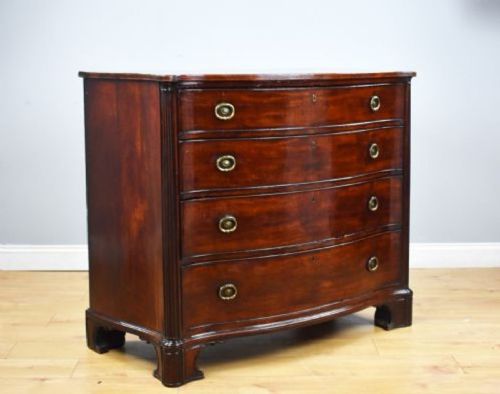


Hepplewhite Mahogany Bedroom Chest
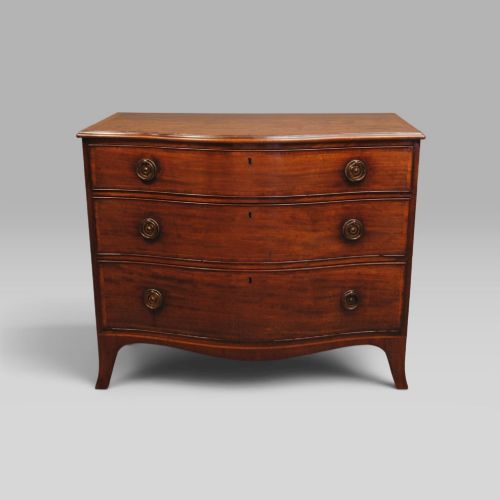
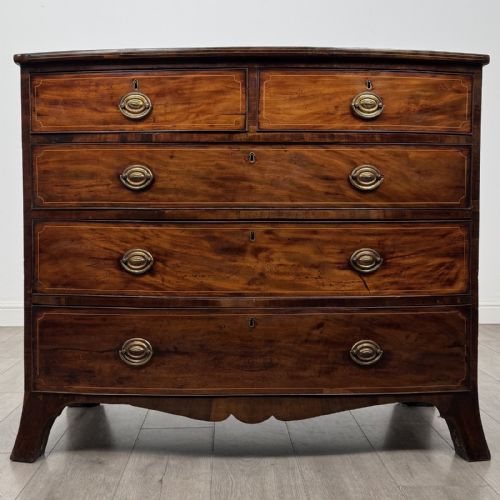
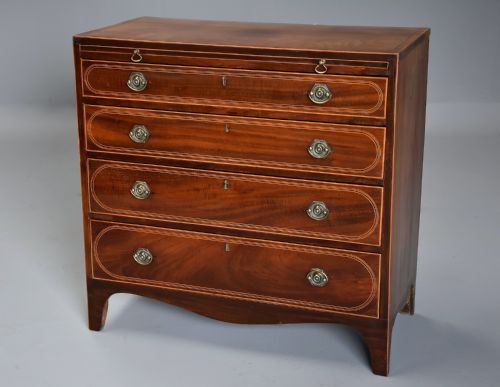
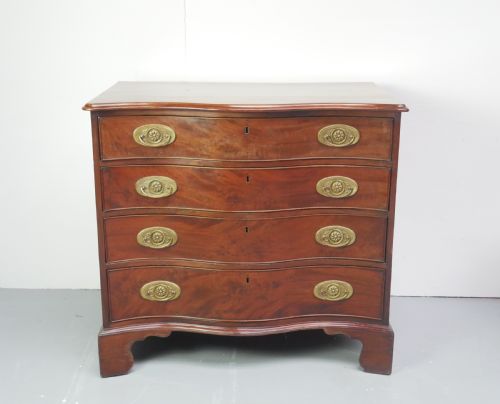
A hepplewhite mahogany bedroom chest brings crisp proportions and figured timber to a room, defined by serpentine or bow fronts and delicate inlay.
Hepplewhite Mahogany Bedroom Chest
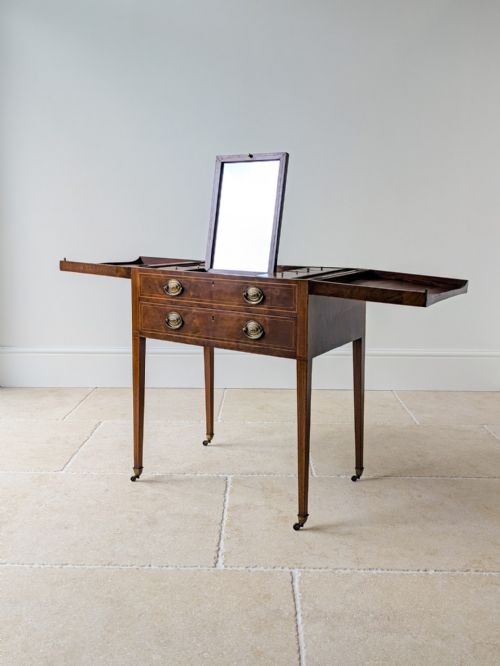
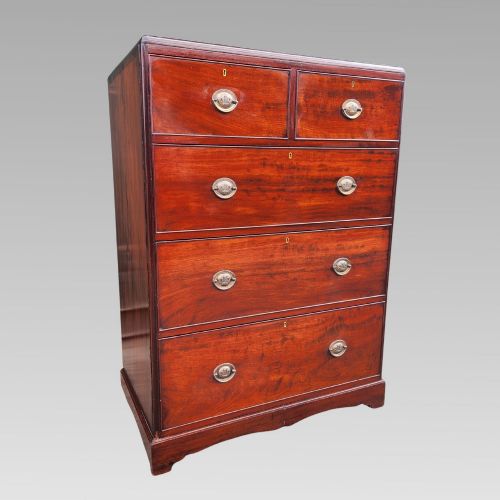
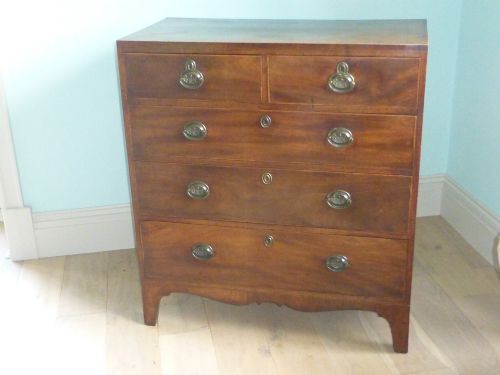
A hepplewhite mahogany bedroom chest is a storage piece defined by the lighter, more elegant lines popularised in the eighteenth century and revisited in later decades. Buyers searching this phrase look for drawer units shaped with serpentine fronts, bow fronts, or straight facades, alongside matching dressing tables.
The versions met most frequently on this page range from eighteenth-century Georgian originals to later nineteenth-century revivals. They share a focus on figured mahogany surfaces, often enhanced by contrasting stringing and boxwood inlay.
What varies in quality
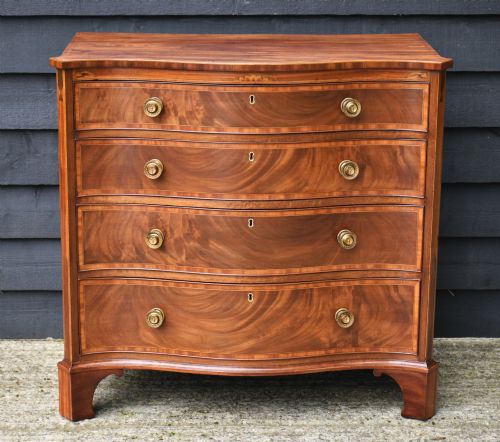
The distinction between standard examples and the finest pieces rests on the choice of timber and the precision of the cabinetwork. Superior chests display richly figured flame mahogany veneer matched symmetrically across the drawers, while lesser pieces utilise plainer stock.
Another measure of quality is the crispness of the boxwood inlay and the subtlety of the serpentine shaping on the front facade. Finer makers invested greater skill in the curves and structural joinery that maintain stability over centuries.
Listings span from eighteenth-century Georgian originals to late nineteenth-century revival pieces, utilising mahogany, flame mahogany veneer, boxwood, and satinwood inlay.
Druce and Co
The Hepplewhite Mahogany Bedroom Chest Glossary
- Serpentine front
- A furniture front curving outward in the centre and inward at the sides, creating a graceful undulating line. This shape demands considerable skill from the cabinetmaker to execute cleanly.
- Bow front
- A convex curved front that swells outward from the corners towards the centre of the chest. It offers a softer alternative to flat fronts while providing generous interior storage.
- Flame mahogany veneer
- Thin slices of mahogany cut from timber where the branch meets the trunk, producing a rippling flame-like pattern. Furniture makers prized this timber for high-status drawer fronts.
- Boxwood inlay
- Narrow strips of pale boxwood set flush into the darker mahogany surface to create contrasting geometric borders. This decorative technique highlights the structural outlines of the piece.
- Caddy top
- A tabletop with a raised or moulded edge resembling the lid of a tea caddy. It gives a distinct architectural profile to eighteenth-century chests.
Hepplewhite Mahogany Bedroom Chest: Frequently Asked Questions
How do I spot a Hepplewhite style chest?
Look for elegant proportions, tapered legs or bracket feet, and delicate inlaid decoration in boxwood or satinwood. The presence of a serpentine or bow front is also characteristic.
Drawer fronts often feature figured mahogany veneers framed by contrasting stringing. Hardware design, such as shaped brass drop handles, further signals the aesthetic.
Are these chests suitable for modern bedrooms?
These chests offer practical drawer storage while bringing warmth and historical character to a modern interior. Their refined proportions allow them to fit comfortably against bedroom walls.
They pair well with both contemporary decor and traditional furnishings. The durable mahogany timber handles daily use reliably.
How do I care for mahogany bedroom furniture?
Keep the timber away from direct heat sources and strong sunlight to prevent the wood and veneer from drying out. Dust regularly with a soft, dry cloth.
Apply a traditional beeswax polish occasionally to nourish the grain and maintain the surface sheen. Avoid silicone-based sprays.
What is the difference between Georgian and revival pieces?
Georgian pieces date from the eighteenth and early nineteenth centuries, displaying period construction methods and patinated timber surfaces. Revival examples were built during the Victorian or later eras in historical styles.
Both categories utilise mahogany and similar decorative inlays, but examination of the secondary woods and internal drawer construction reveals the age of the piece.