


Hepplewhite Console Table
A hepplewhite console table brings refined 18th century elegance to a room through graceful demi-lune shapes and delicate woodwork.
Hepplewhite Console Table
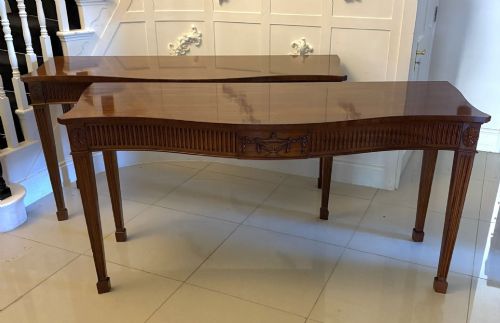
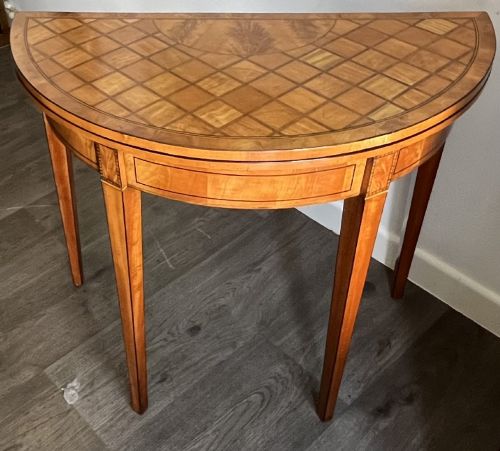
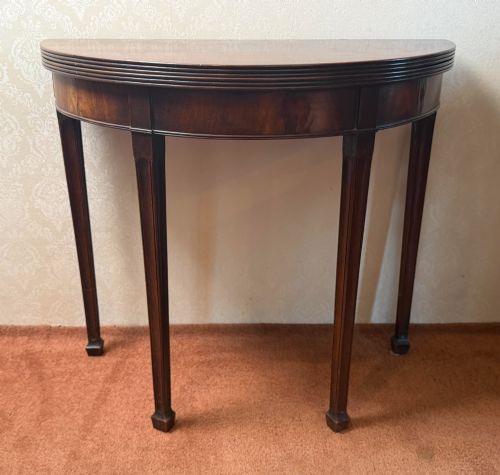
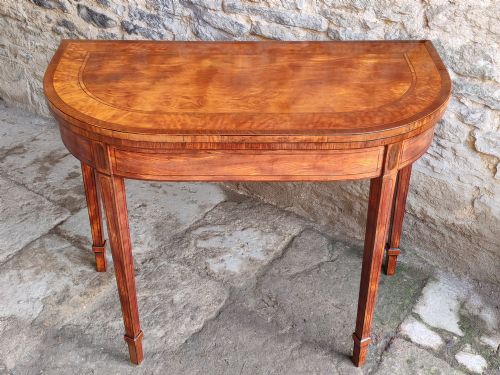
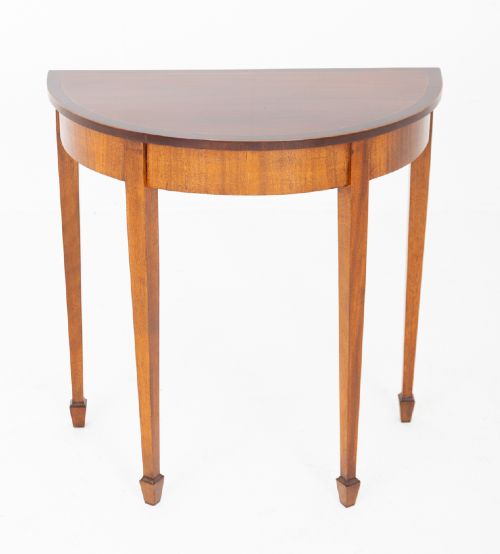
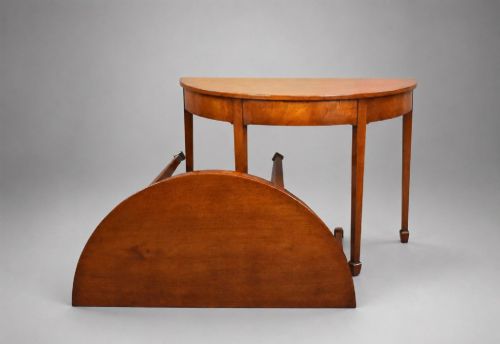
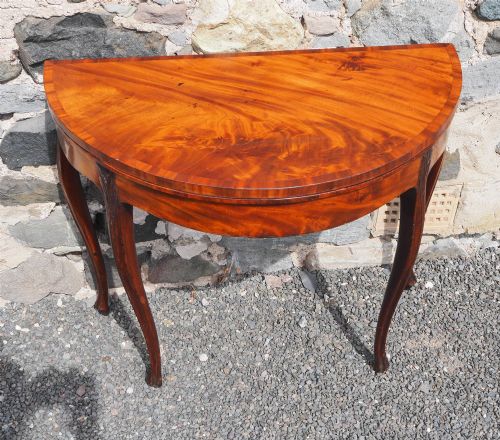
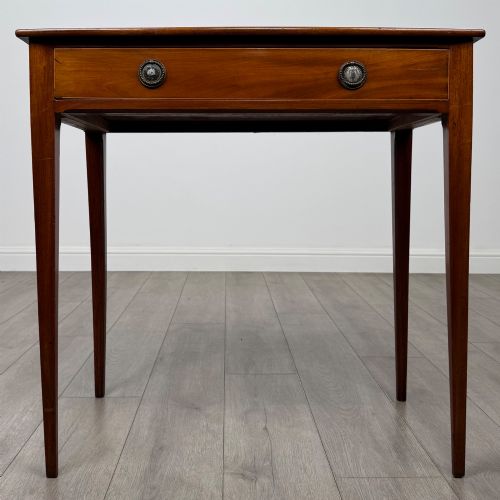
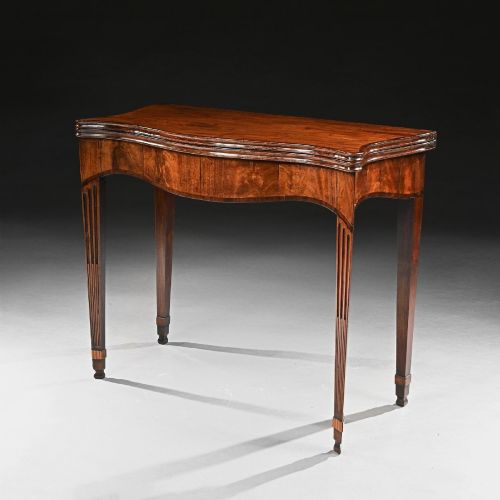
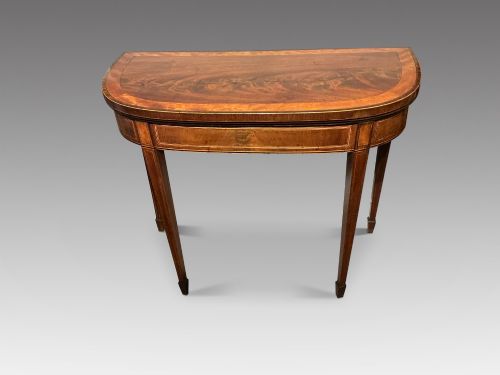
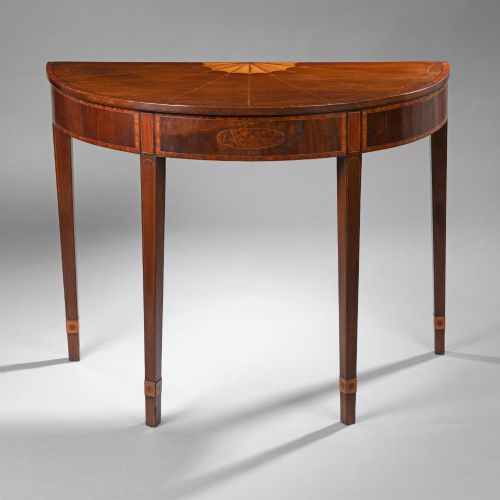
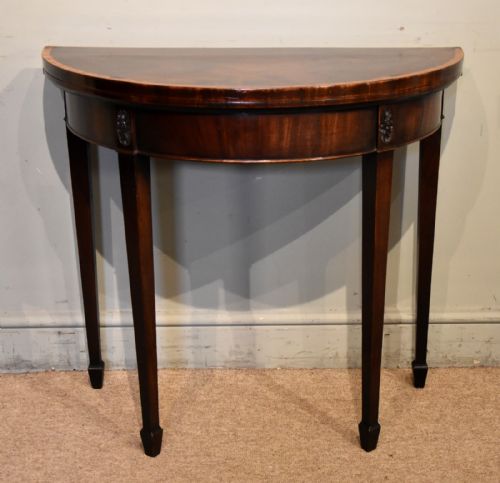
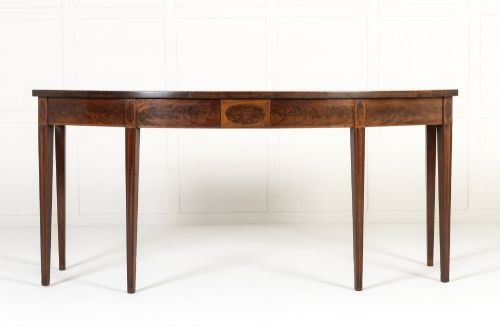
A hepplewhite console table is an 18th century or later form defined by its semicircular demi-lune profile and slender tapering legs. Buyers searching for a hepplewhite console table encounter various related forms in the listings, including fold-over card tables, tea tables, and games tables that share the same distinctive half-moon silhouette.
The pieces appearing on this page span several key eras, originating from the Georgian and George III periods as well as later Georgian Revival and Hepplewhite Revival interpretations from the Edwardian era and the 1920s or 1930s. Original 18th century examples sit alongside later 19th and 20th century revivals, giving buyers a choice between authentic period antiques and later decorative reproductions.
Materials and construction
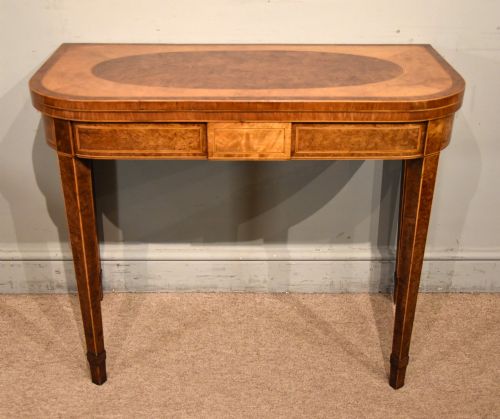
Cabinet makers constructed these tables primarily using solid mahogany and mahogany veneers, often incorporating contrasting timbers such as satinwood, boxwood, and burr yew wood for decorative effect. Wood inlay and satinwood inlay create intricate borders and central motifs across the top surfaces and friezes.
Many examples utilise crossbanding and delicate stringing to frame the demi-lune tops, while structural stability comes from traditional joinery supporting the fold-over mechanisms on card and tea table variants.
Hepplewhite Console Table Retail Price Guide 2026
Typical asking prices for hepplewhite console table among the pieces listed under this phrase on Sellingantiques today, from the lower quarter to the upper quarter. They describe what is for sale here now, not the wider market.
Listings feature mahogany, satinwood, and boxwood inlay across Georgian, Victorian, and 1930s periods.
Judging quality and character
Quality in these tables rests upon the selection of timber and the precision of the inlay work. Finer examples display highly figured mahogany timbers and crisp, well-executed boxwood or satinwood stringing rather than plain, unadorned surfaces.
The harmony of the proportions and the finesse of the carving on the legs separate standard workshop output from exceptional pieces. Original 18th century construction methods and honest surface patination also distinguish period antiques from later revival interpretations.
The Hepplewhite Console Table Glossary
- Demi-lune
- A half-moon shape characteristic of console and card tables designed to sit flush against a wall. This profile defines the majority of the tables found in this category.
- Crossbanding
- A strip of veneer applied to the border of a table top with the grain running perpendicular to the main panel. This technique frames the centre wood and enhances the visual depth.
- Stringing
- A narrow line of contrasting wood inlaid into channels cut into the surface. It forms delicate geometric borders and linear patterns on the tabletops.
- Fold-over
- A hinged tabletop design that opens to double the surface area, commonly found on card and games tables. It allows a compact wall table to convert into a functional playing surface.
- Patination
- The surface sheen and colour acquired by wood over decades of handling and polishing. Good patination shows the depth that only age and natural wear can produce.
Hepplewhite Console Table: Frequently Asked Questions
How do I spot an 18th century original?
Authentic 18th century pieces exhibit period timber grain, hand-cut joinery, and natural surface wear accumulated over centuries. Look closely at the underside and structural joints for construction methods appropriate to the Georgian era.
Revival pieces from the Edwardian period or the 1920s often use similar mahogany and inlay styles but reveal machine-cut components and more uniform finishes upon close inspection.
Can I use a card table for dining?
Fold-over card and tea tables provide a useful surface when opened, but their hinged frameworks and slender legs are not built to support heavy downward pressure. They suit decorative display or occasional card games better than everyday dining.
Keep drinks away from antique polished wood surfaces to prevent water rings and protect the delicate satinwood and boxwood inlay work.
Where should I place a demi-lune table?
The curved profile of a demi-lune console makes it ideal for narrow hallways, entrance foyers, or against a flat wall beneath a matching mirror. Their shallow depth ensures they do not obstruct walking space in smaller rooms.
Pairing a console table with a wall mirror replicates traditional room arrangements seen in Georgian and revival interiors.
What is the difference between revival and original?
Original pieces date from the 18th century reign of George III and carry the authentic age of the Georgian period. Revival tables were manufactured later, during the Victorian, Edwardian, or early 20th century eras, copying earlier designs.
Both categories feature mahogany and intricate inlay work, but collectors generally prize original 18th century examples for their historical provenance.