


Heavy Oak Kitchen Table
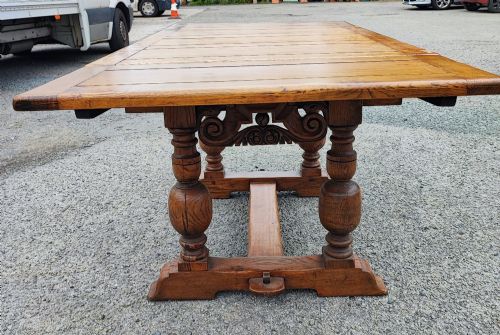
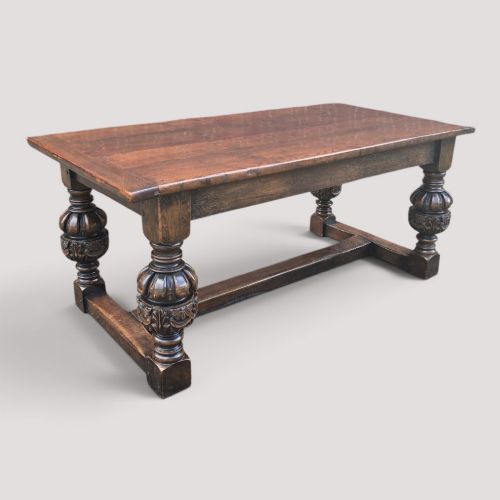
A heavy oak kitchen table anchors a room with solid presence, offering hard-wearing timber and honest construction for daily family life.
Heavy Oak Kitchen Table
Makers and workshops constructed these pieces across the seventeenth, eighteenth, nineteenth, and early twentieth centuries, spanning Edwardian and Victorian eras as well as 1930s production. Buyers encounter rustic country styles alongside Jacobean revival, Elizabethan interpretations, and French provincial aesthetics.
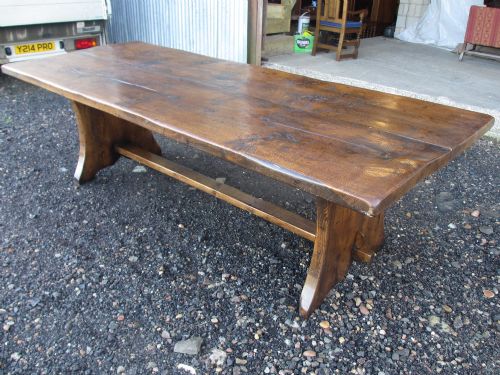
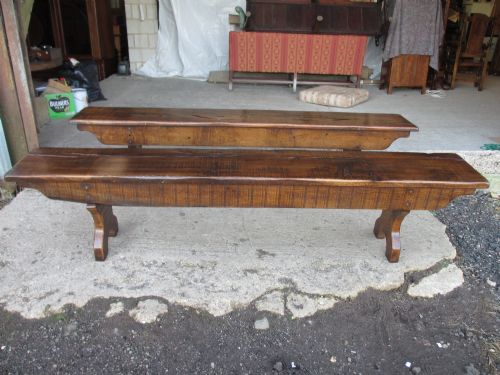
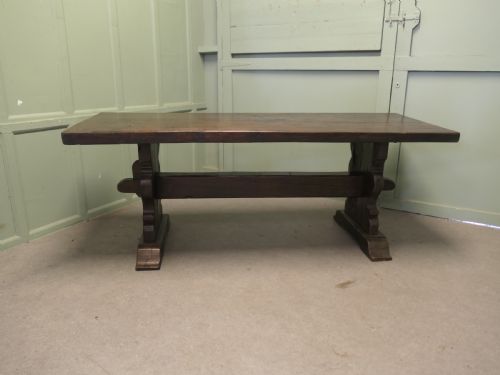
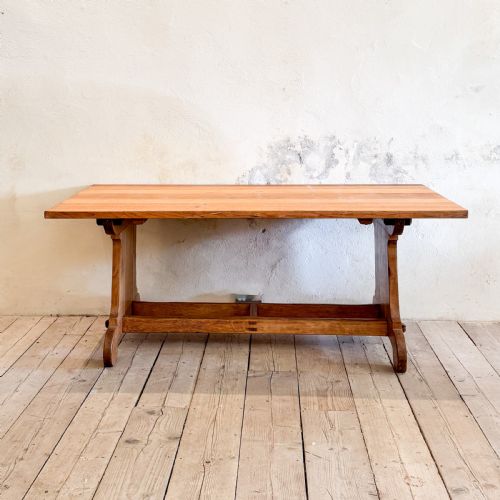
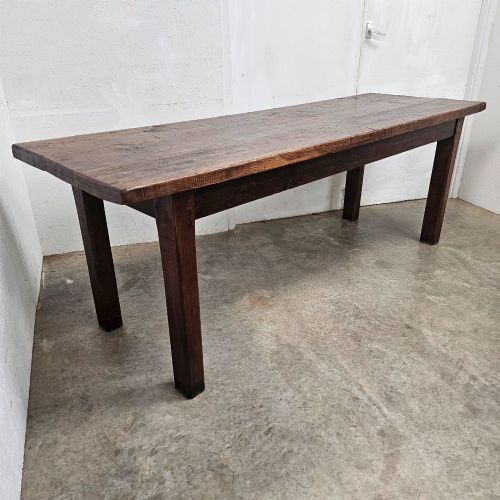
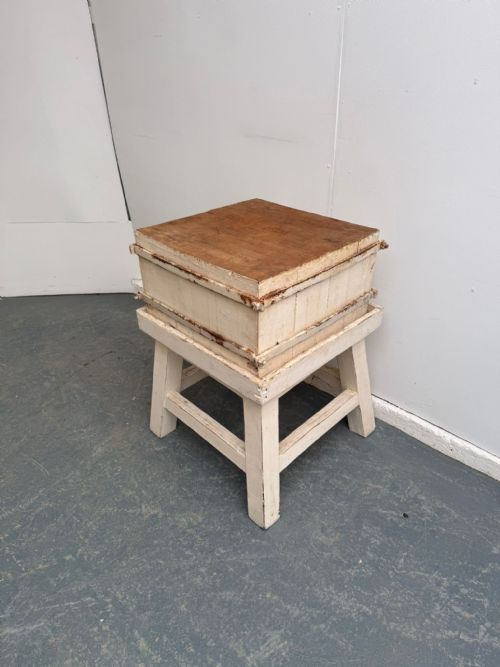
Beyond standard dining boards, the category includes functional workbenches, butchers blocks, and long benches designed with trestle bases, single plank elm tops, and deep aprons. These forms originate from English and continental traditions, prioritising unyielding structural mass and utility.
Materials and construction
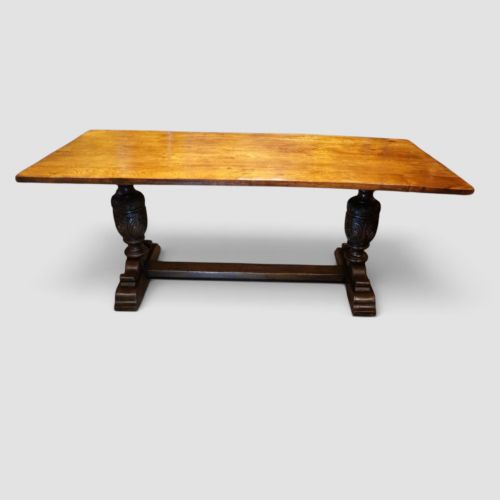
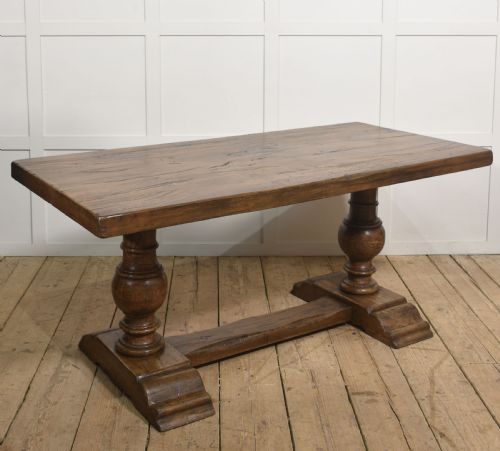
Construction relies primarily on solid oak, frequently paired with secondary hardwoods such as beech, elm, and iron fixings for stability. Tops utilise thick single planks or joined boards secured by sturdy refectory trestle bases and substantial framing.
French and English workshops utilised traditional joinery, integrating pegged joints, thick aprons, and functional vises on workbench variants. Painted finishes, cast iron brackets, and bronzed mounts appear on specific provincial and industrial butcher blocks.
Many French workbenches retain genuine carpenter chalk marks and ink stains pressed deep into the timber grain by generations of unknown hands.
Indicators of quality
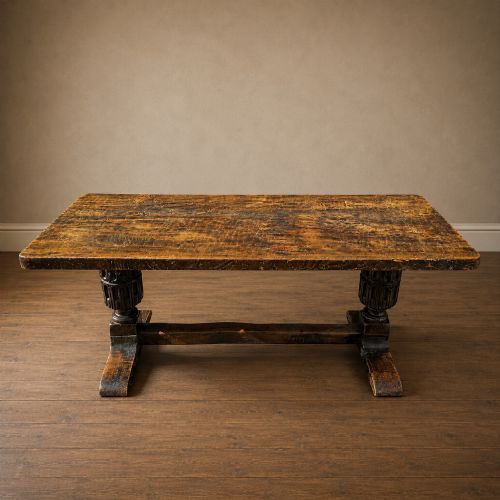
Quality rests upon timber selection and the integrity of the structural frame, where thick single-plank tops and heavy oak scantlings denote superior grade. Tables showing honest patination from decades of sustained use display the best balance of age and character.
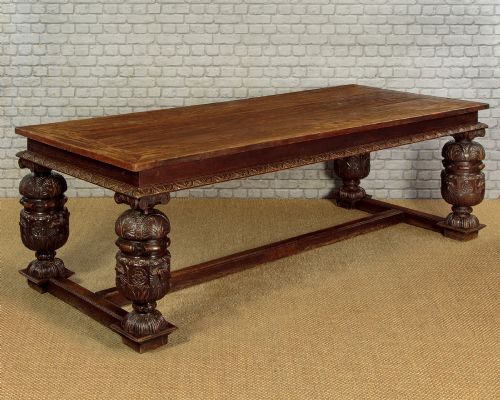
Proportion and the execution of shaped trestle ends separate provincial utility pieces from finer architectural commissions. Strong joinery without excessive modern intervention preserves the structural honesty expected in seventeenth to early twentieth-century examples.
Hennes France
The Heavy Oak Kitchen Table Glossary
- Refectory table
- A long, narrow dining table traditionally used in monastic dining halls. These examples typically feature substantial stretcher bases and thick plank tops.
- Draw leaf table
- A table equipped with extension leaves concealed beneath the main surface. Pulling the ends expands the top surface seamlessly.
- Butchers block
- A heavily constructed chopping surface made from end-grain blocks of hardwood. These stand on robust wooden or cast iron frames.
- Trestle base
- A support structure comprising upright legs connected by a horizontal beam or stretcher. This design maximises legroom along the length of the table.
- Elm top
- A wooden surface fashioned from elm timber, valued for its interlocking grain and resistance to splitting. It frequently appears combined with oak framing.
Heavy Oak Kitchen Table: Frequently Asked Questions
How do I clean a heavy oak kitchen table?
Wipe surfaces with a damp cloth and mild soap, avoiding harsh chemical sprays that strip the natural timber finish. Dry the wood immediately to prevent moisture penetration.
Feed the oak periodically with natural beeswax to nourish the grain and maintain a protective barrier against daily kitchen use.
Can I use an antique workbench as a dining table?
Workbenches provide exceptional structural stability and generous proportions suitable for daily dining and kitchen gatherings. Their thick tops and integrated vises add distinctive industrial character to modern spaces.
Consider the knee clearance beneath the apron and the height of the workbench before pairing it with standard dining chairs.
What is a refectory table?
A refectory table is a long, narrow dining table originally designed for communal meals in monasteries and large estates. They are characterised by sturdy legs united by low floor stretchers.
This robust framing allowed large groups to sit comfortably without legs obstructing the seating arrangement.
How do I date an old oak table?
Examine the underside and joints for hand-cut pegning, saw marks, and the method used to flatten the boards. Tool marks and timber shrinkage patterns reveal the period of manufacture.
Compare the leg style, stretcher placement, and overall proportions against documented regional furniture forms from the seventeenth to the twentieth century.