



Heavy Oak Display Cabinet
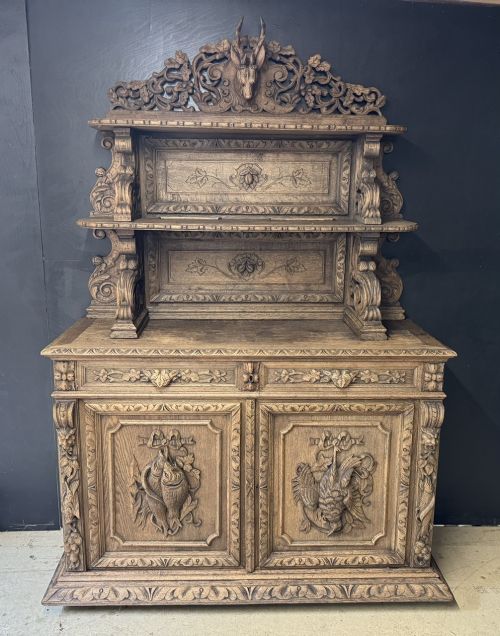
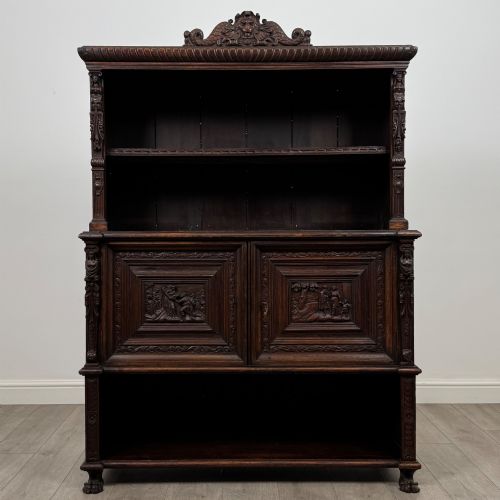
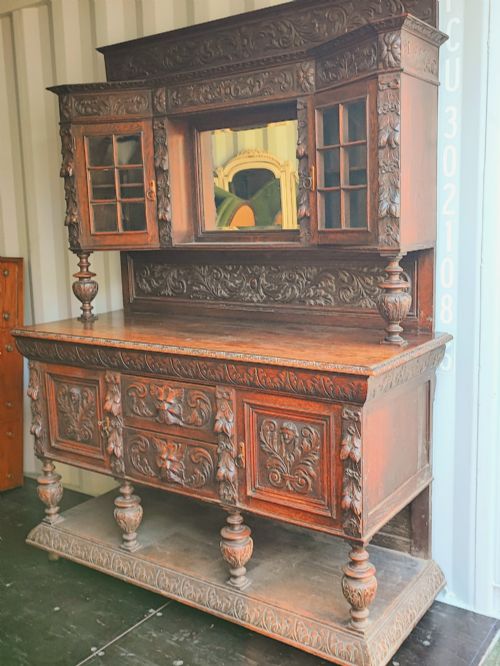
A heavy oak display cabinet brings rich timber and architectural carved detail to a room, offering both storage and display space.
Heavy Oak Display Cabinet
A heavy oak display cabinet encompasses substantial Victorian bookcases, sideboards, and cupboards constructed from robust timber. These substantial items serve as functional storage pieces while showcasing intricate woodworking traditions from the nineteenth century.
The versions most commonly met on this page span the Victorian and Edwardian periods, frequently drawing upon Renaissance, Gothic, and Jacobean revival styles. Many examples incorporate glazed doors, open shelving, or breakfront forms designed for libraries and formal rooms.
How they were made
Construction relies heavily on solid oak timbers, often complemented by glass panels, brass hardware, and mirror backs. Certain pieces incorporate contrasting materials such as rosewood or lead details within the overall wooden framework.
Cabinet makers utilised deep relief carving techniques to embellish doors, cornices, and pilasters, drawing inspiration from French and English Renaissance motifs. Joinery methods of the period ensured structural strength capable of supporting extensive library collections and heavy display items.
Heavy Oak Display Cabinet Retail Price Guide 2026
Typical asking prices for heavy oak display cabinet among the pieces listed under this phrase on Sellingantiques today, from the lower quarter to the upper quarter. They describe what is for sale here now, not the wider market.
What varies in quality
The standard of design is defined by the ambition of the architectural ornamentation and the depth of the carved motifs. Pieces displaying monumental proportions and intricate, crisp carvings sit at the upper end of the scale.
The Heavy Oak Display Cabinet Glossary
- Breakfront
- A piece of furniture whose central section projects forward from the flanking outer sections. This architectural arrangement creates depth and visual rhythm across large bookcases and sideboards.
- Renaissance Revival
- A nineteenth century design movement drawing inspiration from sixteenth century architectural and decorative forms. It manifests in heavy proportions, symmetry, and elaborate carved detailing.
- Gothic Revival
- A style that adapts medieval architectural elements such as pointed arches and tracery into furniture design. It appears frequently in nineteenth century library bookcases.
- Pilaster
- An upright architectural support that projects slightly from a wall or cabinet frame, functioning mainly for decoration. These elements often feature carved fluting or strapwork.
Heavy Oak Display Cabinet: Frequently Asked Questions
Where should I place a heavy oak cabinet?
These substantial pieces require a room with adequate floor space and strong wall support given their considerable weight and presence. Libraries, dining rooms, and high ceilings provide the ideal architectural scale to balance their visual dominance.
Position the cabinet away from direct sunlight and strong heat sources to protect the solid timber and historic finishes from drying out. Adequate clearance ensures the doors and drawers operate smoothly without floor distortion.
How do I date a Victorian oak cabinet?
Dating relies on examining the specific revival style, construction methods, and any recorded provenance associated with the piece. Pieces bearing specific dates or markers from the mid to late nineteenth century offer clear chronological reference points.
Stylistic shifts from early Victorian Gothic influences toward later Renaissance and Edwardian forms help narrow the decade of production. Hardware styles, glass clarity, and secondary woods inside the cabinet provide further supporting evidence for the period.
How do I care for antique oak furniture?
Maintain a stable indoor environment with moderate humidity levels to prevent the solid oak from warping or splitting over time. Regular dusting with a soft, dry cloth preserves the polished surface without introducing harmful moisture.
Avoid using modern silicone-based polishes that can build up and degrade the historic finish. Occasional application of appropriate wax feeds the timber and maintains its natural lustre.
What styles are common in these cabinets?
Renaissance revival and Gothic revival dominate the decorative vocabulary, featuring heavy mouldings, panels, and sculptural carvings. French and Jacobean influences also appear, bringing distinct regional interpretations to the British and continental pieces.
These revival movements reflect nineteenth century tastes for historical grandeur and solid craftsmanship. Each style employs specific motifs, from strapwork and cartouches to pointed arches and heavy corbels.