

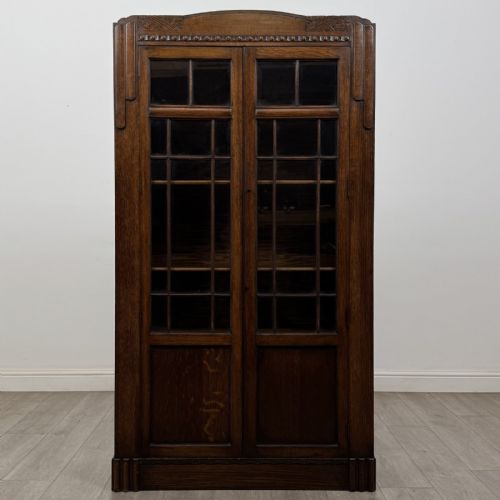
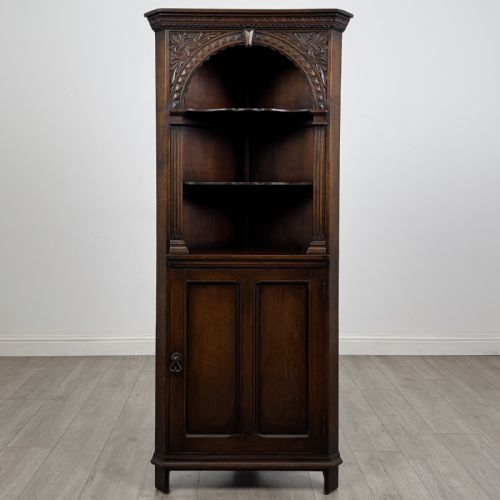

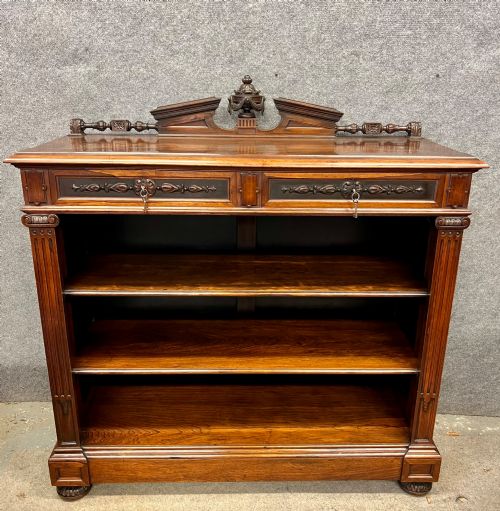


Carved Oak Bookcase Top
These carved oak bookcase top sections bring warmth and distinct architectural presence to a room, offering practical display space without a full-height footprint.
Carved Oak Bookcase Top
A carved oak bookcase top serves as a standalone display unit or the upper portion of a larger bureau bookcase, originating from periods spanning the eighteenth, nineteenth, and twentieth centuries. Buyers searching this phrase encounter formats ranging from open shelves and counter-top shop cabinets to glazed display units and revolving table-top designs.
The pieces reflect diverse historical revivals and design movements, including Tudor, Jacobean, French Renaissance, Arts and Crafts, Art Nouveau, and Art Deco styles. Edwardian and Victorian examples appear frequently across the selection, often showcasing deep relief carving and architectural mouldings.
Origins vary between British workshops and continental European makers, resulting in distinct regional carving motifs such as French hunting scenes or traditional British strapwork. Functionality shifts from desktop storage and rotating book holders to wall-mounted or counter-standing display cabinets.
Materials and construction methods
Construction relies heavily on solid timber and veneers, with oak serving as the primary structural material alongside occasional walnut accents. Cabinet makers shaped these woods using traditional joinery techniques, incorporating brass hardware, iron hinges, and lead framing for glazed doors.
Carving was executed by hand, producing intricate geometric panels, fruit tree motifs, and figurative relief work characteristic of revival styles. Glazing utilised clear or patterned glass panels secured with putty or wooden glazing bars, whilst interior shelving often featured adjustable wooden supports.
Carved Oak Bookcase Top Retail Price Guide 2026
Typical asking prices for carved oak bookcase top among the pieces listed under this phrase on Sellingantiques today, from the lower quarter to the upper quarter. They describe what is for sale here now, not the wider market.
Listings feature oak, walnut, and ceramic elements alongside brass, iron, and lead-framed glass across Victorian and Edwardian periods.
Evaluating craftsmanship and condition
Quality reveals itself in the crispness of the hand-carved ornamentation and the selection of timber grain, where tighter medullary rays in the oak indicate superior quarter-sawn boards. Superior examples exhibit precise joinery, smooth door operation, and well-fitted original hardware rather than later replacements.
The integrity of the structural frame, the clarity and originality of the glass panels, and the depth of the patination distinguish finer pieces from simpler utilitarian items. Surface finish preservation, whether through traditional wax polish or bleached patination, dictates the overall visual harmony of the woodwork.
John Moyr Smith
The Carved Oak Bookcase Top Glossary
- Quarter-sawn oak
- Timber cut radially from the growth rings to produce characteristic decorative flecks known as medullary rays. This method provides greater dimensional stability for cabinet construction.
- Revival style
- An artistic movement drawing inspiration from historical aesthetics such as Tudor, Jacobean, or French Renaissance periods. Makers reinterpreted these past motifs to suit contemporary nineteenth and twentieth-century interiors.
- Glazed door
- A cabinet door fitted with glass panels to display books or objects while protecting them from dust. These doors frequently utilise lead cames or wooden bars to hold individual panes in place.
- Bureau bookcase
- A combination form featuring a sloping writing desk compartment below an upper shelving or cabinet section. The top portion is often separable for transport or modular placement.
Carved Oak Bookcase Top: Frequently Asked Questions
What is a carved oak bookcase top?
A carved oak bookcase top is an upper cabinet or open shelving unit, often originating from a modular piece or a larger bureau bookcase. These sections function independently as display cabinets, counter-top storage units, or desktop revolving bookcases.
They bring concentrated woodwork and period character to spaces where a full-height piece is impractical.
How do I date an oak bookcase top?
Dating relies on examining the construction methods, hardware, and stylistic indicators such as carving motifs. Victorian and Edwardian pieces often display revival styles, whereas eighteenth-century examples show simpler, heavier timbers and hand-wrought fixings.
Secondary woods, backboards, and fastening types also help establish the approximate period of manufacture.
Where can I place a tabletop bookcase?
Tabletop and counter-top revolving bookcases sit comfortably on sturdy desks, sideboards, or shop counters. They provide accessible storage for reference volumes or small collections without requiring floor space.
Ensure the supporting surface can bear the combined weight of the solid oak frame and books.
Are these bookcase tops complete units?
Many bookcase tops are designed to function independently as display cabinets or open shelves, even if they originally sat atop a bureau base or lower cabinet. Glazed doors and enclosed shelving make them fully operational for display purposes.
Their proportions allow them to be mounted on walls or placed directly onto flat surfaces.
How do I care for antique oak?
Maintain antique oak by dusting with a soft, dry cloth and applying a traditional beeswax polish sparingly to nourish the timber. Avoid placing the wood in direct sunlight or near heat sources to prevent splitting.
Checking brass hinges and structural joints periodically ensures the piece remains stable during use.