
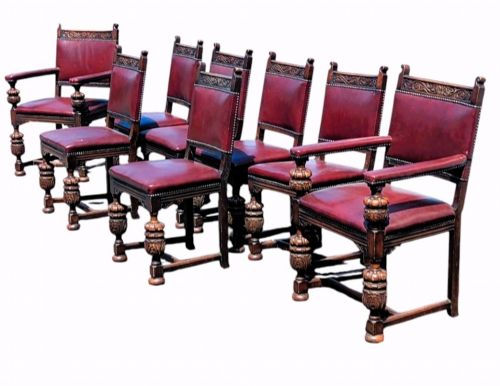


Heavy Oak Chair
A heavy oak chair brings substantial presence to a room, built from durable timber to endure through generations.
Heavy Oak Chair
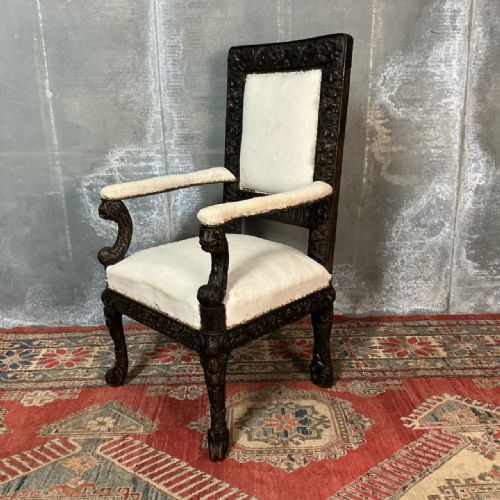
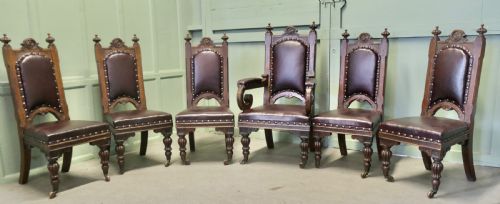
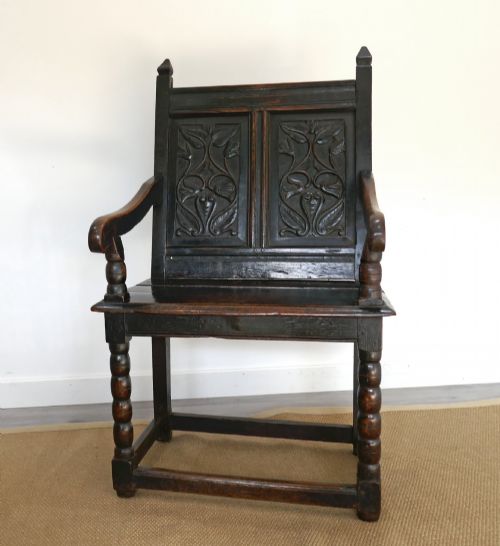
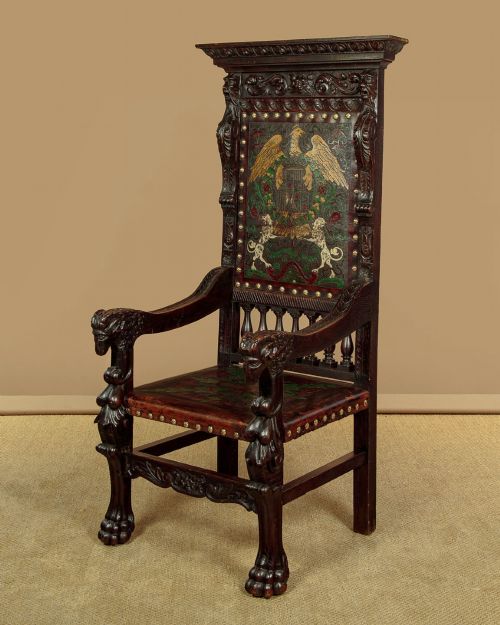
A heavy oak chair encompasses robust seating designed for domestic, dining, or library use, built predominantly from English oak. When searching for a heavy oak chair, buyers encounter diverse forms ranging from single wainscot armchairs and throne chairs to matched dining sets.
The selections span multiple centuries and revival movements, including 17th-century vernacular pieces alongside Victorian Gothic Revival and 1930s kitchen or boardroom seating. Single armchairs often display elaborate carving, while sets of dining chairs focus on sturdy frames and high backs.
Origins vary from English regional workshops to Scottish and Welsh makers, with styles drawing heavily on Jacobean, Renaissance, and Baroque traditions. Buyers meet both singular antique items carrying centuries of patina and early 20th-century revival interpretations.
Materials and construction methods
Construction relies heavily on solid English oak, chosen for its density and structural integrity, often joined using traditional pegged mortise and tenon joints. This rigid timber framework frequently supports secondary elements such as rush seating, leather upholstery, or textile panels secured with brass studs.
Carving serves as the primary decorative technique, executed directly into the solid oak to produce deep relief motifs including strapwork, hounds, and foliage. Surfaces are finished with wax or polish, highlighting the natural grain and enduring weight of the timber.
Listings feature solid English oak combined with leather, brass, rush, and velvet across periods ranging from the 17th century to the 1930s.
Distinctions in craftsmanship
Quality differentiates itself through the depth and crispness of the hand-carved detail, distinguishing master workshops from mass-produced revival pieces. Timber selection also matters, as straight-grained heartwood provides superior stability compared to lesser cuts.
The integrity of the structural joinery dictates long-term durability, where tight original pegging holds firm without excessive modern intervention. Upholstery choices and secondary materials like heavy brass studding or quality leather further separate standard utility seating from exhibition-grade armchairs.
S&H Jewell
The Heavy Oak Chair Glossary
- Wainscot chair
- A heavy wooden armchair of 17th-century origin, constructed with panelled backs and solid wooden seats. These early pieces represent some of the earliest seating forms encountered in oak.
- Carver armrest
- An armchair designed to match a set of dining chairs, typically positioned at the head of a table. These items share stylistic motifs with their smaller side-chair counterparts.
- Gothic Revival
- An architectural and decorative style popular during the 19th century, drawing inspiration from medieval forms. Pieces in this style utilise pointed arches, tracery, and heavy carved details.
- Baroque Revival
- A theatrical design movement reinterpreting 17th-century continental excess through robust carving and grand proportions. Such chairs often feature scrolling ornamentation and high upholstered backs.
- Rush seating
- Woven marsh grass utilised to form durable, textured seat pads within wooden chair frames. This traditional method provides a resilient surface for daily use.
Heavy Oak Chair: Frequently Asked Questions
What defines a heavy oak chair?
A heavy oak chair relies on dense solid timber construction, substantial framing, and robust joinery to provide lasting structural stability. These pieces often feature thick back panels, heavy armrests, or extensive hand-carving.
Such weight reflects both the inherent density of English oak and the utilitarian requirements of historical domestic, boardroom, or monastic environments.
How do I care for antique oak?
Maintaining antique oak involves applying occasional quality bees-wax to nourish the timber and preserve its natural sheen. Avoiding direct sunlight and sudden temperature shifts prevents the wood from drying out or splitting.
Leather and fabric elements require gentle dusting and specialised conditioning depending on their specific period and material composition.
How are different periods identified?
Periods are distinguished through construction techniques, tool marks, joinery methods, and prevailing decorative styles. 17th-century pieces often display pegged mortise frames and vernacular wainscot panelling, while 19th-century revival items lean towards heavier, more ornate Gothic or Baroque carving.
Hardware elements, such as brass studding and upholstery types, offer further clues to a piece's exact era of manufacture.