
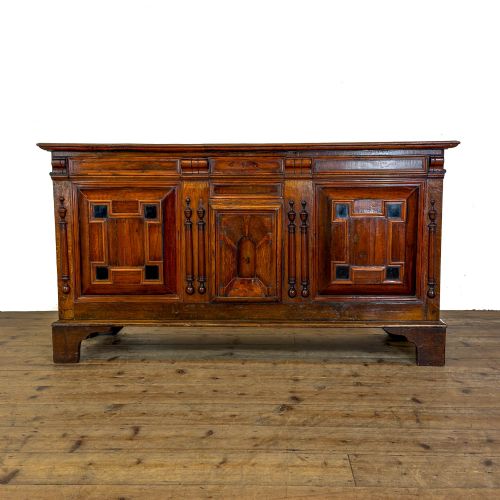
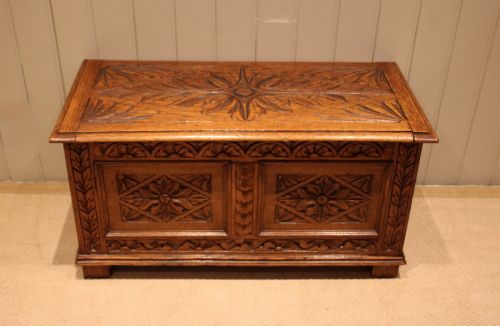
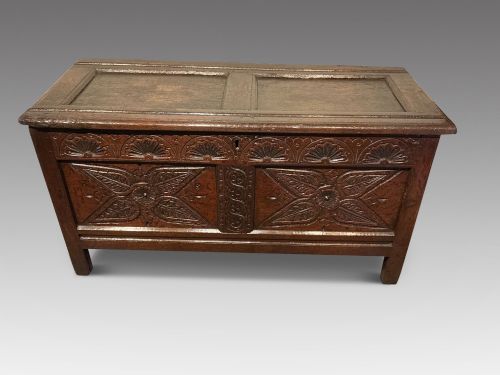


Heavy Oak Blanket Box
A heavy oak blanket box brings rugged utility and centuries of storage history directly into a modern bedroom or hallway.
Heavy Oak Blanket Box
A heavy oak blanket box typically appears as a robust coffer, storage chest, or iron-bound silver trunk. These pieces originate from periods spanning the sixteenth century through the Victorian era and into the early twentieth century.
Buyers will encounter traditional panelled coffers alongside heavily banded travel trunks and campaign chests. The selection ranges from vernacular country house pieces to sturdy shipping containers built for secure transit.
Materials and construction
Makers utilised solid oak timbers, frequently complemented by heavy iron, steel, or brass banding to reinforce the structural corners and edges. Wrought iron handles, straps, and secure locking mechanisms were forged to withstand rigorous travel and daily domestic use.
Joinery methods rely on traditional pegged framing and robust panel construction rather than modern adhesives. Ebonised wood details and carved surfaces appear on specific revival and period examples.
Materials documented across the inventory include solid oak, wrought iron, brass, steel, and ebonised wood.
Factors of quality
The distinction between standard storage items and superior examples lies in the integrity of the timber and the original hardware. Intact iron banding, working locks, and untouched surface patination elevate a piece beyond basic utilitarian trunks.
Original internal fittings, such as compartmentalised trays and fabric linings, separate custom travel pieces from standard domestic coffers. The weight and thickness of the solid oak boards further define the structural calibre of each chest.
Elkington·H D Dean
The Heavy Oak Blanket Box Glossary
- Coffer
- A traditional sturdy chest, usually constructed from solid timber, used for storing valuables or household goods. These pieces often feature hinged lids and robust front panels.
- Silver chest
- A specialised storage trunk reinforced with metal banding and fitted internally for the transport of valuable tableware. These containers date predominantly from the Victorian and Georgian eras.
- Campaign chest
- Portable furniture designed for military officers on the move, constructed for durability during transport. They frequently incorporate recessed brass handles and reinforced corners.
- Panelling
- A method of framing timber where central boards sit within grooved stiles and rails to allow for natural wood movement. This technique prevents warping in heavy furniture.
Heavy Oak Blanket Box: Frequently Asked Questions
How do I date an oak coffer?
Dating relies upon examining the construction methods, tool marks, and style of jointing used in the carcass. Earlier pieces display hand-riven timber and primitive pegged joinery, whereas nineteenth-century examples incorporate machine-sawn boards and standardised hardware.
Hardware styles and lock mechanisms also provide chronological markers. Iron hinges and straps change in profile significantly from the Tudor period through to the Victorian era.
Were these chests meant for travel?
Many of the metal-bound trunks and silver chests were specifically engineered for shipping and travel. They feature robust iron banding and heavy-duty carrying handles to endure long journeys.
Other forms, such as traditional panelled coffers, remained stationary within domestic interiors for storing household linens and blankets.
How do I care for solid oak furniture?
Solid oak benefits from consistent indoor humidity levels to prevent the timber from splitting or warping over time. Periodic applications of appropriate wax feed the wood and maintain the natural lustre of the surface.
Avoid placing these heavy boxes near direct heat sources or in damp environments. Gentle dusting with a dry cloth is sufficient for routine maintenance.
What is the difference between a coffer and a trunk?
A coffer is traditionally a stationary domestic chest with a flat lid, often ornamented with carvings or frame-and-panel construction. They served as primary storage for textiles and valuables in historic homes.
A trunk or silver chest is typically reinforced for travel with iron or steel bands and side handles. These utilitarian containers prioritized structural defence over decorative carving.