
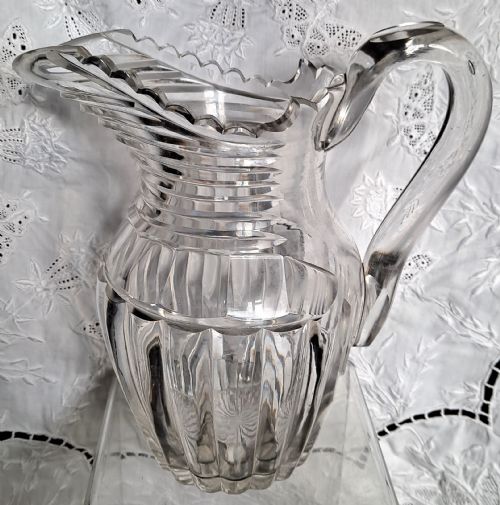
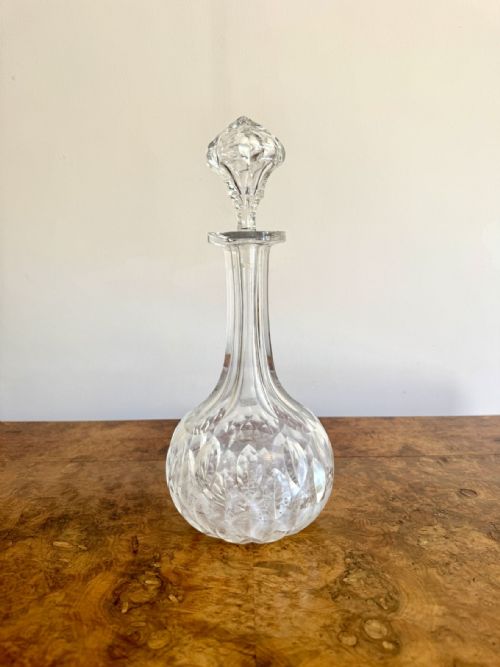


Heavy Lead Crystal Decanter
A heavy lead crystal decanter brings real weight and brilliance to the table, formed from deep-cut glass that catches the light from every angle.
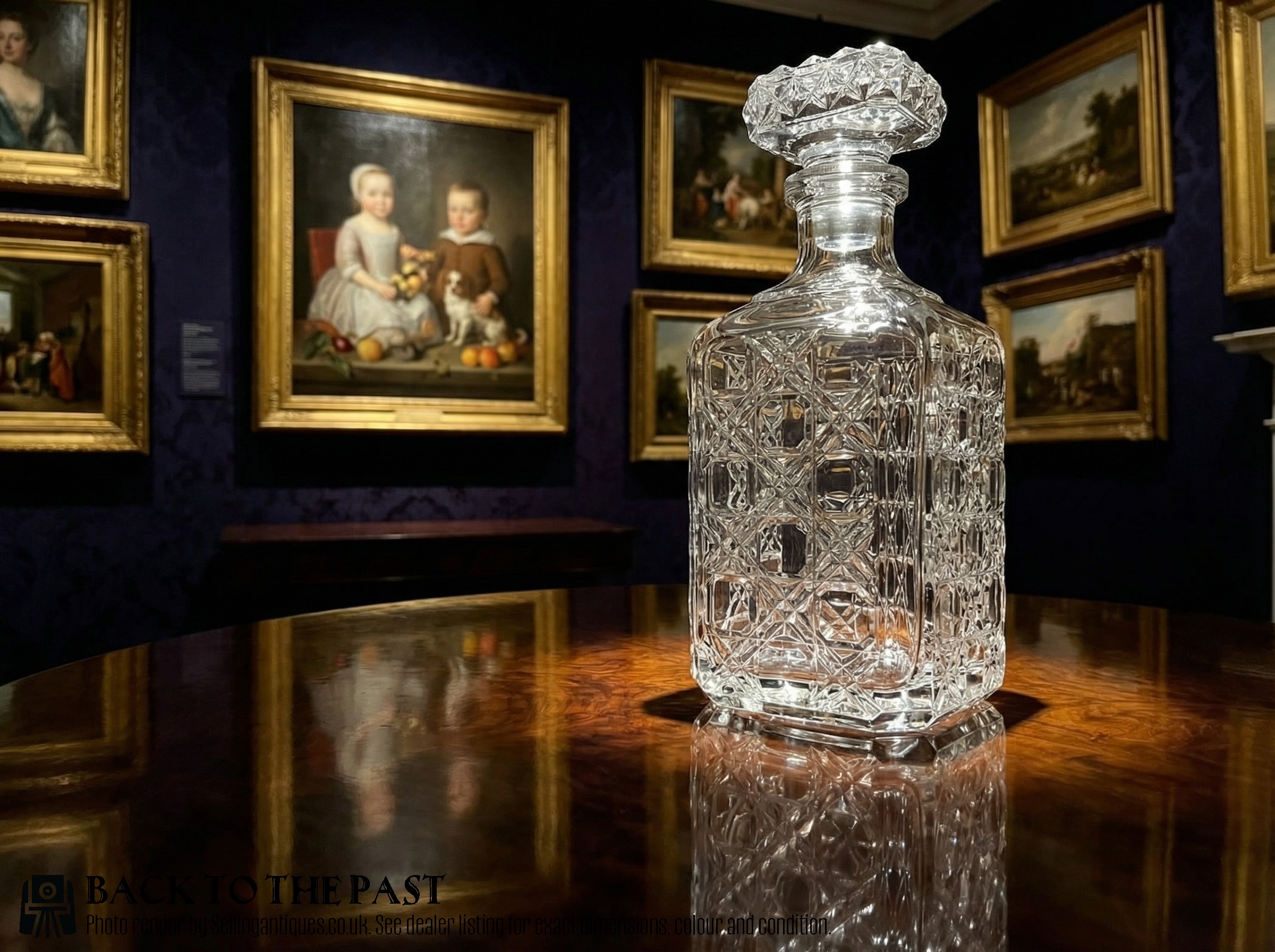
Heavy Lead Crystal Decanter
A heavy lead crystal decanter sits firmly on the sideboard, offering substantial weight and deep refraction that marks out better service vessels. Buyers searching this phrase will find sturdy spirit decanters, three-ring carafes, and water jugs intended for daily hospitality or grand dining.
Most examples found here span the Georgian, Regency, Victorian, and Edwardian eras, with Edwardian and Victorian pieces appearing most frequently. These earlier vessels often feature robust necks with applied rings and thick bases designed to anchor the piece securely during pouring.
How they were made
Makers shaped these vessels using lead glass and heavy crystal, combining high-lead content with thick-walled blowing techniques to achieve exceptional clarity and heft. Molten metal was gathered, blown into moulds or free-blown, and then annealed slowly to relieve internal stress.
Workmen applied deep wheel-cutting and facet-cutting directly onto the cooled surface, creating sharp prisms, flutes, and diamond patterns. Necks often received multiple applied glass rings, whilst stoppers were individually ground to fit each specific mouth.
Many Victorian dining rooms relied on three distinct decanter rings so damp fingers wouldn't drop the port.
What varies in quality
The distinction between ordinary and superior pieces rests on the crispness of the cutting and the purity of the metal. Deeper, sharper facet cuts demand greater skill from the glass-cutter and produce livelier refraction under candlelight.
Weight distribution and balance also dictate standard; a finer vessel feels substantial yet poised in the hand, with a meticulously ground stopper that matches the specific contours of the neck.
The Heavy Lead Crystal Decanter Glossary
- Lead crystal
- Glass containing a significant proportion of lead oxide, which increases density, weight, and light dispersion. This material allows for deeper and sharper cutting than standard soda-lime glass.
- Three-ring carafe
- A serving vessel featuring three prominent horizontal glass rings applied around the neck. These rings originally provided a secure grip for the hand when pouring heavy liquids.
- Facet-cut
- A decorative surface treatment composed of flat, polished planes meeting at sharp angles. It maximises the sparkle and brilliance of heavy lead glass.
- Spirit decanter
- A smaller, often heavier bottle designed specifically for serving potent spirits like whisky or brandy. They frequently feature robust stoppers to prevent evaporation of the contents.
- Regency
- A British design period spanning the early nineteenth century characterised by classical restraint and bold cutting. Pieces from this era often display strong geometric facets and substantial wall thickness.
Heavy Lead Crystal Decanter: Frequently Asked Questions
How do I clean a cloudy decanter?
Cloudiness inside old vessels usually stems from mineral deposits or liquid residue etching the interior surface over decades. Gentle cleaning with warm water, specialised soft beads, and mild vinegar can help clear light residue.
Avoid harsh abrasives or sudden temperature changes that might fracture the heavy lead metal. Thorough air drying prevents moisture rings from forming inside the base again.
Are these decanters safe for modern port?
These vessels were historically designed to hold strong spirits, wine, and water for immediate service during formal meals. Using them for port or whisky today remains entirely appropriate for dinner parties.
Check that the interior shows no stubborn staining and that the stopper seats correctly before filling. Modern testing can confirm lead safety if you intend to store liquids for long periods.
How do I date a Georgian decanter?
Georgian and Regency pieces typically show distinct stylistic markers such as hand-hammered pontil scars on the base and thicker, heavier metal walls. The cutting patterns on earlier items tend to be broader and less mechanical than later Victorian work.
Examining the shape of the neck rings and the individual grinding of the stopper also provides reliable clues to the decade of manufacture.
Why do some stoppers feel loose?
Stoppers were individually ground to fit the specific neck of the vessel during manufacture, meaning they are rarely interchangeable between different bottles. Over centuries of use, minor wear on the ground glass surfaces can create a slight play.
Keeping the original stopper paired with its correct base maintains both the visual harmony and the historical integrity of the piece.