



Heavy Iron Hearth Basket
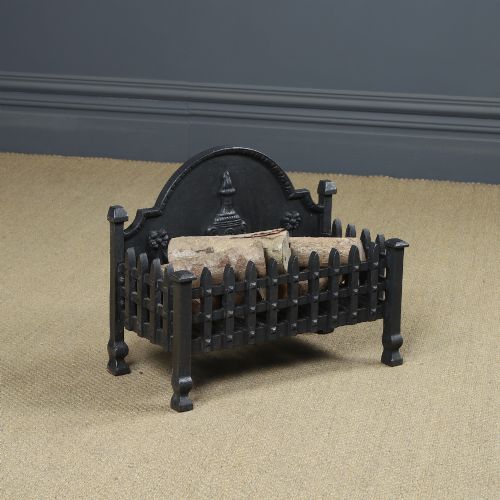
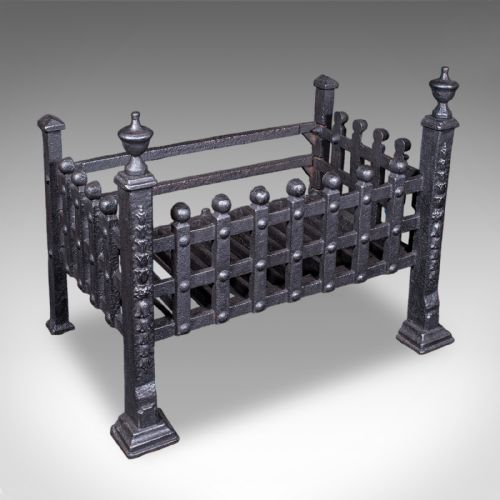
A heavy iron hearth basket anchors the fireplace with robust structure, built to hold logs and sustain intense fires.
Heavy Iron Hearth Basket
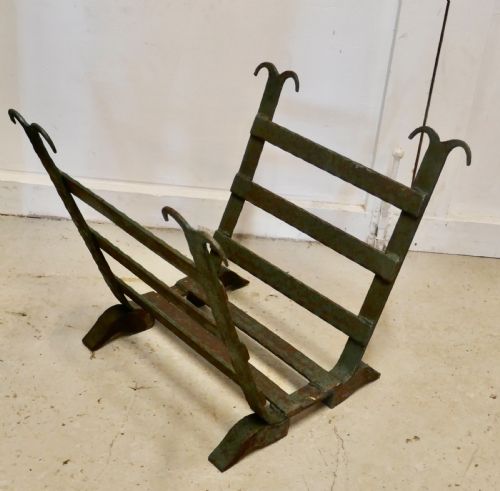
A heavy iron hearth basket serves as a practical vessel for burning wood, appearing in forms such as fire grates, log holders, and inglenook fire baskets alongside andirons.
The heavy iron hearth baskets available span periods from the nineteenth century to the early twentieth century, incorporating styles like Victorian, Gothic Revival, Neoclassical Revival, Arts and Crafts, and Tudor Revival.
Buyers will encounter various configurations on this page, including standalone baskets, sets with matching firebacks and fenders, and sturdy log carriers meant for heavy domestic use.
Materials and construction
Blacksmiths and foundries utilised cast iron and wrought iron for the primary structure, providing the necessary density and heat resistance required for daily hearth use.
Secondary elements incorporate brass, copper, and firebrick, adding functional contrast and structural support to grates, cauldrons, and companion andirons.
Some nineteenth-century hearth sets are so heavy they practically require a blacksmith just to rearrange the logs.
Evaluating construction and design
Quality rests in the thickness of the metal and the integrity of the blacksmith work, distinguishing sturdy utilitarian pieces from lighter decorative interpretations.
The harmony of assembled sets, such as baskets paired with original andirons or firebacks, elevates the visual weight and historical cohesion of the grouping.
The Heavy Iron Hearth Basket Glossary
- Andirons
- Iron supports placed on either side of the hearth to elevate logs above the floor of the fireplace. They often accompany fire baskets in larger inglenook settings.
- Fireback
- A heavy metal plate placed at the back of the fireplace to protect the masonry and reflect heat forward into the room.
- Inglenook
- A deep recess for a fireplace, traditionally large enough to accommodate seating inside the hearth space alongside a substantial basket or grate.
- Gothic Revival
- A nineteenth-century design movement drawing on medieval architectural motifs, frequently seen in pointed arches and heavy cast iron tracery on fire grates.
- Neo-Classical
- A style referencing classical antiquity, characterised by symmetrical ornamentation and restrained geometric forms on grates and firebacks.
Heavy Iron Hearth Basket: Frequently Asked Questions
How do I choose the right size fire basket?
Measure the internal dimensions of your fireplace opening carefully, allowing adequate clearance around the basket for air circulation and safety.
Consider the depth of your hearth to ensure that companion pieces like andirons or log holders fit comfortably alongside the main structure.
Can these baskets burn real wood?
Most of these pieces are constructed from heavy cast or wrought iron designed specifically to contain solid fuel and wood fires.
Check the internal condition and ensure any firebrick liners are intact before lighting a substantial fire in a period grate.
What is the difference between cast and wrought iron?
Cast iron is poured into moulds while molten, resulting in rigid, heavy components with detailed surface patterns suitable for firebacks and grates.
Wrought iron is worked by hand by a blacksmith while hot, yielding fibrous, resilient structures that handle thermal shock well in basket frames.
How do I clean a cast iron hearth basket?
Remove ash and debris regularly with a soft brush to prevent moisture retention and subsequent surface oxidation on the metal.
Apply a light coating of grate polish or stove blacking with a cloth to maintain the deep dark finish and protect the iron.