

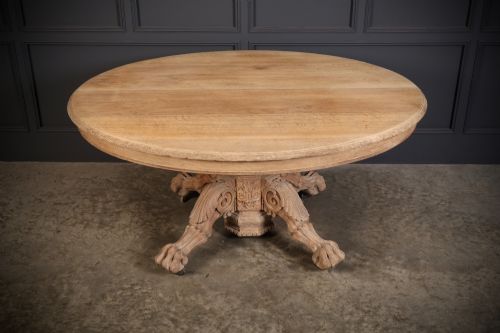
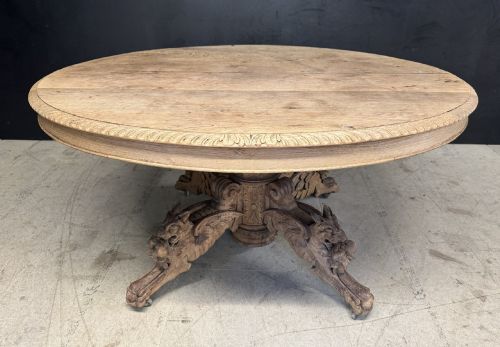
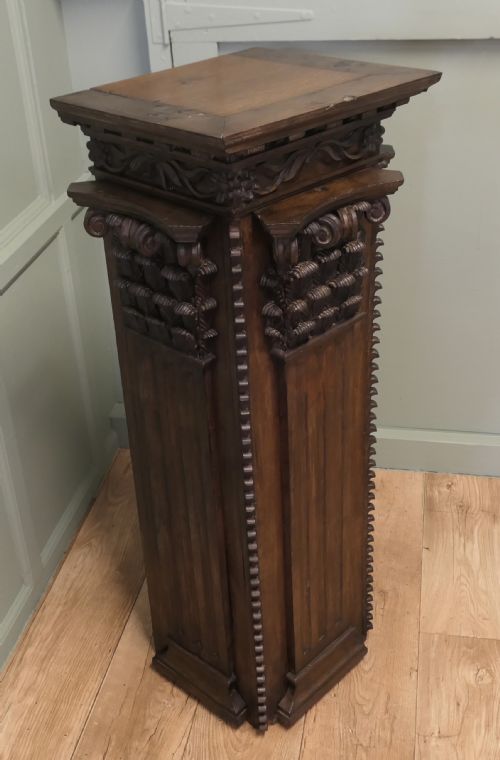
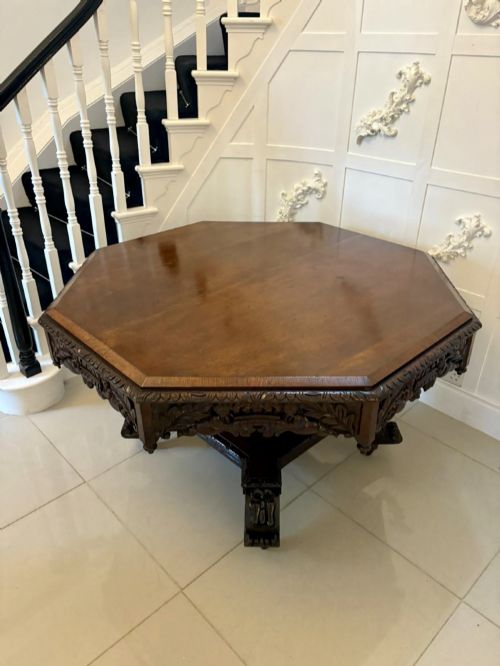
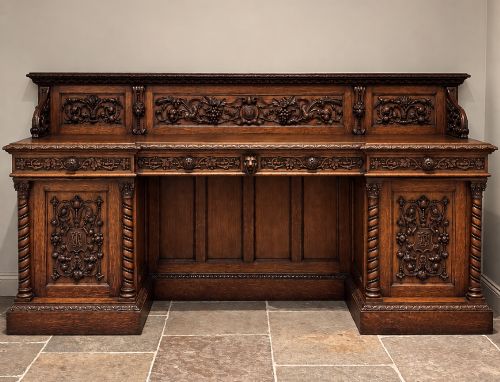
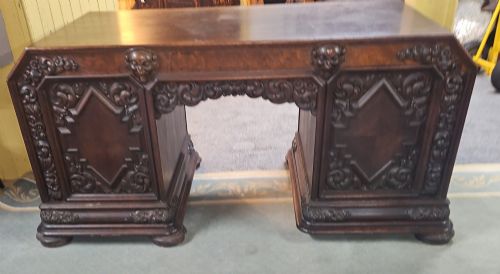


Heavy Carved Oak Pedestal
A heavy carved oak pedestal brings substantial architectural weight to a room, offering a sturdy stage for display.
Heavy Carved Oak Pedestal
A heavy carved oak pedestal represents a solid form of wooden furniture designed primarily to elevate sculpture, urns, or decorative items within a room. These pieces appear from various periods including the nineteenth century and the Victorian era, showing how makers utilised dense timber to create stable display columns.
Buyers browsing this selection will frequently encounter single display columns, grand spiral pillars, and pairs dating from the mid-Victorian era through to the early decades of the twentieth century. The forms range from simple turned shafts to richly carved revival styles that echo earlier architectural traditions.
How they were made
Makers constructed these supports using solid oak, a dense and durable timber selected for its strength and capacity to hold deep sculptural carving. Workshops employed hand tools to chisel intricate foliage, linenfold panels, or classical motifs directly into the seasoned wood.
Structural stability was achieved through heavy turning and jointing techniques, visible in pieces featuring spiral columns or faceted shafts. The natural grain of the oak was typically finished with waxes or polishes to enhance the texture and depth of the carved surfaces.
Heavy Carved Oak Pedestal Retail Price Guide 2026
Typical asking prices for heavy carved oak pedestal among the pieces listed under this phrase on Sellingantiques today, from the lower quarter to the upper quarter. They describe what is for sale here now, not the wider market.
Some nineteenth-century columns were turned so vigorously they seem ready to dance out of the room.
What varies in quality
The distinction between standard examples and the finest pieces lies entirely in the ambition and execution of the carving. Master carvers produced crisp, deeply undercut foliage and figures that catch the light, whereas lesser items rely on shallow, mechanical stamping or simple lathe work.
Proportion and timber selection also divide the range significantly. Superior examples utilise well-figured solid oak with balanced architectural proportions that maintain visual harmony from base to capital.
The Heavy Carved Oak Pedestal Glossary
- Oak
- A hard, heavy timber native to temperate regions, prized for its durability and prominent grain pattern. It forms the primary structural and decorative material for these pedestals.
- Pedestal
- A freestanding vertical support used to elevate a bust, urn, or decorative object. It typically consists of a base, a central column, and a top platform.
- Spiral Pillar
- A column carved with a twisting, rope-like helix running along its vertical length. This decorative technique creates strong diagonal movement and visual rhythm.
- Victorian Revival
- A nineteenth-century design movement that reinterpreted earlier historical styles such as Jacobean, Tudor, or French Renaissance. It brought robust carving and dark timber back into fashion.
Heavy Carved Oak Pedestal: Frequently Asked Questions
Where should I place a heavy pedestal?
These columns sit best in hallways, corners of reception rooms, or substantial living spaces where their weight does not overwhelm the floor area.
Ensure the floor surface is level and capable of supporting a dense timber structure carrying a heavy display item.
How do I clean carved oak?
Dust the intricate carvings regularly with a soft-bristled brush to prevent dirt from settling in the recesses of the wood.
Apply a traditional beeswax occasionally to nourish the oak and maintain a soft sheen without building up excess residue.
Can these columns support heavy sculptures?
Solid oak construction provides immense structural strength, making these pedestals naturally suited for heavy bronze figures, marble busts, or large ceramic urns.
Check that the top platform offers sufficient surface area to balance the weight of the object safely.
How do I date an oak pedestal?
Examine the tool marks, timber shrinkage, and the specific revival style referenced in the carving to estimate the period of manufacture.
Nineteenth-century examples often display machine assistance alongside hand carving, whereas earlier interpretations show entirely manual joinery.