




Heart Trinket Box
When you handle a heart trinket box, you are holding a small token of affection shaped from sterling silver, glass, or fruitwood that survived from the late nineteenth or early twentieth century.
Heart Trinket Box
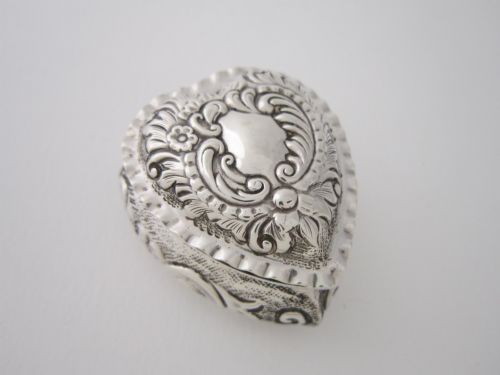
A heart trinket box is a compact lidded container designed to hold small personal valuables, rings, or pins. The form appears frequently in late Victorian and Edwardian manufacturing, executed by silversmiths and glassmakers across England.
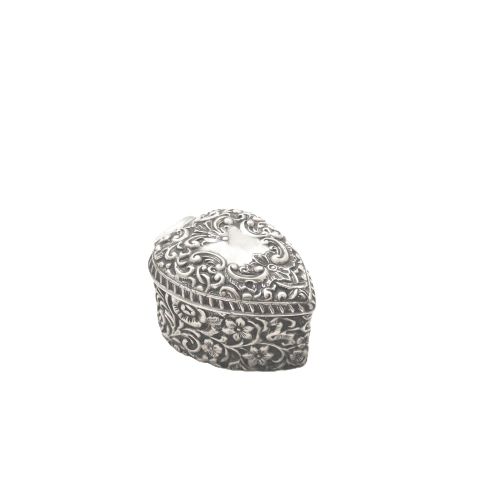
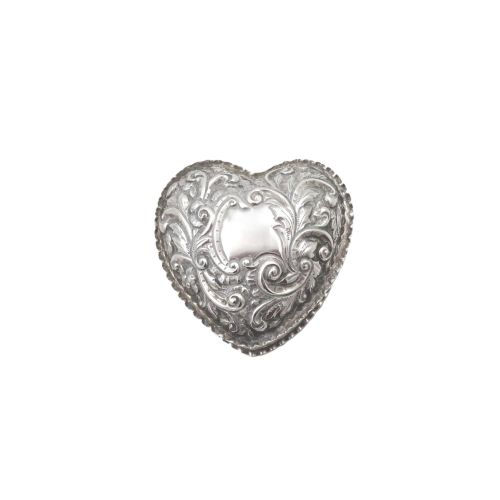
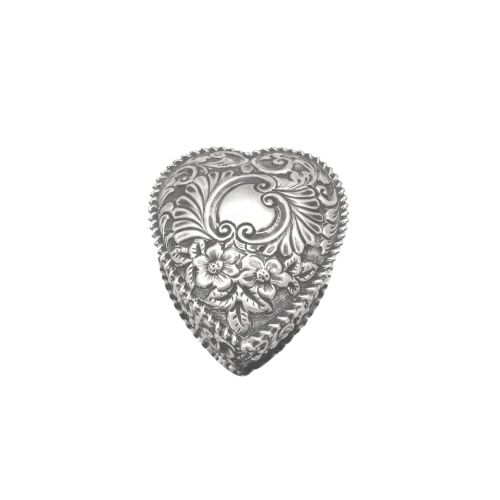
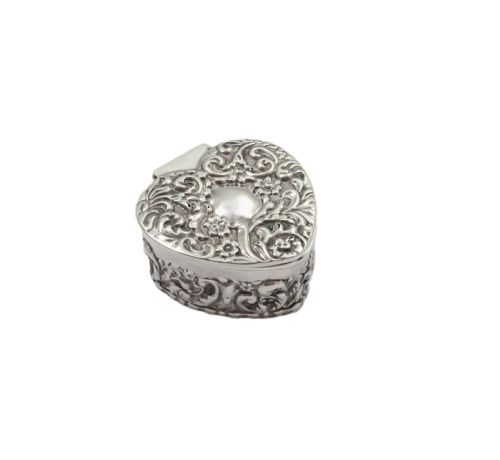
The version most likely to meet you on this page is a sterling silver lidded box bearing hallmarks from Birmingham or London assay offices, often dating between 1890 and 1910. These metal pieces sit alongside cut glass vessels with silver tops, enamel pill boxes, and occasional wooden folk art examples.
Makers ranged from specialist silversmiths to larger firms, adapting the cardioid outline for dressing tables, vanity sets, and pocket transport. While silver dominates the surviving record, buyers also encounter ceramic, treen, and bone iterations from the nineteenth century.
Evaluating Quality and Craftsmanship
Quality in a heart trinket box rests upon the crispness of the stamping, the gauge of the silver, and the structural integrity of the hinge. Thicker metal resists denting and maintains its shape around the cardioid curve, whereas thin silver yields easily to pressure.
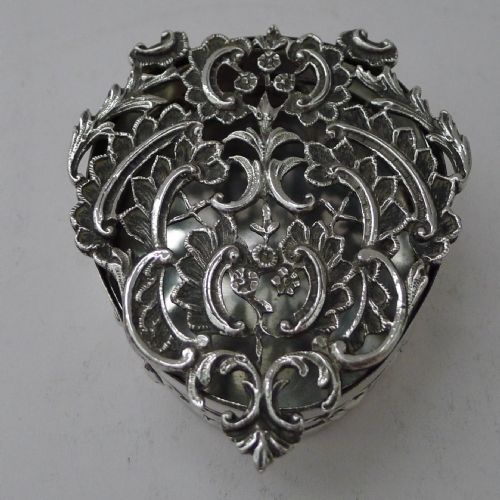
The detail of surface decoration separates standard production from superior output, visible in deeply chased repoussé motifs, clean hand-piercing, and intact interior linings. Maker attribution also influences standing, with well-documented workshops demonstrating finer finishing on catches and rims.
For glass and ceramic pieces, clarity of the crystal, absence of chips along the cut facets, and a snug fit between the silver mount and the vessel body determine the standard.
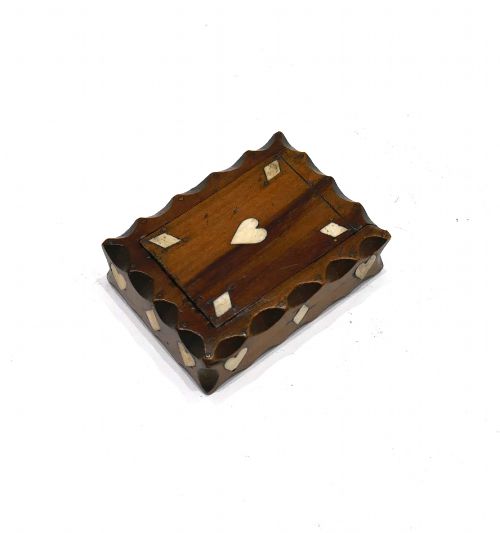
Several nineteenth-century boxes feature secret bone heart inlays hidden away on the undersides of unassuming wooden lids.
William Comyns·George Adam Scheid·Deakin And Francis
The Heart Trinket Box Glossary
- Hallmark
- A series of official marks stamped on precious metals indicating the standard of purity, assay office, and year of manufacture. These small stamps allow historians to date silver boxes precisely.
- Repoussé
- A metalworking technique where the artisan hammers the design from the reverse side to form raised relief patterns on the front. This method creates the ornate floral and scroll borders seen on many Victorian lids.
- Treen
- Small handmade wooden objects produced before the advent of mass manufacturing. These domestic items often feature carved details or inlaid bone.
- Pierced work
- Metal ornament formed by cutting or sawing openings through the sheet to create an openwork lattice pattern. It appears on Edwardian baskets and box lids.
- Silver gilt
- Sterling silver that has been coated with a thin layer of gold on the surface. This treatment provides a warm, rich interior finish.
Heart Trinket Box: Frequently Asked Questions
What were heart trinket boxes used for?
These small containers served primarily on Victorian and Edwardian dressing tables to store rings, pins, and delicate pieces of jewellery out of sight.
People also carried smaller pill and patch boxes in pockets or reticules for daily personal use outside the home.
How do I date a silver heart box?
You date the piece by examining the letter punch and assay office symbols within the stamped hallmarks on the metal rim or base.
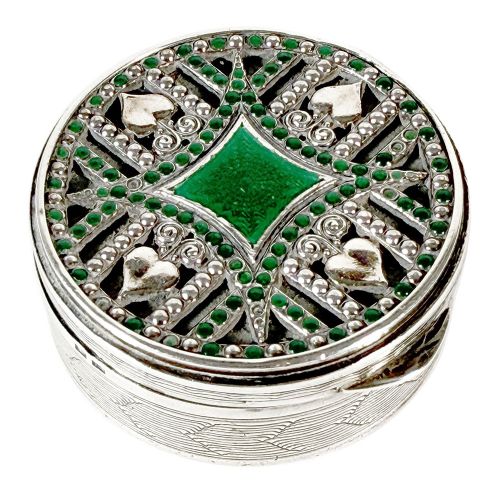
Stylistic cues such as the flowing organic lines of Art Nouveau enamel or the dense floral embossing of late Victorian work also indicate the era.
Are these boxes made entirely of solid silver?
Most sterling silver examples feature solid silver lids and bodies formed from sheet metal, though some rely on weighted bases for stability.
Interior compartments typically retain their original fabric linings of silk, velvet, or satin to protect delicate jewellery.
How should I clean an antique silver box?
You should use a soft microfibre cloth and avoid harsh chemical dips that strip away the dark oxidation highlighting the chased details.
Keeping the box in a dry environment prevents tarnishing and protects the fragile historic interior textiles from moisture damage.