







Hardwood Jardiniere Stand
When you search for a hardwood jardiniere stand, you step into a tradition of displaying heavy plants and vases on elevated timber furniture.
Hardwood Jardiniere Stand
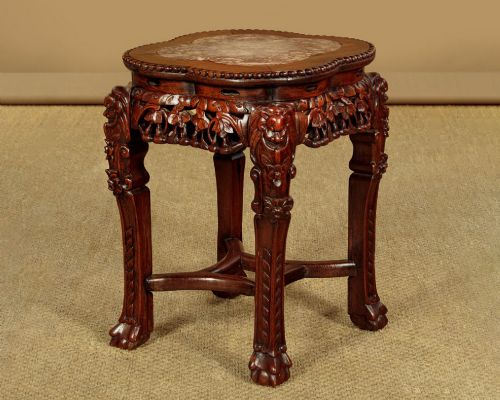
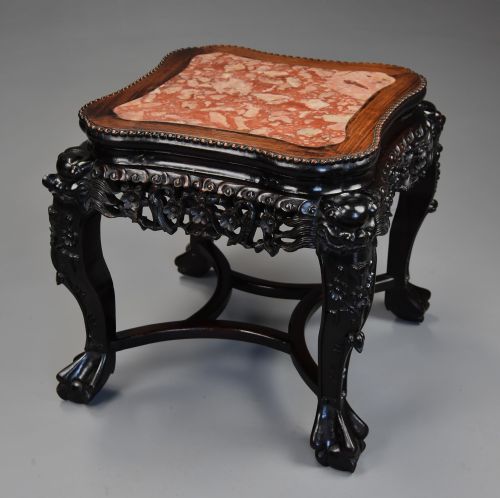
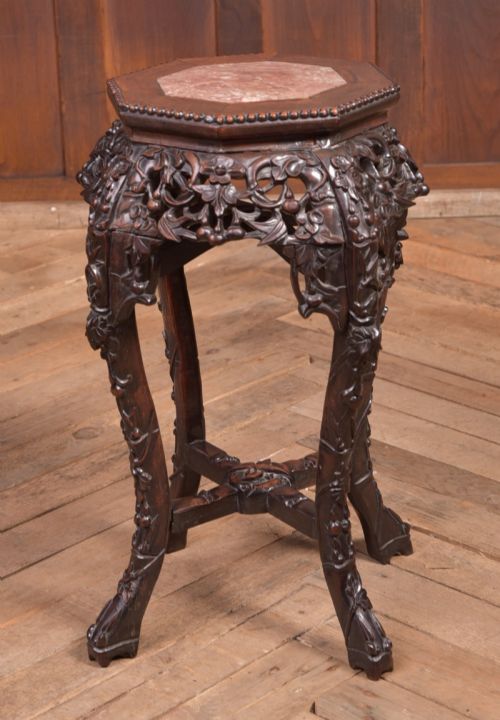
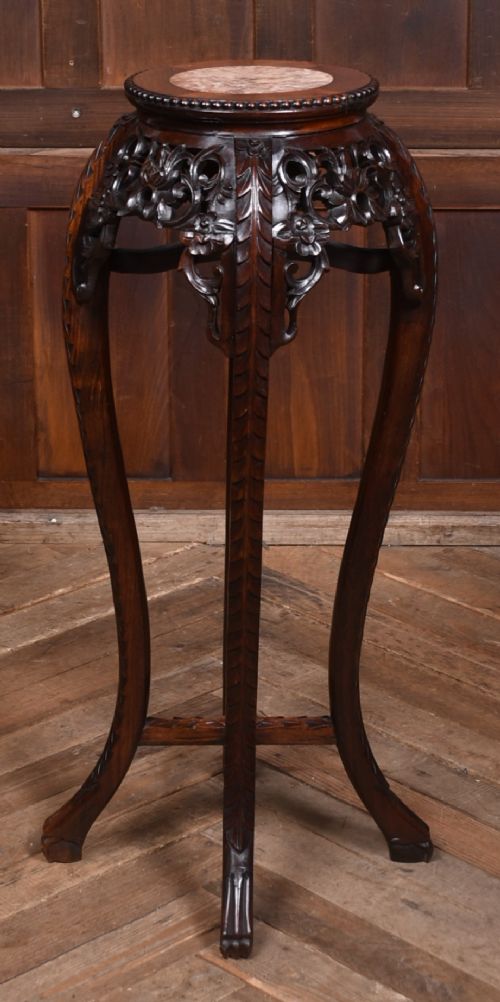
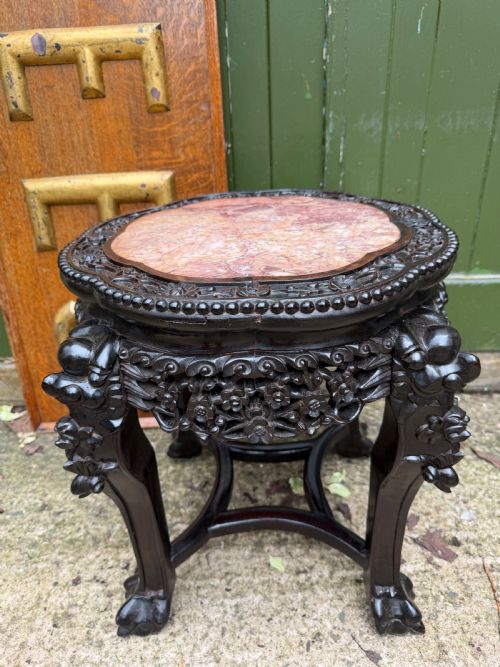
A hardwood jardiniere stand provides an elevated platform designed specifically to display heavy planters, urns, and decorative vases within a room. Most examples found here originate from nineteenth-century Chinese export workshops or Japanese Meiji period production, reflecting global Victorian tastes for oriental interiors.
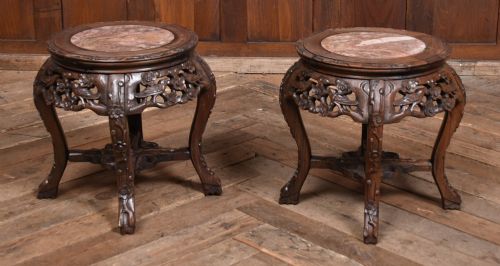
The primary forms vary from low occasional tables to tall pedestals, frequently incorporating a circular or shaped inset top. These pieces served practical functions in period homes by protecting flooring and lifting greenery to window light.
Makers utilised dense timbers to support heavy ceramic vessels without warping, producing sturdy furniture intended for daily domestic utility. Surviving pieces often demonstrate regional carving traditions, ranging from floral Qing dynasty motifs to simpler Anglo-Indian structures.
Materials and construction
Craftsmen relied upon dense tropical timbers such as padouk, rosewood, and hongmu, selecting them for their natural weight and resistance to moisture from potted plants. These dark woods were frequently hand-carved with intricate floral borders, claw feet, or openwork aprons.
Many tables incorporate smooth stone surfaces, setting variegated rouge or white marble directly into the timber frame to resist water damage from overflowing watering cans. Joinery techniques prioritised rigidity, ensuring the tall legs could balance heavy ceramic jardinieres safely.
Hardwood Jardiniere Stand Retail Price Guide 2026
Typical asking prices for hardwood jardiniere stand among the pieces listed under this phrase on Sellingantiques today, from the lower quarter to the upper quarter. They describe what is for sale here now, not the wider market.
Listings feature items dated across the nineteenth and early twentieth centuries, spanning Victorian, Edwardian, and Meiji production periods.
Factors of quality
The standard of carving defines the upper tier of these pieces, showing crisp relief work, undercut details, and symmetrical joinery rather than shallow or mechanical stamping. Superior examples retain their original matching marble inserts without hairline fractures or replacement panels.
Scale and timber selection also divide ordinary utility stands from exceptional exhibition pieces, with dense padouk and figured rosewood commanding greater attention. Completed items that survive with matched pairs or intact mother-of-pearl inlay represent more ambitious original commissions.
Liberty of London
The Hardwood Jardiniere Stand Glossary
- Jardiniere
- A decorative ceramic or metal pot designed to hold plants and flowers indoors. These vessels usually sit atop dedicated wooden pedestals or low tables.
- Padouk
- A heavy, durable tropical hardwood noted for its reddish-brown colour and stability. Cabinetmakers favoured this dense timber for load-bearing plant stands.
- Hongmu
- A traditional Chinese classification for dense, red-hued hardwoods used in fine furniture production. Pieces constructed from this material often display complex hand-carved decoration.
- Qing Dynasty
- The final imperial dynasty of China, spanning from the seventeenth to the early twentieth century. Many surviving stands reflect the artistic motifs and export trades associated with this era.
- Meiji Period
- An era in Japanese history marked by extensive international trade and artistic output directed at Western markets. Works from this time frequently feature meticulous hand-carved woodwork.
Hardwood Jardiniere Stand: Frequently Asked Questions
What is a jardiniere stand?
A jardiniere stand is a piece of furniture built to elevate a plant pot or flower bowl above the floor. They protect interior surfaces and display decorative ceramics at a comfortable viewing height.
These items range from low tables meant for large ceramic fishbowls to tall, slender pedestals supporting smaller trailing plants. Their sturdy construction ensures they can bear significant weight without tipping.
Where were these stands made?
The majority of these pieces originated in China and Japan during the nineteenth and early twentieth centuries, created specifically for export to European markets. Makers also produced similar furniture in Anglo-Indian and Victorian colonial workshops.
Craftsmen adapted local timber species to satisfy the immense Western demand for oriental interior decoration. This cross-cultural trade resulted in distinct regional interpretations of standard plant stand forms.
How do I care for a marble top?
Marble inset surfaces require gentle cleaning with a damp cloth and mild soap to avoid dulling the stone polish. Avoid using abrasive household cleaners or acidic liquids that can etch the polished surface.
Ensure that watering cans or wet saucers do not sit directly on unsealed wooden edges surrounding the stone. Regular dusting preserves the natural lustre of both the timber frame and the inset panel.
How do I date a hardwood stand?
Dating relies upon examining the density of the timber, the depth of the hand-carved details, and the construction methods used underneath the top. Nineteenth-century examples typically display heavier tropical hardwoods and hand-cut joinery rather than modern machine fixings.
Stylistic cues such as Qing dynasty motifs or Meiji period carving characteristics help narrow the production era. Associated ceramic vessels or registry marks can also provide helpful chronological context.