

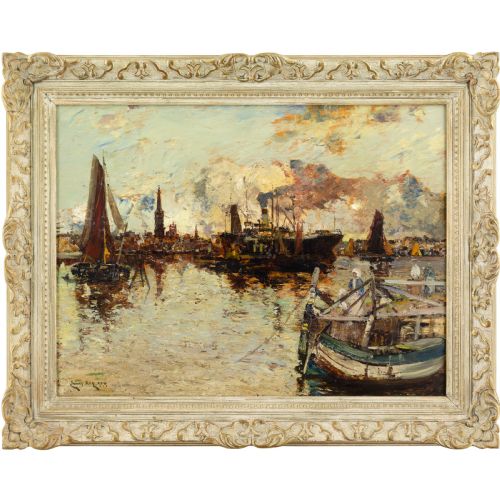
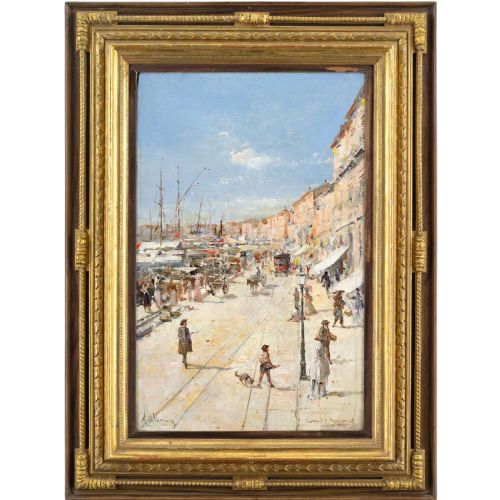
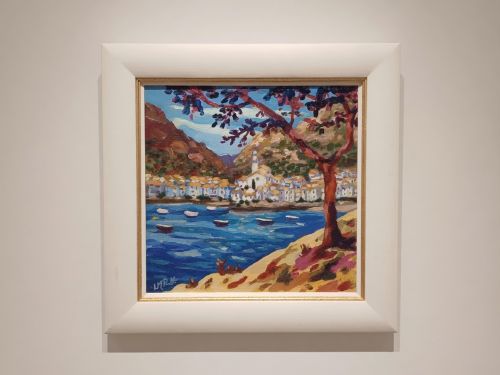
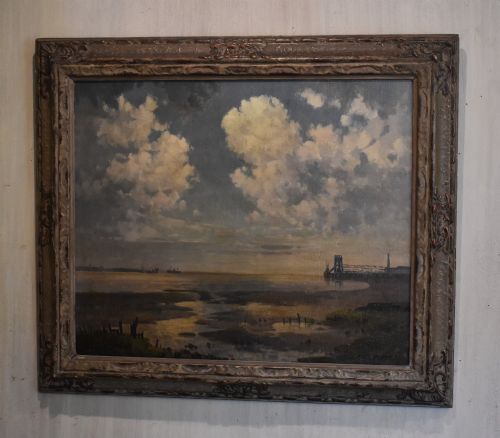
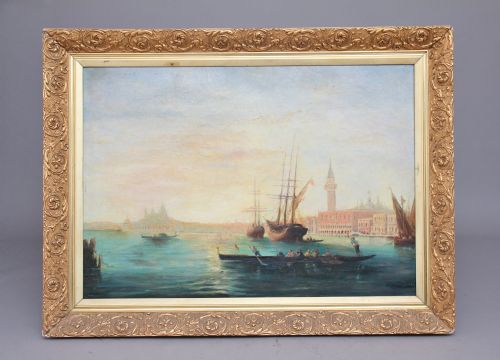
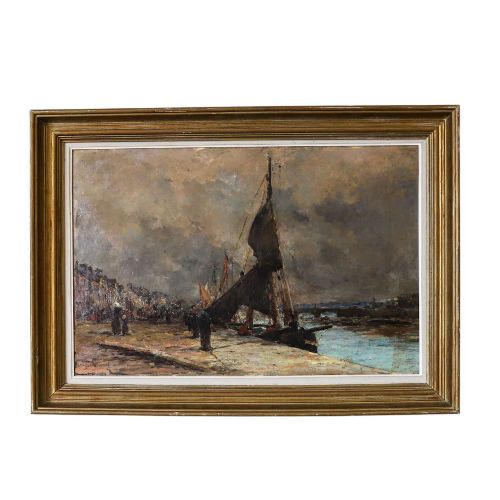


Harbour Scene Canvas Painting
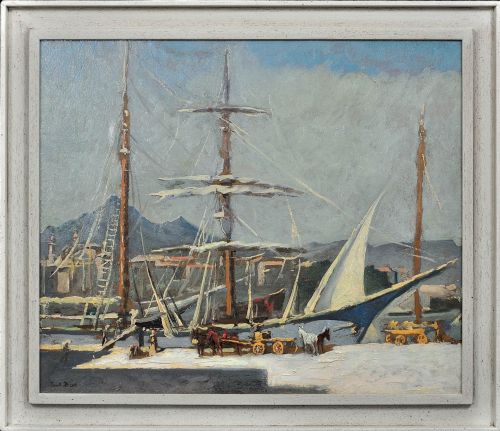
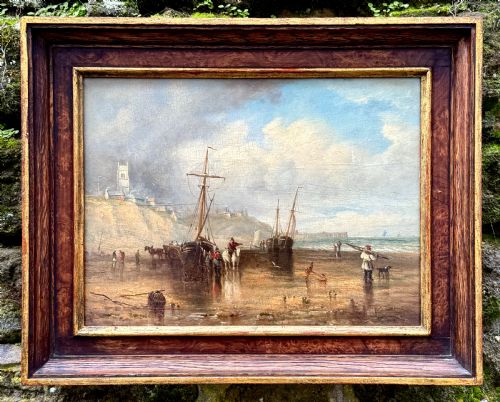
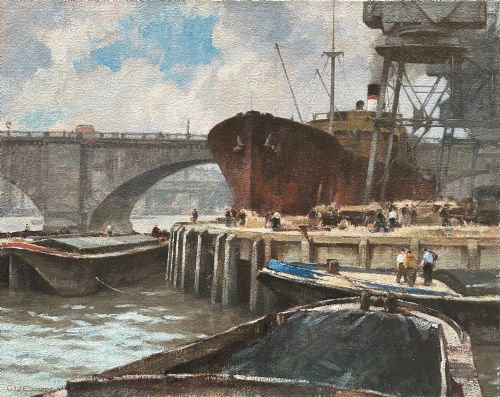
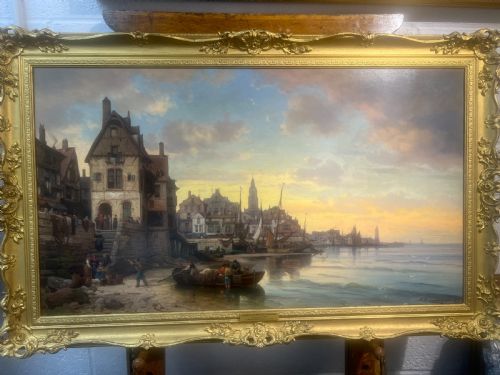
When you search for a harbour scene canvas painting, you step into centuries of maritime life rendered in rich oil and pigment.
Harbour Scene Canvas Painting
A harbour scene canvas painting captures coastal activities, shipping vessels, and bustling quaysides across diverse eras. Buyers encounter Victorian compositions alongside mid-century interpretations stretching from the seventeen-hundreds through to nineteen-sixty.
The selections span British coastal villages, Venetian lagoons, Sicilian ports, and northern European estuaries. Most examples rely upon traditional oil paint applied to woven canvas or wood panels, framed often in gilt timber.
Artists record specific locations such as Peel Harbour, Mevagissey, and the Port of Ostia with varying degrees of impressionistic freedom. These works document the changing face of maritime trade and leisure over generations.
Materials and Construction
Painters used oil paint formulated from ground pigments suspended in drying oils, layered onto primed canvas stretched over wooden frames or applied directly to wood boards. This medium allowed artists to build up textured impasto for water and sky, or blend smooth gradients for atmospheric light.
Sir Edwin Landseer makes a surprising appearance among the coastal vessels through a nineteenth-century follower's brush.
Standards of Execution
Quality rests upon the artist's handling of light, atmosphere, and maritime architecture within the composition. Stronger works demonstrate a confident command of perspective regarding shipping vessels, rigging, and coastal reflections.
The depth of pigment and stability of the underlying canvas or board dictate the longevity and visual impact of the piece. Superior examples maintain vibrant tonalities and cohesive brushwork that capture the movement of water and air.
James Kay RSW·Augusto Alberici·Paul Bret·Thomas Creswick·Charles Euphraisie Kuasseg·William Edward Webb·Gyrth Russell·Raymond Picque·George Turland Goosey·Adrian Van Porten·Donald McIntyre·T.S. Wallis·James Webb·Owen Bowen·John Callow·William Lambert Bell·James Torrington Bell·Gustave De Breanski·Edward M. Elliott
The Harbour Scene Canvas Painting Glossary
- Impressionism
- A nineteenth-century painting style characterised by relatively small, thin, yet visible brush strokes and an emphasis on accurate depiction of light. It altered how artists recorded coastal atmospheres.
- Impasto
- The process or technique of laying on paint or thick pigment so that it stands out from a surface. This method is frequently utilised to render churning water or thick clouds.
- Maritime
- Connected with the sea, shipping, or marine navigation. Such scenes form the primary subject matter of these coastal paintings.
- Estuary
- The tidal mouth of a large river, where the tide meets the stream. Painters often recorded these transitional waterways for their shifting light and varied shipping traffic.
Harbour Scene Canvas Painting: Frequently Asked Questions
What periods do these paintings cover?
The available selection spans from the seventeenth century through to the mid-twentieth century. Pieces reflect prevailing aesthetic movements of their respective decades.
Buyers will find Victorian works alongside Impressionist and mid-century modern interpretations of coastal life.
How should I hang an oil painting?
Select a wall space away from direct sunlight and excessive humidity to protect the oil paint and canvas. Proper picture wire and wall anchors suited to the weight of the gilt frame are essential.
Maintain stable room temperatures to prevent the wooden stretcher frames and canvas from warping over time.
How do I identify a coastal scene's location?
Artists often inscribed titles, signatures, or location names on the reverse of the canvas or on the stretcher bars. Quayside landmarks, specific vessel types, and architectural clues within the brushwork also offer geographical context.
Signatures linked to documented regional art movements, such as the St Ives School, help pinpoint the origin.