






Harbour Landscape Wall Art
Harbour landscape wall art captures maritime life and coastal towns through oil and watercolour, bringing historic ports and shipping scenes directly into domestic spaces.
Harbour Landscape Wall Art
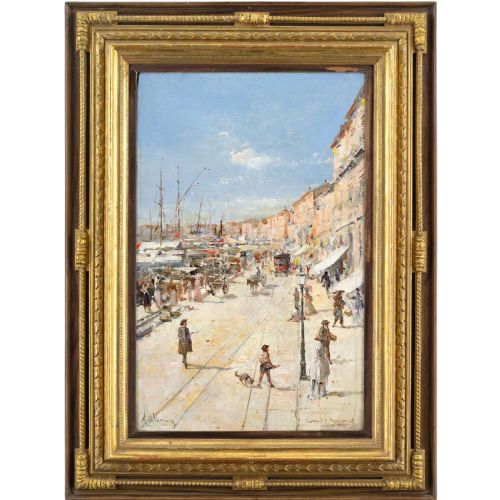
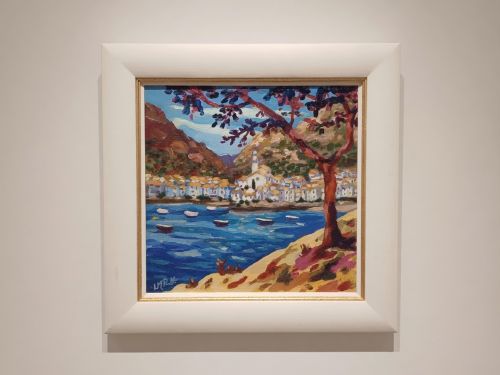
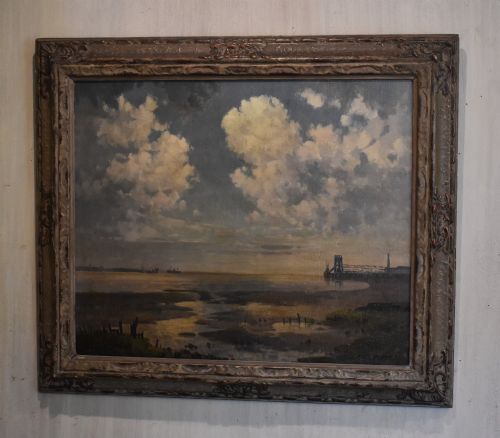
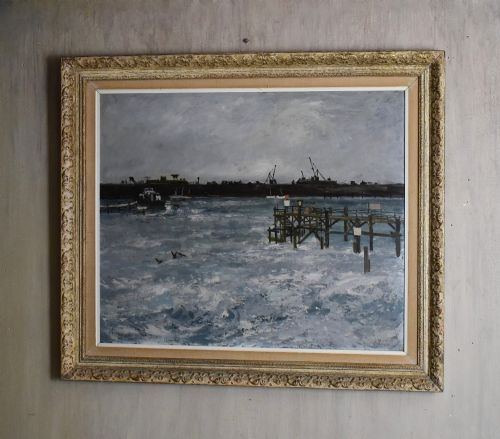
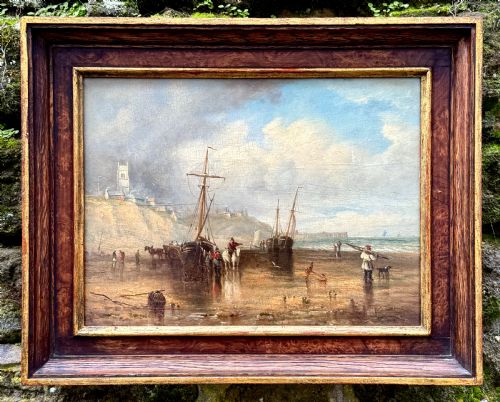
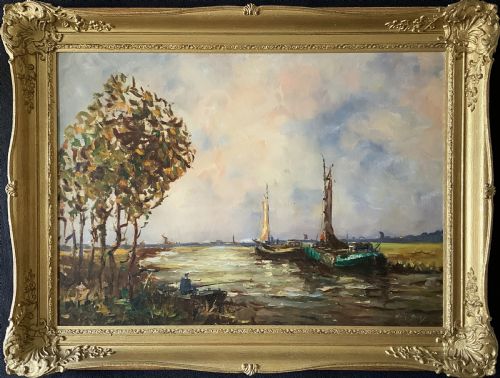
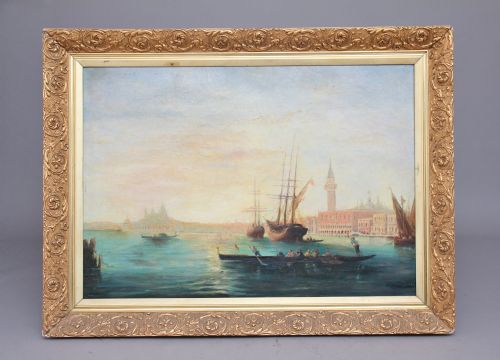
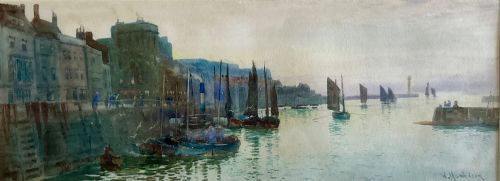
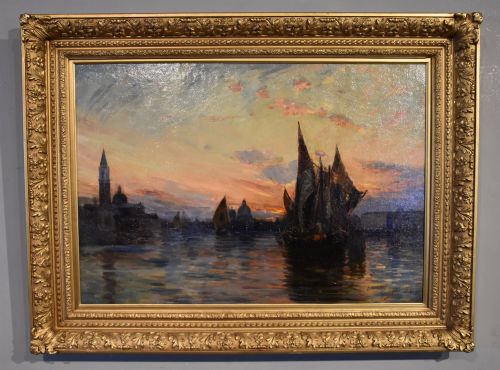
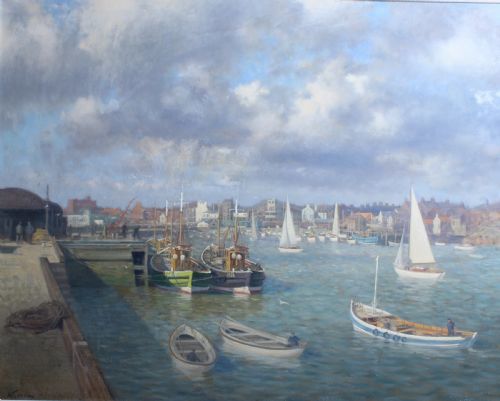
Harbour landscape wall art encompasses paintings and watercolours depicting coastal scenes, ports, shipping, and maritime architecture from various periods. These works record the changing activity of tides, quaysides, and fishing boats across British and European locations. A buyer searching this phrase encounters works spanning from the eighteenth century through to the mid-twentieth century. The most common representations on this page are oil paintings and watercolours originating from the nineteenth and early twentieth centuries.
Materials and Construction
Artists working within this genre utilised oil paint applied to canvas, board, or wood panels, alongside watercolours worked on paper. Oil mediums allowed for rich textures and deep tones suitable for water and sky, while watercolours provided transparency and immediacy for coastal light. Canvases and panels were mounted in wooden frames, frequently incorporating gilt wood mouldings that complemented the maritime subject matter.
Techniques varied from the precise academic rendering found in nineteenth-century maritime pieces to the looser, expressive brushwork characteristic of British Impressionism and mid-century modern interpretations. Painters built up surfaces through layered pigments, capturing the reflective qualities of the sea and the atmospheric conditions of specific ports.
Artists frequently chased the salt air, leaving behind enduring records of bustling quaysides and quiet tidal flats.
Factors Determining Quality
Quality within these works rests upon the artist's command of light, spatial depth, and atmospheric perspective in rendering water and architecture. The handling of complex coastal elements, such as rigging, reflections, and changing weather, distinguishes superior compositions from routine topographical records.
The integration of the medium to the support, the preservation of the original pigment surface, and the harmony of the framing contribute to the overall standard of each piece.
Kenneth Cozens·Edward Mills·John E. Aitken·William Banks Fortescue·James Kay·Augusto Alberici·Lucy Pratt·Clive Browne·Peter Brannan·Paul Bret·Thomas Creswick·Willem Bos·William Matthison·Thomas Hodgson Liddell·Walter Goodin·George F Pennington·Alfred George Morgan·Charles William Wyllie·Edward Matthew Elliott·Gyrth Russell·Jean-Baptiste Olive·William Lee Hankey·Donald McIntyre·T.S. Wallis·James Webb
The Harbour Landscape Wall Art Glossary
- Watercolour
- A painting method in which the paints are made of pigments suspended in a water-based solution. This medium provides translucent washes of colour particularly suited to capturing atmospheric coastal skies and light.
- Gilt wood
- Wood that has been coated with a thin layer of gold leaf or metallic gilt paint. Such frames are frequently found enclosing nineteenth and twentieth-century maritime paintings.
- British Impressionism
- An art movement that developed in the late nineteenth century characterised by visible brushstrokes and an emphasis on light in its changing qualities. Artists working in this style focused on domestic coastal scenes and harbours.
- Maritime painting
- Works of art that depict or draw main inspiration from the sea, ships, harbours, and coastal views. This genre encompasses both documentary records of shipping and expressive coastal landscapes.
Harbour Landscape Wall Art: Frequently Asked Questions
What periods do these paintings cover?
The available selection spans multiple centuries, beginning with mid-eighteenth-century works and extending through the Victorian era to the mid-twentieth century. Mid-century modern and post-impressionist pieces also appear alongside earlier traditional marine works.
This broad chronological range allows collectors to select pieces reflecting specific historical artistic movements and changing attitudes toward coastal topography.
How were these coastal scenes framed?
Many works are housed in their original wooden or gilt wood frames, which reflect the framing conventions of their respective periods. These frames range from ornate nineteenth-century Victorian mouldings to simpler mid-century wooden profiles.
Original frames provide context for the age and origin of the painting, though framing styles vary considerably across the different decades represented.
Where do the depicted harbours originate?
The listings include numerous British fishing ports and coastal towns, notably St Ives and Whitby in Cornwall and Yorkshire, alongside the River Thames in London. European locations are also well represented, featuring ports in France, Italy, the Netherlands, and Sicily.
This geographical spread documents both local British maritime heritage and international coastal destinations recorded by travelling artists.
How should I care for oil and watercolour art?
Oil paintings on canvas or board require stable environmental conditions away from direct sunlight and extreme humidity fluctuations to protect the pigment and support. Watercolours on paper demand careful protection behind glass with UV-filtering materials to prevent fading.
Regular inspection of the backing boards and frame fixings helps maintain the structural integrity of these historic artworks over time.