
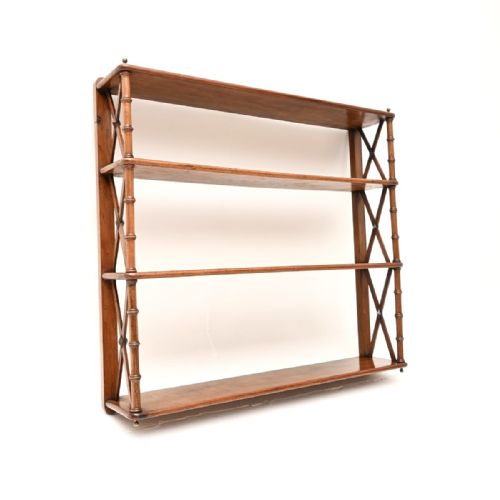
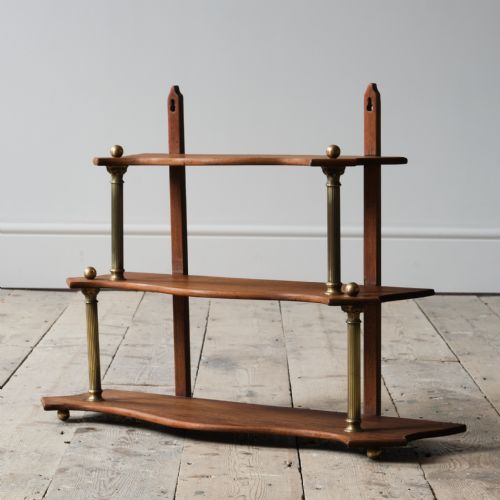
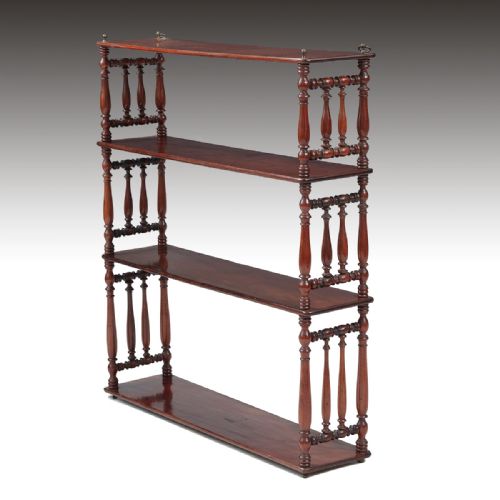
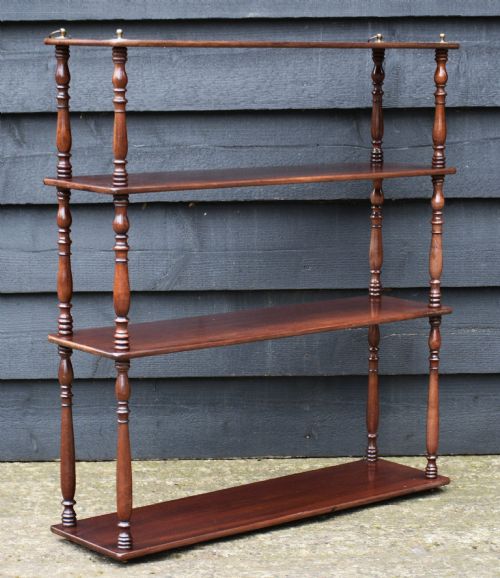





Hanging Wall Bookcase
A hanging wall bookcase lifts your volumes off the floor and frames them neatly against plaster, turning routine storage into a display of timber and binding.
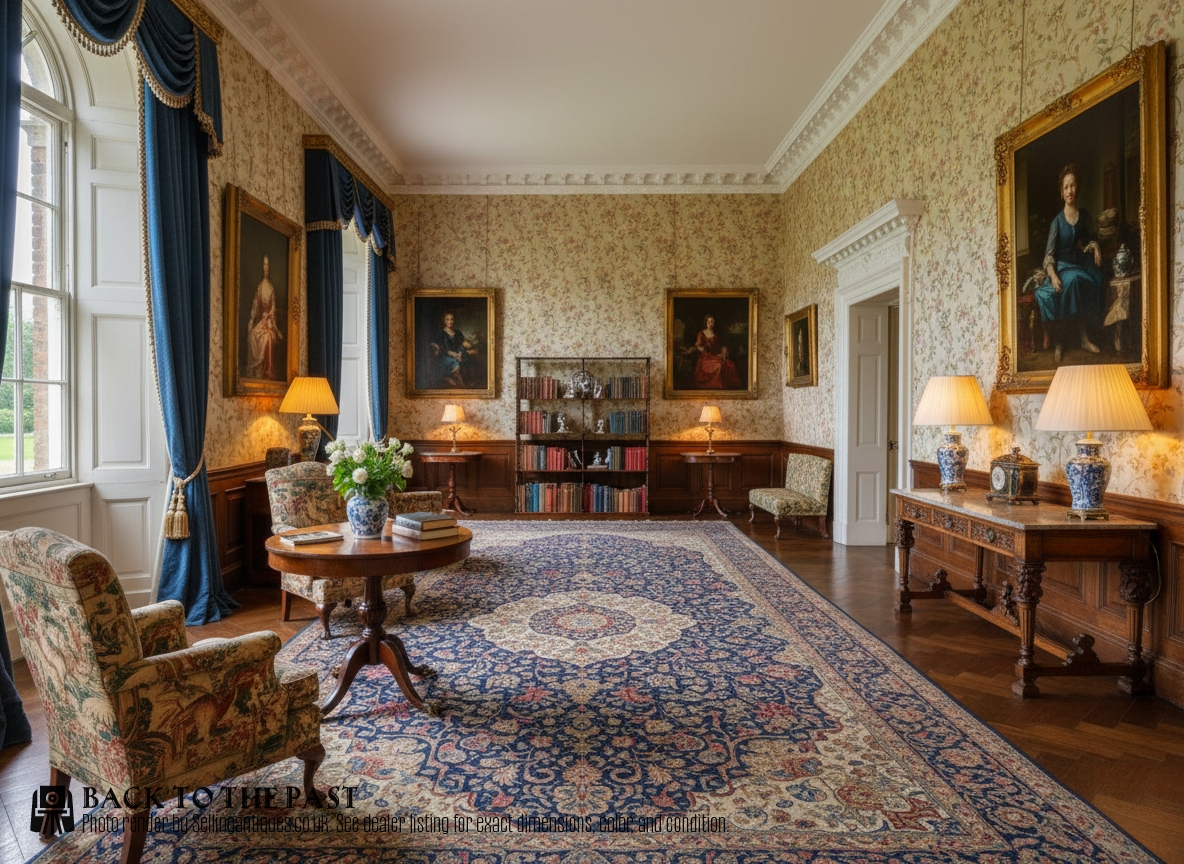
Hanging Wall Bookcase
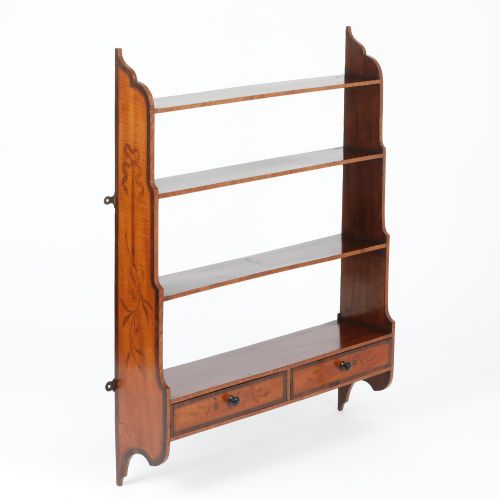
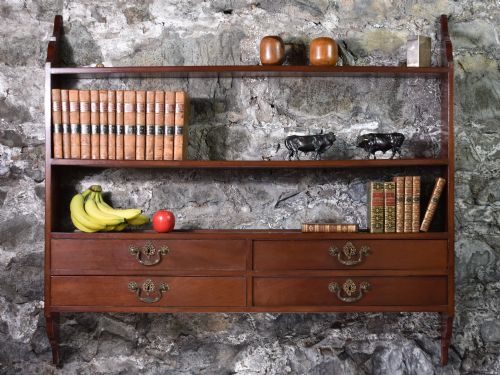
A hanging wall bookcase offers compact shelving designed to suspend directly from structural fixings rather than rest upon floorboards. These pieces serve domestic spaces needing accessible book storage without sacrificing valuable floor area.
Mahogany forms the backbone of these selections, appearing alongside walnut, oak, satinwood, and painted timbers. Makers shaped these materials across Georgian, Victorian, Edwardian, and Regency periods to create wall-mounted vessels for books and display.
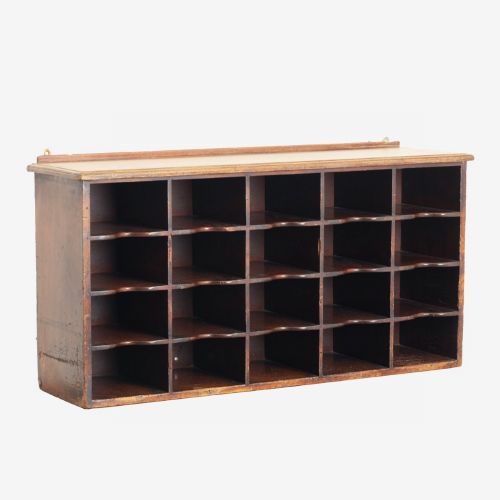
The objects span open wall shelves, hanging waterfall bookshelves, glazed wall cabinets, and desktop pigeon holes. Formats range from modest single-tier shelves to larger multi-tier units with enclosed cupboards below.
Judging Quality
The refinement of timber selection and inlay work dictates the standing of a piece, with figured grains and careful satinwood banding marking out superior execution. Structural integrity in the hanging points and joints remains essential for pieces meant to bear heavy loads of books.
Proportion and stylistic cohesion distinguish standard workshop output from exceptional examples attributed to known designers. The integration of secondary woods and the crispness of mouldings reveal the level of care invested by the original maker.
One Edwardian wall shelf is politely designated as an attractive whatnot, ready to rescue your knick-knacks from gravity.
George Edmund Street·John Moyr Smith·Arthur Simpson
The Hanging Wall Bookcase Glossary
- Waterfall bookshelves
- Tiers of shelves that step back progressively from bottom to top, creating a cascading profile often seen in mahogany.
- Whatnot
- An open set of multi-tiered shelves used for displaying ornaments and small books, popular in the Victorian and Edwardian periods.
- Pigeon holes
- Small, open compartment divisions designed for sorting correspondence or papers, sometimes integrated into desktop or wall units.
- Glazed cabinet
- A wall-mounted storage unit featuring glass panes fitted into doors to protect books or display items from dust.
- Barley twist
- A turned wooden column carved in a spiral screw pattern, frequently found on 19th-century cupboards and shelf supports.
Hanging Wall Bookcase: Frequently Asked Questions
Were these always meant for books?
Many structures served flexible domestic purposes, holding ceramics, plates, letters, or decorative ornaments alongside bound volumes.
Listings often describe pieces interchangeably as shelves, display cabinets, or plate racks depending on the depth of the ledges.
How do I tell a Georgian piece from a Victorian one?
Georgian examples generally display restrained classical proportions, rectilinear mahogany carcases, and subtle mouldings without excessive ornamentation.
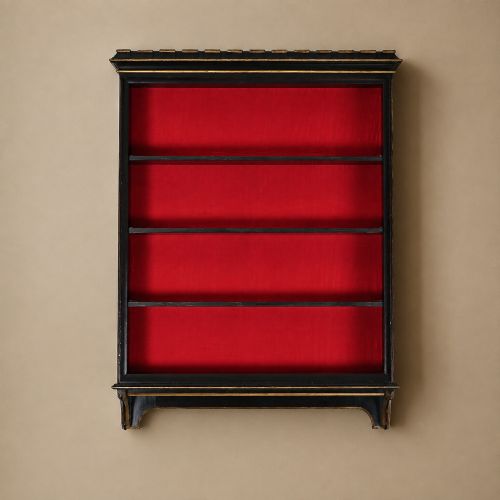
Victorian versions frequently introduce darker ebonised finishes, Gothic revival details, barley twists, or heavier walnut and oak constructions.
How should I care for antique wall timber?
Keep hanging bookcases away from direct heat sources and strong sunlight to prevent the timber from drying, warping, or fading.
Apply traditional beeswax occasionally to nourish polished mahogany and walnut surfaces while avoiding modern silicone-based sprays.