

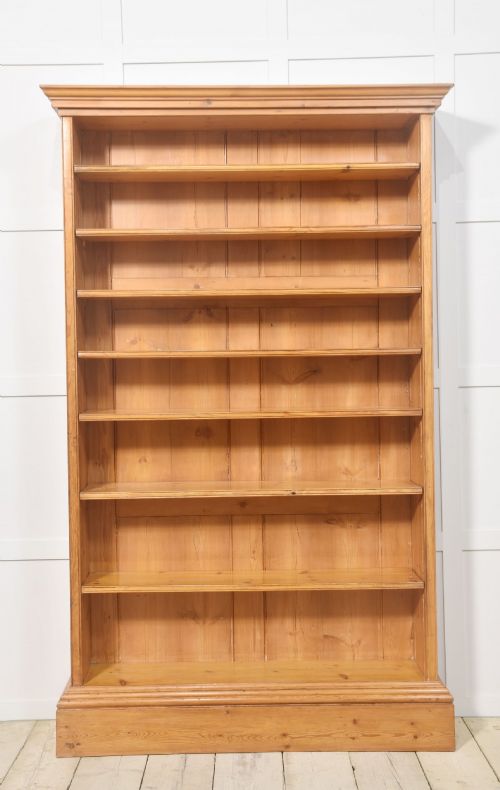
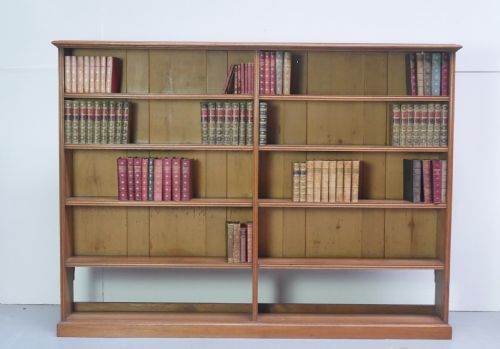


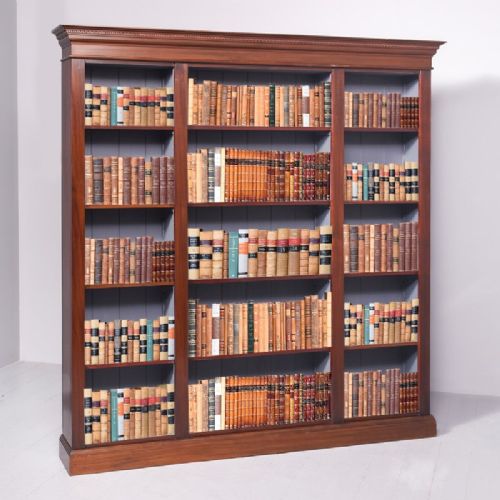


Traditional Open Wall Bookcase
A traditional open wall bookcase offers open shelving for books and display, combining utility with period timber character.
Traditional Open Wall Bookcase
A traditional open wall bookcase provides accessible storage for volumes and decorative objects without the visual weight of glazed doors. When exploring a traditional open wall bookcase, expect formats ranging from floor-standing pieces to wall-hanging shelves.
The evidence shows origins spanning the Georgian era, the Victorian period, and the Edwardian years. Pieces appear in distinct iterations, from rustic country pine to formal mahogany revival styles.
Most examples lean towards practical domestic use, taking the form of upright bookcases or hanging shelves. Formats vary from large standing units to compact wall shelves suited for smaller rooms.
How they were made
Carpenters relied on solid timber construction, employing pine, mahogany, oak, pitch pine, and cherry wood. Softwood also appears frequently, particularly in country pieces intended for everyday utility.
Joinery techniques matched the wood to its purpose, while metal additions such as brass fittings and iron elements provided structural support and adjustment mechanisms.
Surfaces were finished to highlight the natural grain of the wood, whether through polishing fine mahogany or leaving pine with a simpler, rustic character.
Traditional Open Wall Bookcase Retail Price Guide 2026
Typical asking prices for traditional open wall bookcase among the pieces listed under this phrase on Sellingantiques today, from the lower quarter to the upper quarter. They describe what is for sale here now, not the wider market.
Some pine bookcases retain ink stains and marginalia on their shelves from centuries of late-night reading.
What varies in quality
Quality rests primarily on the selection of timber and the ambition of the design, distinguishing formal revival pieces from utilitarian country items. Select examples display refined stylistic details like Georgian revival proportions.
The sophistication of the joinery and the presence of functional elements, such as adjustable shelving, separate standard utility pieces from more considered cabinet work.
The Traditional Open Wall Bookcase Glossary
- Open bookcase
- A shelving unit without doors that provides direct access to books. This form prioritises visibility and quick retrieval of volumes.
- Hanging shelves
- Shelving units designed to be mounted directly onto a wall rather than resting on the floor. They free up floor space while displaying books or objects at eye level.
- Adjustable bookcase
- A shelving unit featuring movable shelves supported by pins, ratchets, or tracks. This allows the internal spacing to adapt to books of varying heights.
- Pine
- A softwood commonly used in country furniture for its workability and availability. It accepts paint or simple finishes readily.
Traditional Open Wall Bookcase: Frequently Asked Questions
How do I style an open bookcase?
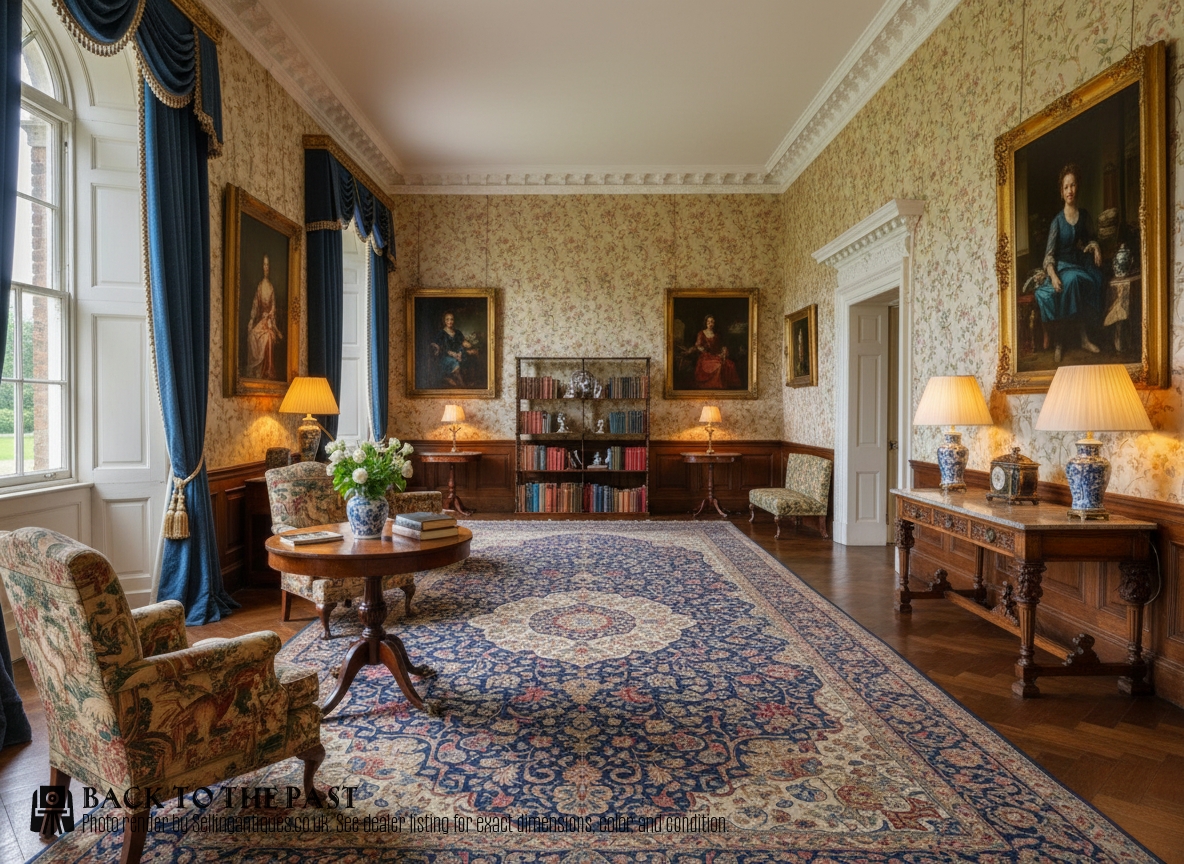
Styling an open bookcase involves balancing collections of books with decorative objects, ceramics, or framed pictures. Varying the orientation of books by stacking some horizontally adds visual interest.
Because the contents remain fully visible, editing the display helps maintain a balanced and tidy appearance in the room.
Where should I hang wall shelves?
Wall-hanging shelves work well above desks, sideboards, or in alcoves where floor space is limited. Positioning them at a comfortable height ensures easy access to the books stored upon them.
Secure fixings are essential to support the combined weight of the timber shelves and the books placed on them.
How do I care for antique timber bookcases?
Antique timber bookcases require protection from direct sunlight and sudden changes in temperature to prevent the wood from drying out or warping. Regular dusting with a soft, dry cloth keeps the surface clean.
Applying a suitable wax occasionally helps nourish hardwoods like mahogany and oak while preserving the finish.