

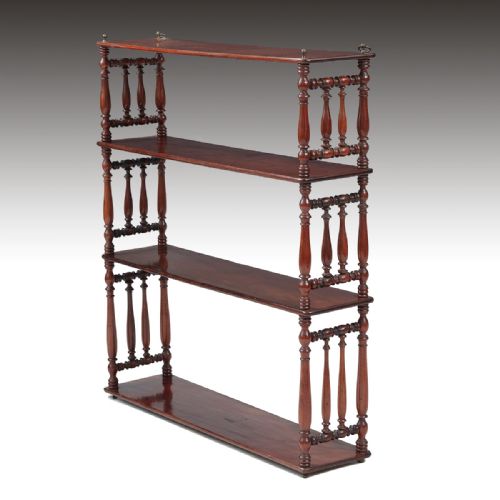
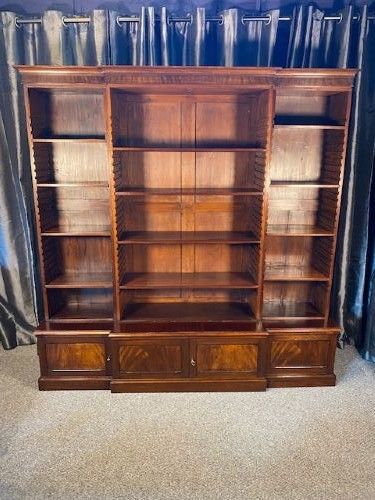
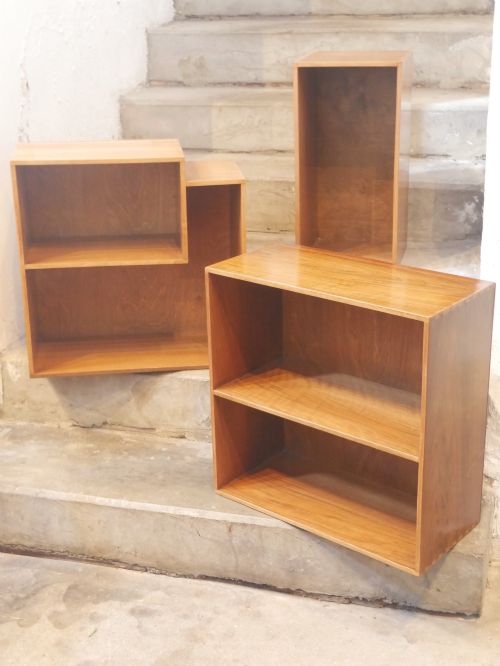
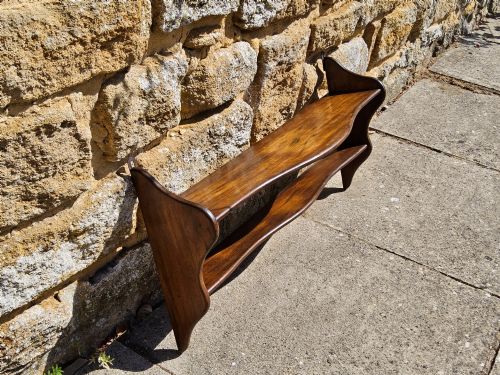
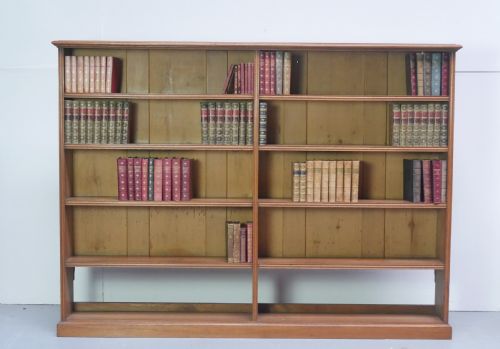
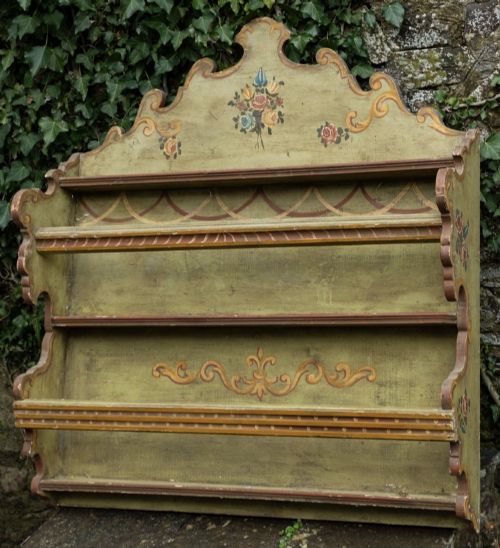


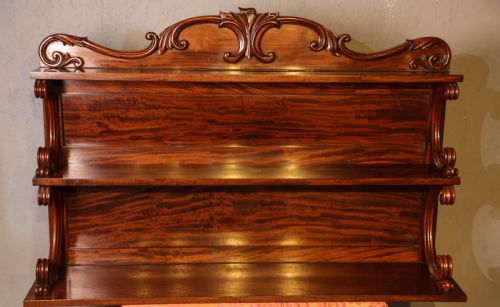
Wooden Wall Display Unit
A wooden wall display unit brings architectural order to a room, offering practical vertical storage for books and ceramics while lifting display items off the floor.
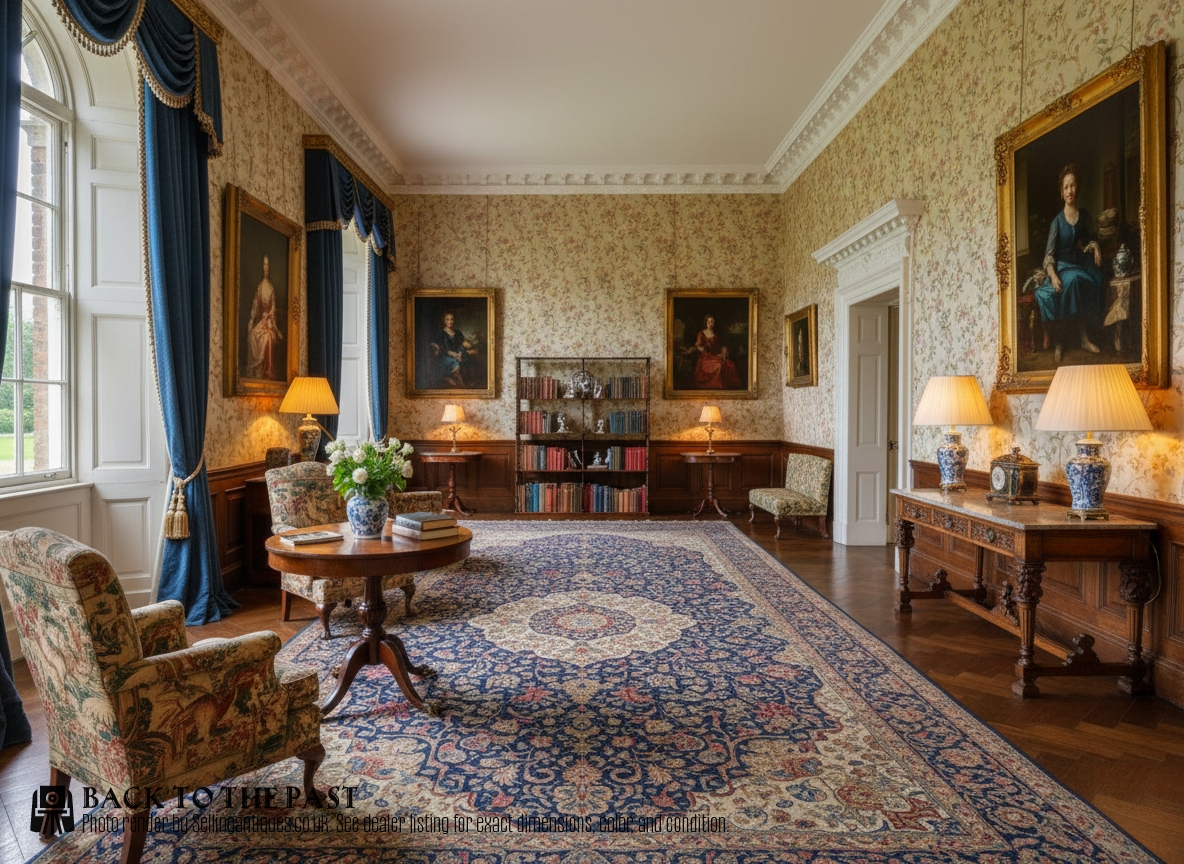
Wooden Wall Display Unit
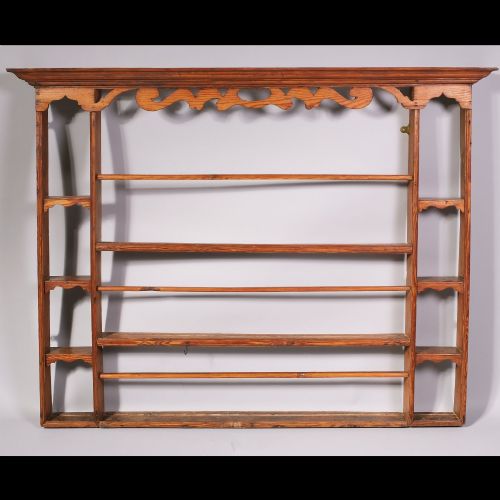
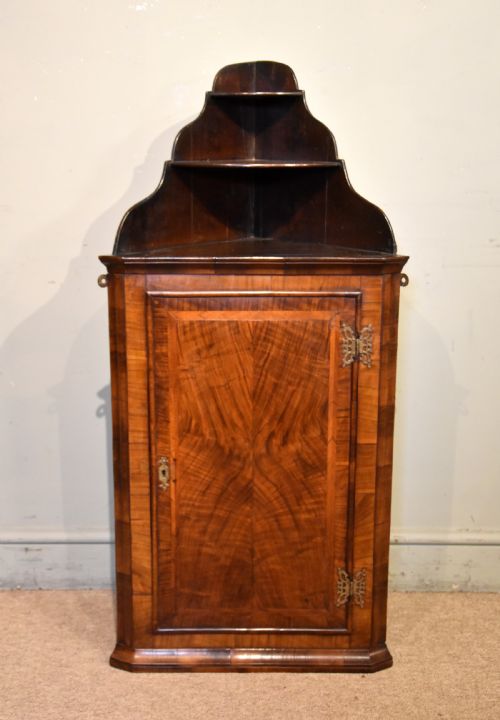
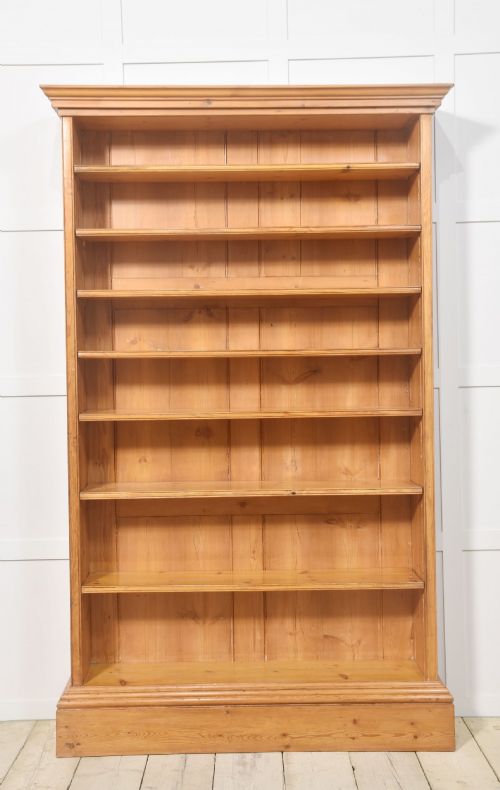
A wooden wall display unit encompasses hanging shelves, corner cupboards, plate racks and wall bookcases spanning the eighteenth century through to the mid-twentieth century. Buyers seeking these pieces encounter substantial regional and period variations, from Georgian mahogany hanging shelves to rustic pine plate racks and Edwardian hand painted wall units.
The selection ranges from compact corner cabinets designed to utilise awkward angles to expansive open bookcases and hanging wall cabinets featuring brass fittings. Pieces originate from diverse domestic traditions including French provincial workshops, English country houses and the Arts and Crafts movement.
Victorian walnut and mahogany versions appear frequently alongside earlier eighteenth-century oak and walnut iterations. Each piece serves the dual purpose of organising domestic possessions and providing a decorative focal point on interior walls.
Materials and construction techniques
Construction relies primarily on hardwoods and softwoods such as mahogany, oak, walnut, pine and cherry, occasionally enhanced with flame mahogany veneer, satinwood or satin birch. Cabinetmakers utilised traditional jointing methods to build hanging frames, bracketed shelves and enclosed corner cupboards.
Metal elements appear in the form of brass mounts, hinges and occasional iron details, particularly on Regency hanging wall shelves. Surface treatments range from natural wax finishes on polished timbers to decorative hand painted applications and bleached oak treatments.
Evaluating craftsmanship and proportion
Quality reveals itself in the selection of timber figures, such as flame mahogany or figured walnut, and the crispness of architectural details like broken arch pediments or inlaid borders. Superior examples maintain structural integrity across joints and suspension points while preserving original surface patination.
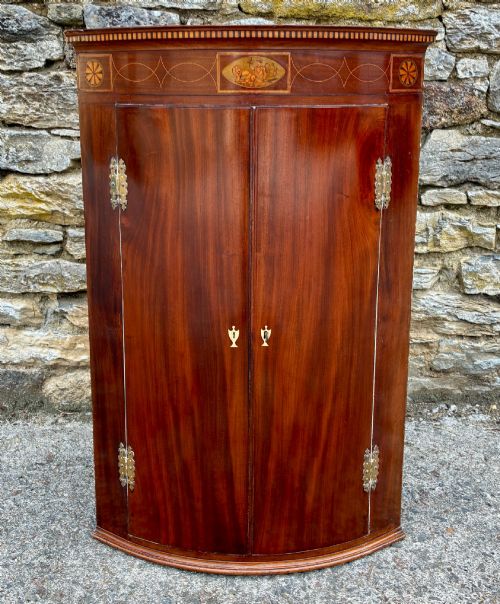
The harmony of proportions distinguishes finer workshops from utilitarian pieces, particularly in corner cupboards and bow front designs where curved doors must align seamlessly with the frame. The integration of secondary timbers and the precision of hand-cut joints further separate standard production from exceptional cabinet work.
Heals
The Wooden Wall Display Unit Glossary
- Bow front
- A convex curved cabinet front that projects outward from the corners, frequently seen in Georgian and Regency corner cupboards.
- Pediment
- The decorative architectural structure surmounting the top of a cabinet or bookcase, sometimes fashioned in a broken arch design.
- Hanging shelves
- Open or enclosed wooden shelving units specifically constructed to be mounted directly onto a wall rather than resting on the floor.
- Flame mahogany veneer
- A decorative wood veneer sliced from timber where the branch meets the trunk, creating a distinctive flamelike pattern.
- Plate rack
- A wall-mounted wooden rack featuring narrow shelves and vertical slats designed to hold plates upright.
Wooden Wall Display Unit: Frequently Asked Questions
How do I hang a heavy wooden wall display unit safely?
Wall units require secure anchoring into structural studs or masonry using appropriate fixings rated for the combined weight of the timber and the objects displayed upon it.
Ensuring the back plates and hanging brackets are firmly attached to the main frame prevents structural strain over time.
Where should I place a corner cupboard in a room?
Corner cupboards utilise dead space where two walls meet, making them ideal for smaller rooms or transitional areas like hallways and dining spaces.
They draw the eye upward and frame corners without projecting too far into the main floor area.
How do I clean and maintain antique wood finishes?
Dust the surfaces regularly with a soft, dry cloth and apply a quality beeswax periodically to nourish the aged timber without building up heavy residues.
Avoid placing wooden wall units in direct sunlight or near heat sources to prevent the timber from drying out and splitting.
What is the difference between an open bookcase and a display cabinet?
Open bookcases feature accessible shelving designed primarily for books and easy-to-reach decorative objects, while display cabinets often incorporate glazed or solid doors to enclose and protect contents.
Wall-mounted versions of both types lift storage off the floor to alter the vertical balance of an interior.