


Satinwood Inlaid Shelves
Satinwood inlaid shelves bring a warm, figured luminosity to a room, combining pale exotic timber with precise contrasting stringing.
Satinwood Inlaid Shelves
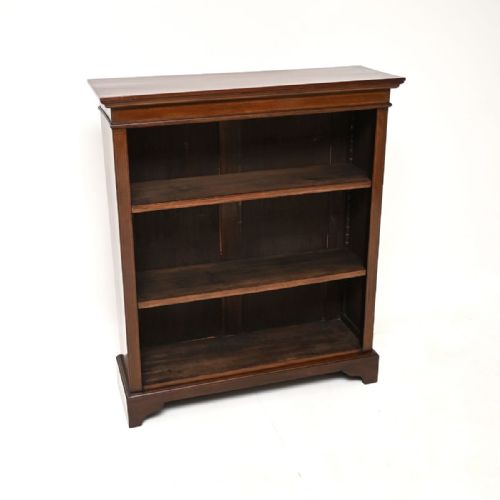
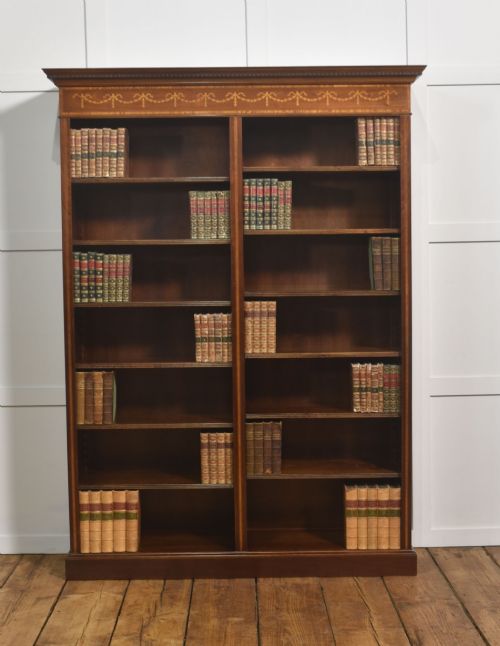
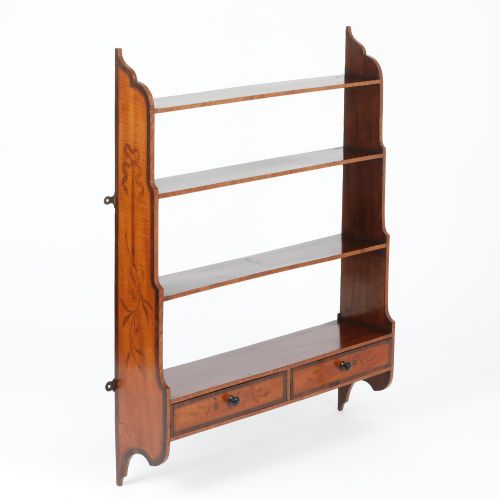
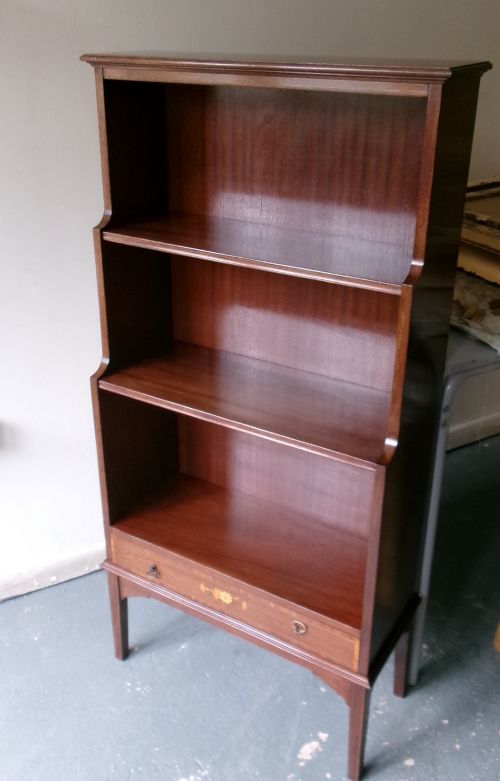
Satinwood inlaid shelves encompass wall-mounted tiers, hanging waterfall bookshelves, and open library bookcases created across the eighteenth, nineteenth, and early twentieth centuries. When searching for satinwood inlaid shelves, buyers frequently encounter Edwardian and Sheraton Revival interpretations alongside earlier Georgian and Victorian examples.
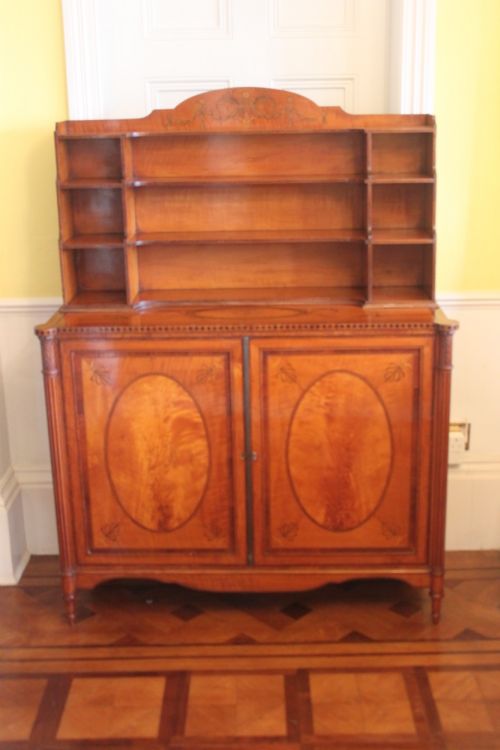
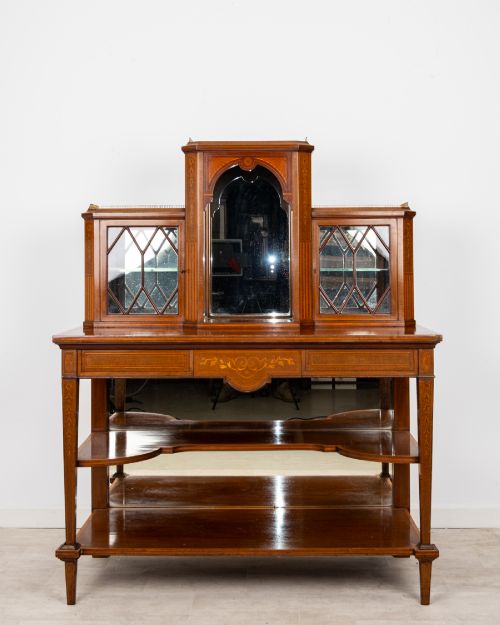
Makers often paired rich mahogany carcases with pale satinwood panels and banding, creating a crisp contrast that defines the style. These pieces functioned primarily for display and storage in polite rooms, holding small libraries or decorative objects.
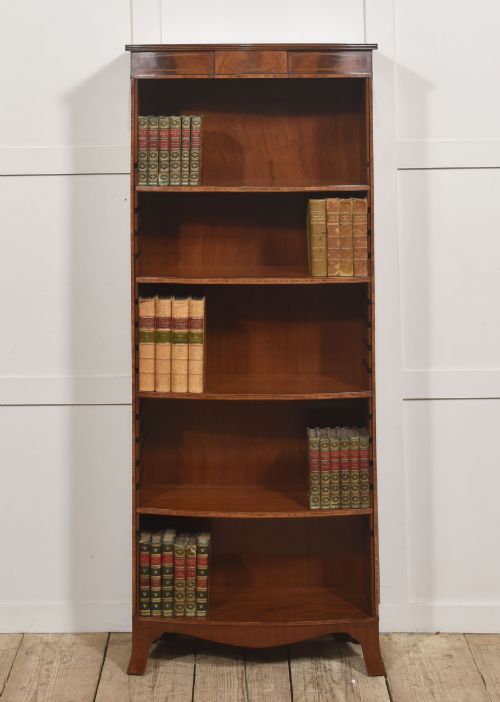
The construction ranges from compact hanging shelves designed for intimate spaces to substantial floor-standing open bookcases and dwarf bookcases with adjustable tiers. Each version relies on balanced proportions and precise linear framing to display the grain of the timber.
How they were made
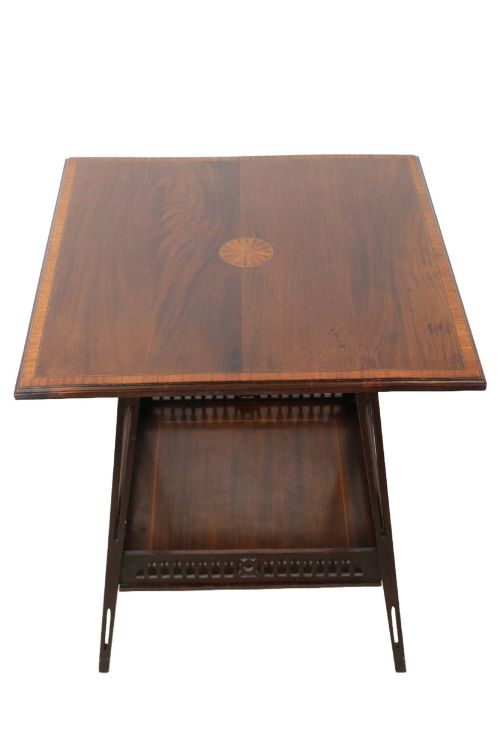
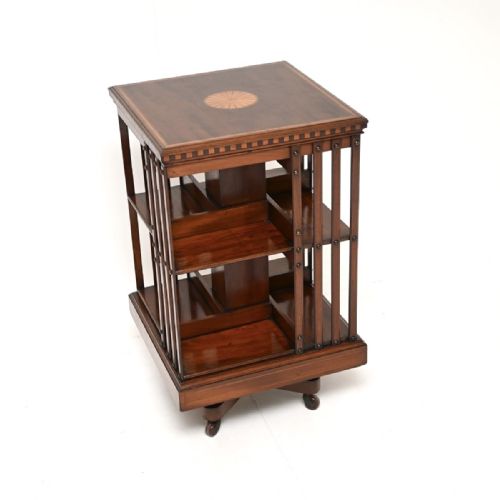
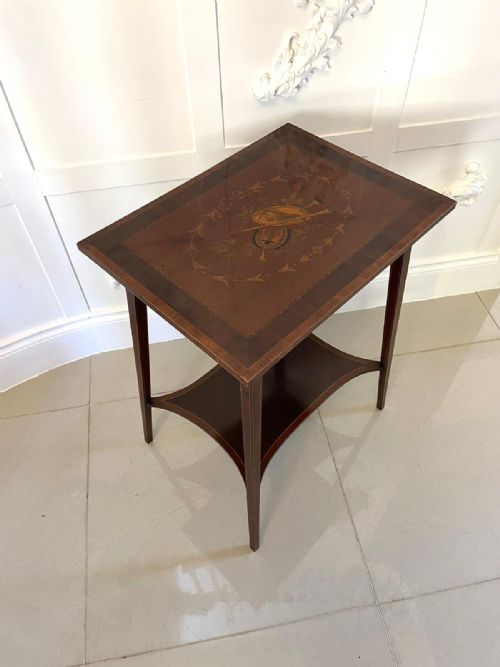
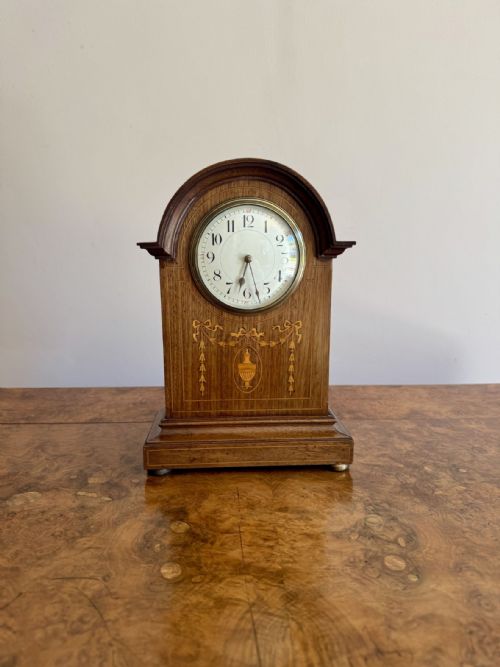
Cabinetmakers constructed the carcases using solid timbers such as mahogany, applying veneers of satinwood to prominent surfaces to capture light and varied grain patterns. Boxwood and darker timber strips were meticulously channelled into the surface to form geometric stringing and decorative borders.
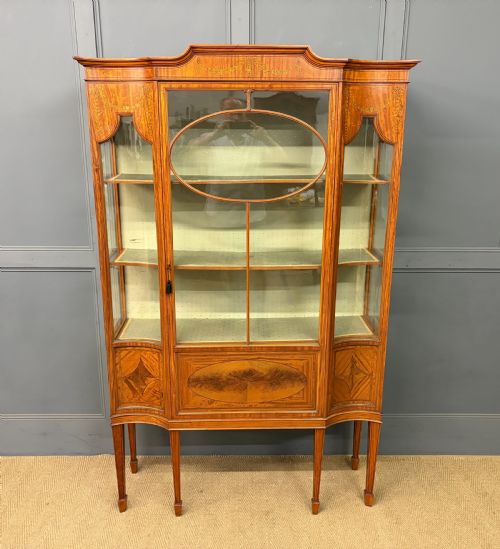
Surfaces were finished with traditional polishes that deepened the golden hues of the satinwood while protecting the delicate linear timber inlay from wear. Brass fixtures and mirrored panels occasionally appeared on related cabinets and bookcases to complement the reflective quality of the polished woods.
The documented styles span Georgian Revival, Victorian, Edwardian, Arts and Crafts, and Sheraton Revival.
What varies in quality
The standard of timber selection sets individual pieces apart, with superior examples displaying dense, highly figured satinwood matched symmetrically across panels and shelves. Lesser pieces rely on plain veneers or painted substitutes that lack the depth and natural chatoyancy of genuine exotic hardwoods.
The precision of the inlay work distinguishes workshop output, revealing clean, tight joints where the boxwood and contrasting stringing meet the surrounding timber. Finer pieces demonstrate careful attention to structural proportion and uncompromised stability in the uprights and shelf supports.
Trevor Page & Co·Maple & Co·Gillows
The Satinwood Inlaid Shelves Glossary
- Satinwood
- A hard, dense timber native to the tropics known for its golden-yellow colour and natural sheen. It takes a high polish and provides a striking contrast when paired with darker woods.
- Inlay
- A decorative technique where pieces of contrasting timber, such as boxwood, are fitted into recesses flush with the surrounding surface. This creates crisp linear patterns and pictorial motifs.
- Sheraton Revival
- A late nineteenth and early twentieth century design movement that reinterpreted the light, neoclassical furniture forms of the eighteenth-century designer Thomas Sheraton. It frequently employs satinwood banding, delicate legs, and symmetrical proportions.
- Waterfall bookshelves
- Graduated hanging or standing shelves where each tier steps back from the one below, resembling the descending steps of a waterfall. This form gained popularity during the nineteenth and early twentieth centuries.
Satinwood Inlaid Shelves: Frequently Asked Questions
How do I date satinwood shelves?
Dating relies on construction methods, timber choice, and stylistic markers such as Edwardian revival proportions or nineteenth-century carcase assembly. Examining the backboards and drawer linings often reveals hand-cut elements or factory-standard milling characteristic of specific decades.
Later revival pieces from the early twentieth century frequently emulate eighteenth-century Sheraton models but utilise machine-cut veneers and standardised hardware. Comparing the joinery and finish helps distinguish original period production from later interpretations.
Where should I place wall shelves?
Hanging shelves require secure wall fixings suited to the weight of solid timber and the books or objects they support. Placing them away from direct sunlight and heat sources protects the sensitive satinwood veneers from fading and drying.
These pieces work well in studies, drawing rooms, or hallways where their reflective golden tones can brighten vertical wall space. Their shallow depth allows them to sit comfortably in narrower rooms without obstructing movement.
Are the shelves adjustable?
Many larger bookcases and dwarf bookcases feature adjustable shelving systems supported by wooden ratchets or brass shelf pins. Smaller hanging shelves and waterfall tiers generally feature fixed partitions integrated directly into the side uprights.
Checking the interior walls of a bookcase reveals the mechanism used to alter shelf heights, indicating whether the piece was built for flexibility or permanent display.
How do I care for satinwood?
Maintenance involves dusting with a soft, dry cloth and avoiding silicone-based polishes that can degrade traditional finishes. Keeping the wood away from extreme humidity and temperature fluctuations prevents the veneers from lifting.
Occasional application of appropriate wax nourishes the timber and preserves the natural lustre of the polished satinwood and inlay. Gentle handling ensures the delicate boxwood stringing remains intact over time.