
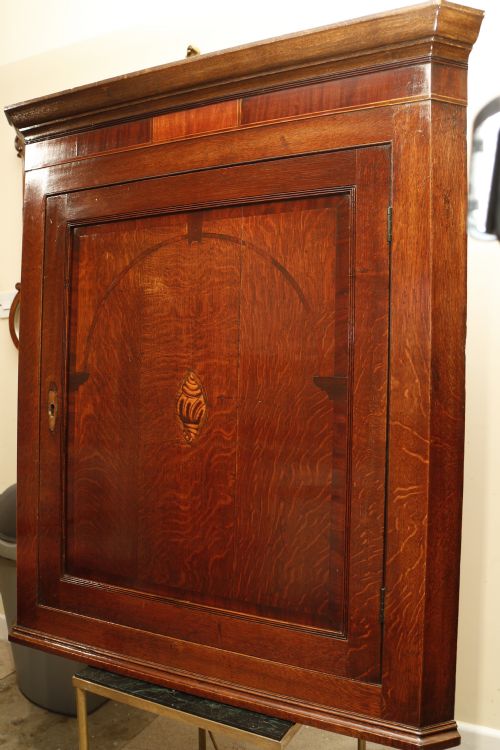


Hanging Oak Corner Cabinet
When choosing a hanging oak corner cabinet, you select a practical wall-mounted piece designed to utilise forgotten room angles while displaying domestic ware.

Hanging Oak Corner Cabinet
A hanging oak corner cabinet brings functional storage to domestic spaces by fitting snugly into room junctions without consuming floor area.
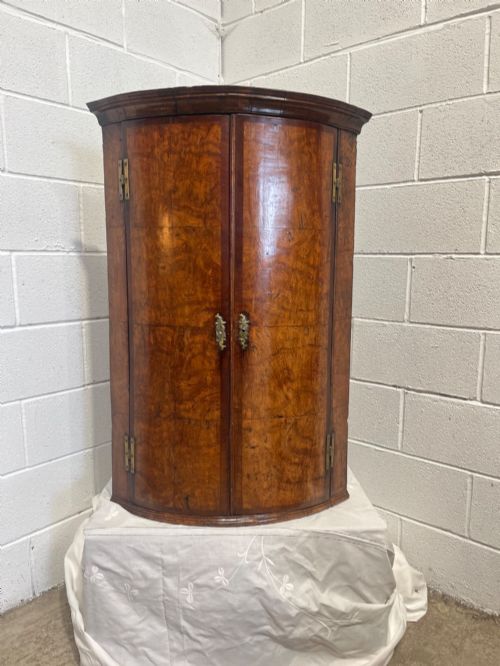
The pieces seen on this page span several periods, with Georgian and eighteenth-century examples appearing frequently alongside later nineteenth-century and Edwardian variations.
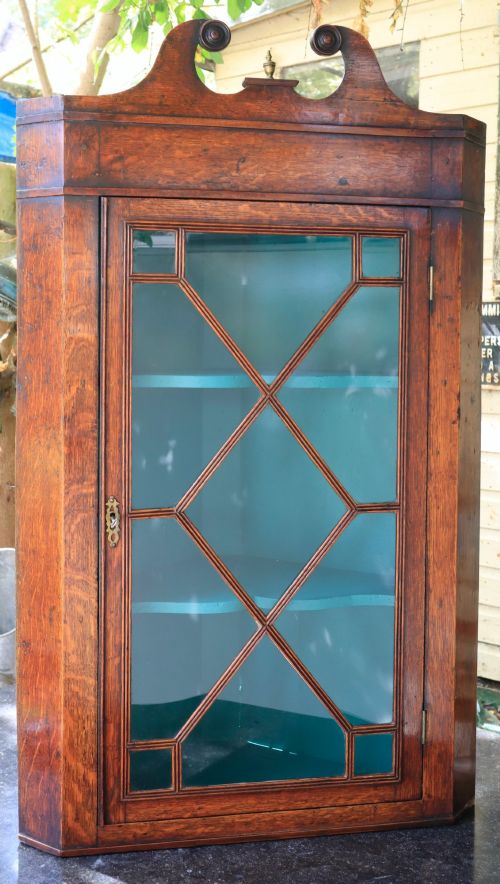
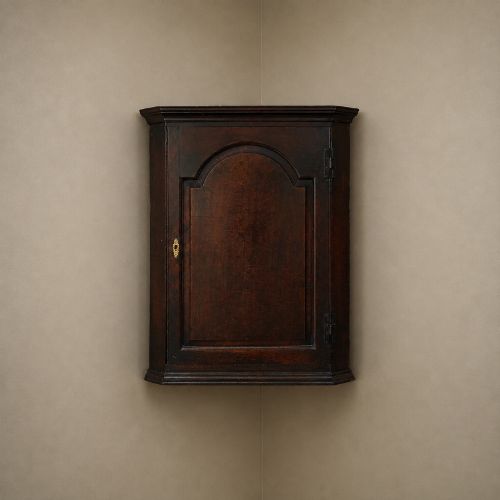
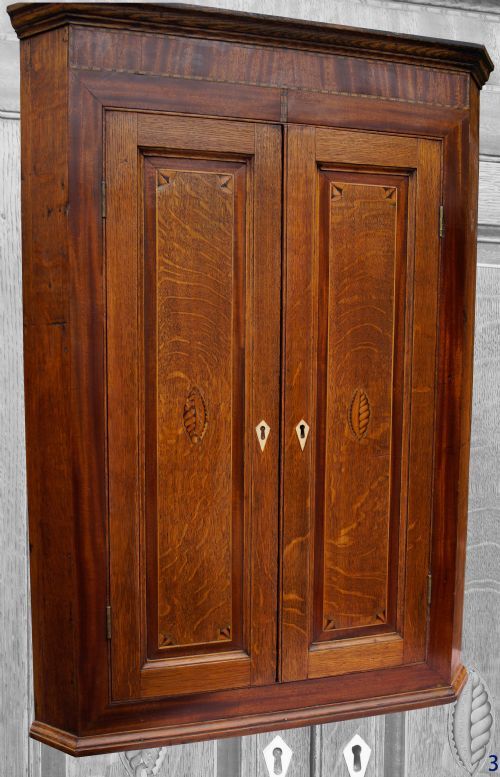
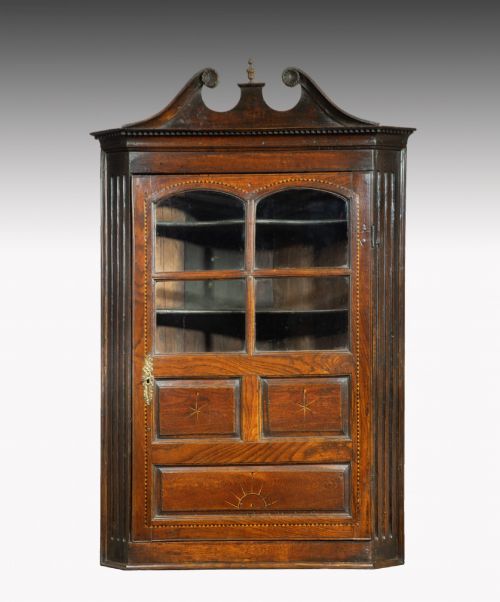
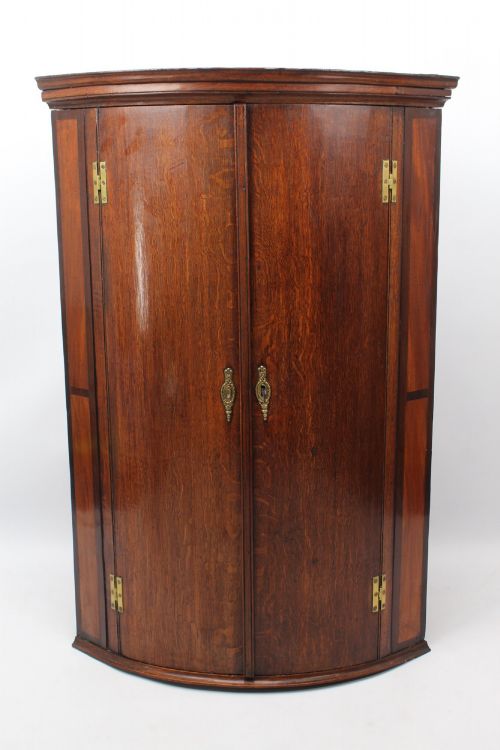
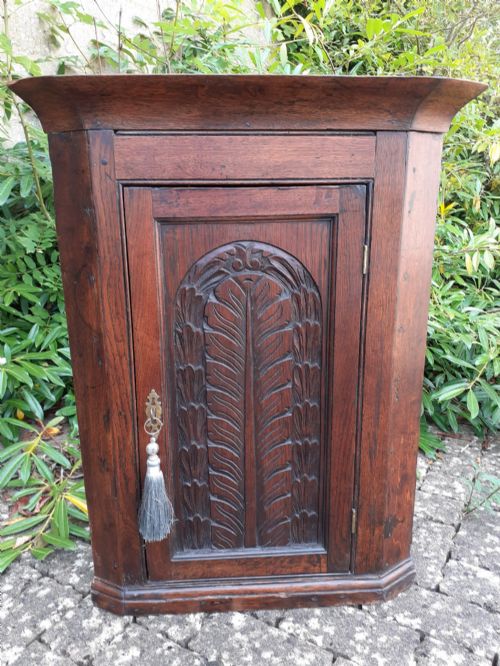
Makers constructed these wall-mounted cupboards in various structural forms, including straight-fronted models, bow fronts, and glazed display formats.
Materials and construction
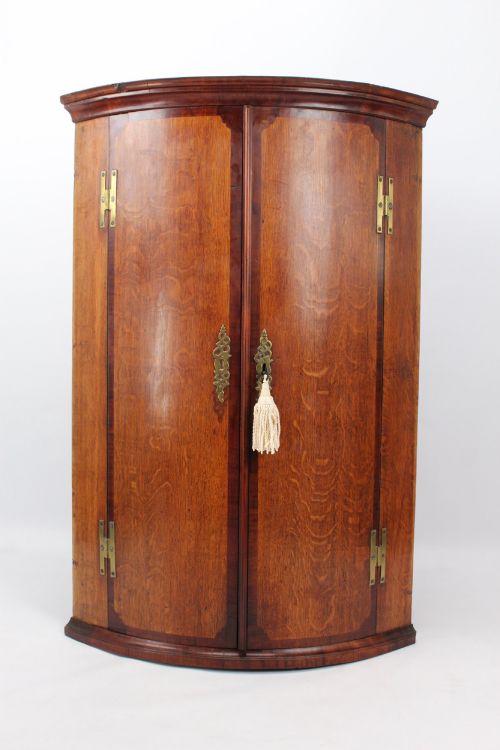
Cabinet makers relied primarily on solid oak, frequently incorporating burr oak, mahogany crossbanding, or fruitwood inlay to accent the exterior surfaces.
Workshops utilised brass for hinges and escutcheons, while interior shelves occasionally accommodated glass doors to exhibit ceramic or glass collections.
Early cabinetmakers thoughtfully ensured that dusty kitchen corners could finally hold family china and fine spirits without spilling a drop.
Assessing craftsmanship
Quality separates standard provincial cupboards from finer examples through the crispness of carved detailing, the selection of figured timber veneers, and the precision of inlaid crossbanding.
Superior construction involves well-fitted panel doors and intact original brass hardware that maintains structural integrity across centuries of wall mounting.
The Hanging Oak Corner Cabinet Glossary
- Bow front
- A convex curved cabinet facade that projects outward from the corner walls. This curved profile requires specialised joinery to shape the doors.
- Crossbanding
- A decorative border technique where veneer strips are applied perpendicularly to the grain of the main surface. It frames the central panels.
- Astragal glazed
- Glass doors divided by thin wooden strips into smaller panes. These light frames are typical of eighteenth-century display cabinets.
- Escutcheon
- A protective plate surrounding a keyhole. It is commonly fashioned from brass on period cabinet doors.
Hanging Oak Corner Cabinet: Frequently Asked Questions
How were hanging oak corner cabinets used?
These wall-mounted cupboards served to store tableware, dry goods, and glassware within parlours and dining rooms. Their placement in room corners kept domestic items accessible while preserving central floor space.
Over later generations, owners utilised them primarily for display, placing ceramics behind glazed doors where visitors could admire the contents without risking breakage.
How do I secure a heavy wall cabinet?
Period wall-mounted cupboards require robust fixing points attached directly to wall studs or masonry support. Because these oak structures carry substantial weight, professional installation prevents structural strain on the historical timber.
Ensuring the internal hanging brackets match the original load-bearing design protects the backboards from splitting under the pressure of stored crockery.
How do I tell an 18th-century piece apart?
Eighteenth-century examples often display hand-cut dovetails, pegged joints, and native oak boards showing subtle surface undulations from early conversion methods. Regional variations, such as Welsh or provincial English construction traits, help determine geographical origins.
Later Victorian and Edwardian revivals tend to feature machine-sawn backing boards and standardised interior fittings that lack the hand-finished quirks of earlier centuries.
What rooms suit a corner cabinet today?
Dining rooms and kitchens provide natural settings for these units, echoing their traditional domestic functions. They integrate smoothly into narrow hallways or empty study angles where standard rectangular furniture proves too bulky.
Matching the wood tone to existing furniture helps the piece anchor the corner space without overwhelming smaller modern interiors.