




Hanging Lantern Light Fitting
A hanging lantern light fitting casts a welcoming amber glow across an entrance hall while anchoring the architectural scale of high ceilings.
Hanging Lantern Light Fitting
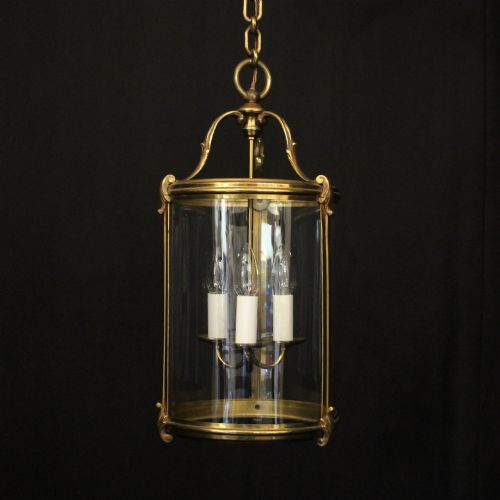
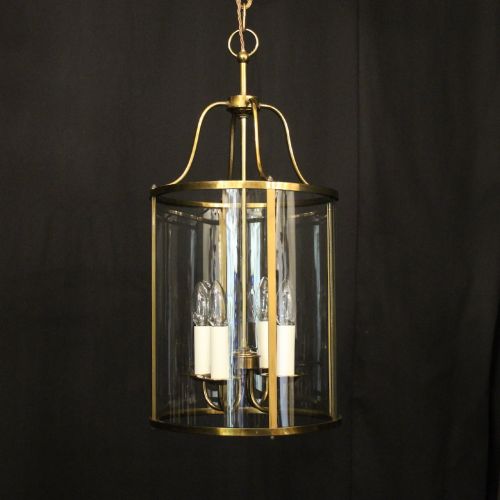
A hanging lantern light fitting serves primarily as an overhead illumination source for hallways, stairwells, and vestibules. These pieces combine functional illumination with decorative metalwork and glass panels designed to be viewed from below.
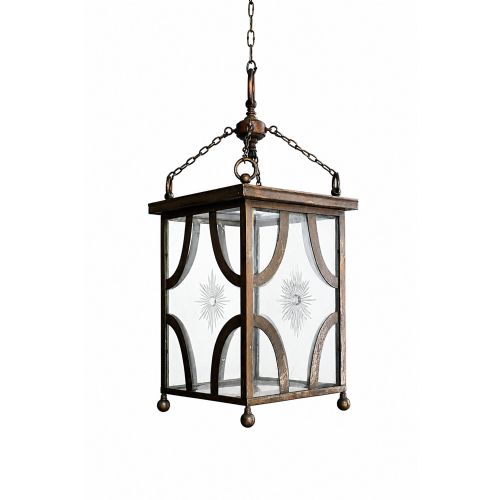
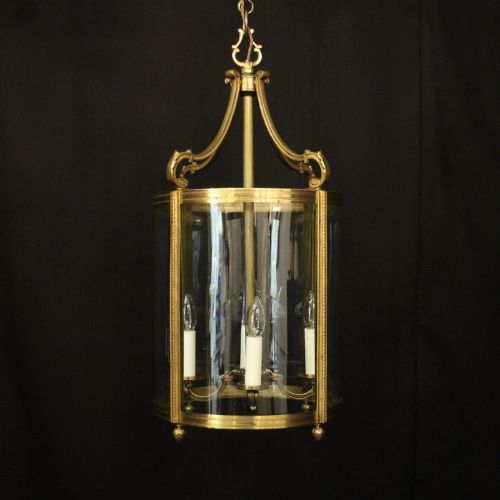
The selection ranges from robust Arts and Crafts copper fixtures to ornate French gilded bronze and English brass hall lanterns. Pieces span multiple periods including the nineteenth century, Edwardian era, and the 1930s.
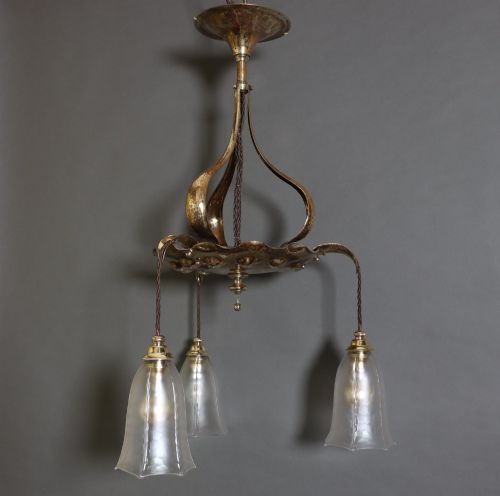
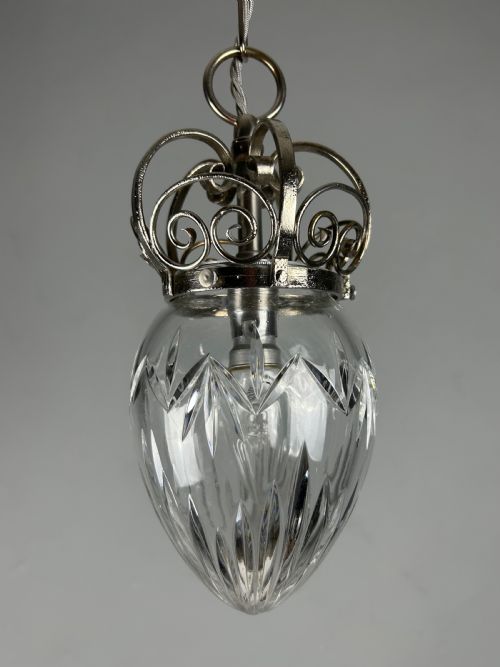
Common forms on this page include pendant lights, ceiling lanterns, and multi-light hall fixtures. Buyers frequently encounter geometric brass frames alongside rounded glass shades and prism-adorned chandeliers.
Materials and construction
Construction relies heavily on metals such as brass, copper, bronze, gilt brass, wrought iron, and chrome combined with clear, cut, or moulded glass panels. Metal frames are cast, forged, or soldered together to support the weight of the glass and internal electrical fittings.
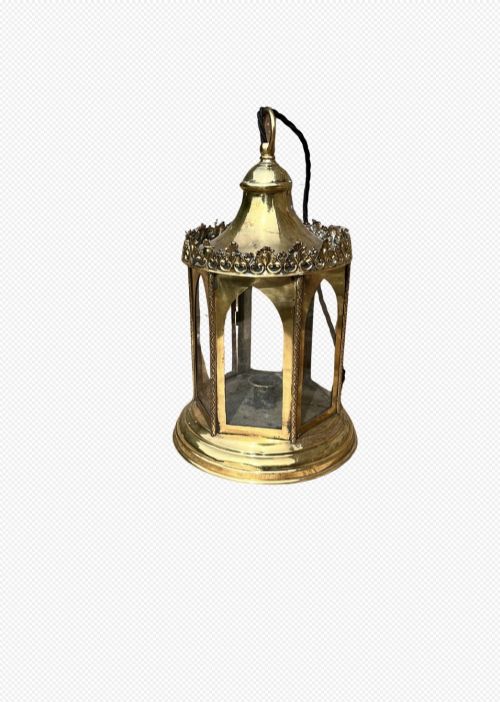
Decorative detailing incorporates gilded finishes, carved giltwood, and tôleware accents to enhance the visual impact of the fixture. Many pieces feature hinged doors or glazed panels that allow access to the interior bulbs.
Period representation ranges from the late nineteenth century through the Edwardian era and into the 1930s and 1940s.
Evaluating quality and design
Quality reveals itself in the weight of the metal framework, the clarity and thickness of the glass panes, and the crispness of any cast or carved ornamentation. Substantial bronze, heavy brass, and solid copper frames outlast lighter alloy alternatives.
Design sophistication distinguishes standard utility fixtures from masterworks with detailed provenance, such as Florentine carved giltwood or Arts and Crafts copper work. The integration of period-appropriate glass panels and original patination elevates the character of the piece.
The Hanging Lantern Light Fitting Glossary
- Hall lantern
- An enclosed ceiling-hung light fixture designed specifically for narrow corridors and entrance spaces. These fixtures typically feature glass sides held within a metal framework.
- Gilt brass
- Brass coated with a thin layer of gold leaf or gilt finish. This treatment provides a bright, reflective surface that enhances the decorative appeal of the metalwork.
- Tôleware
- Painted or lacquered sheet metal items often used in decorative lighting components. The technique adds colourful accents to traditional metal frames.
- Convex glass
- Curved glass panels that project outward from the lantern frame. This shape disperses light more broadly across a room.
- Pendant light
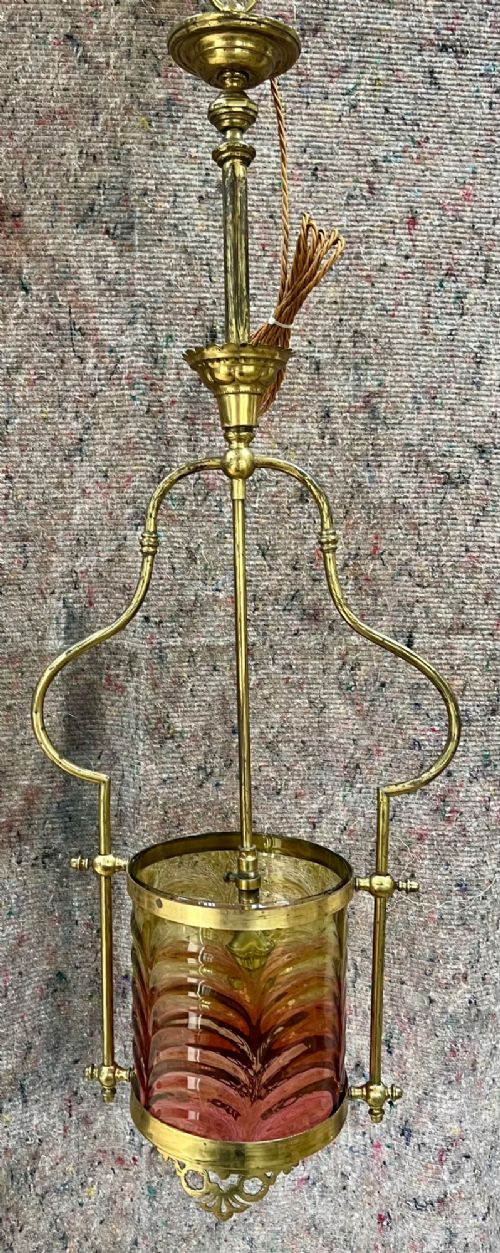
- A single light fixture suspended from the ceiling by a chain, cord, or metal rod. It hangs lower into the space to provide direct illumination.
Hanging Lantern Light Fitting: Frequently Asked Questions
Where should I hang a hall lantern?
These fixtures suit entrance halls, high-ceilinged landings, and corridors where overhead clearance permits. Their enclosed design directs illumination downward while casting patterns through the glass.
Ensure the bottom of the lantern clears the heads of tall visitors, maintaining adequate distance from the floor.
How do I clean antique glass panels?
Remove delicate glass panels from the metal frame if the fixings allow safe extraction. Use a mild glass cleaner and a soft cloth to preserve the surface.
Avoid harsh chemical abrasives that might damage aged patination on surrounding brass or copper frames.
Can these lights be rewired for modern use?
Most antique metal and glass fixtures accept modern electrical wiring by standard standards. Professional electricians can update internal fittings while retaining the original exterior housing.
Check the socket size and wattage limits to ensure compatibility with contemporary LED bulbs.
How do I identify an Arts and Crafts lantern?
Arts and Crafts pieces emphasise hand-beaten copper or ironwork with visible construction rivets and simple geometric lines. These designs avoid excessive ornamentation in favour of honest craftsmanship.
Purchasers often find makers integrated these elements with amber or leaded glass shades.