

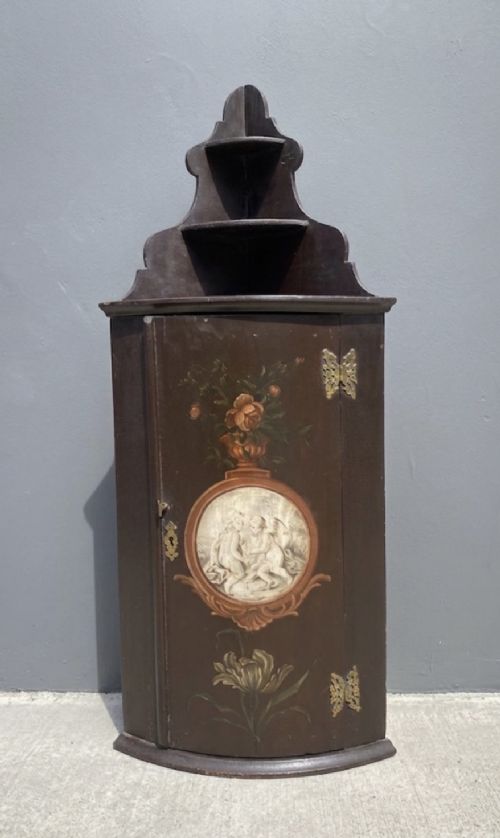


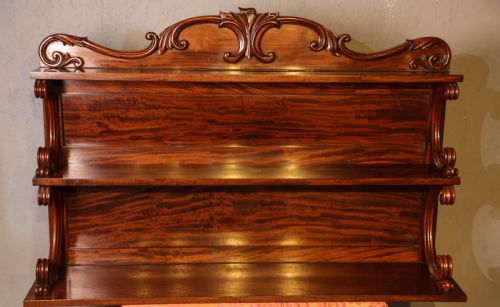


Hanging Display Shelf Unit
These hanging display shelf units bring compact vertical storage and character to walls, offering timber surfaces to show off small collections.
Hanging Display Shelf Unit
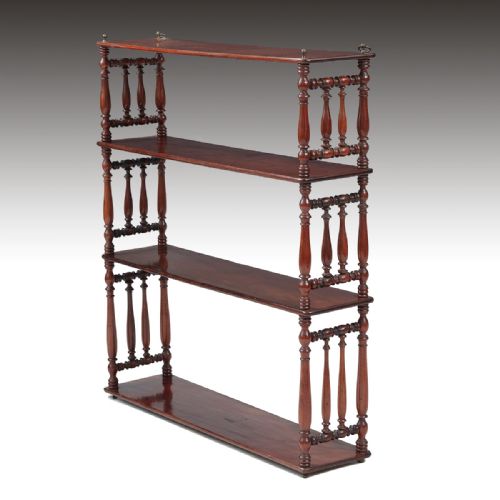
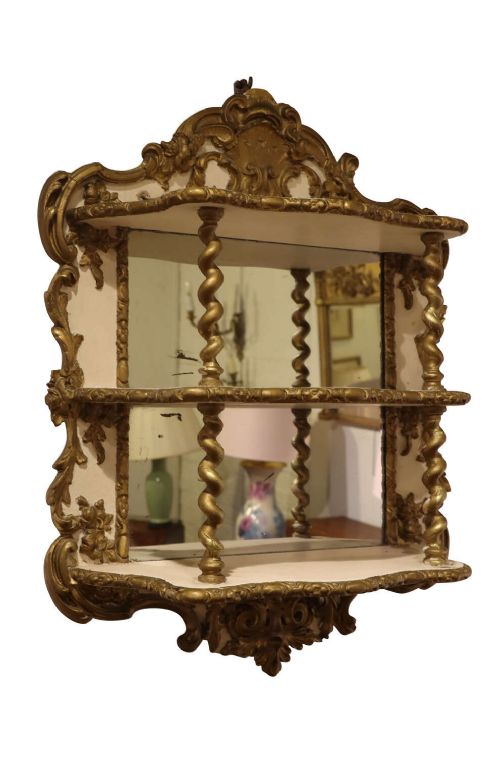
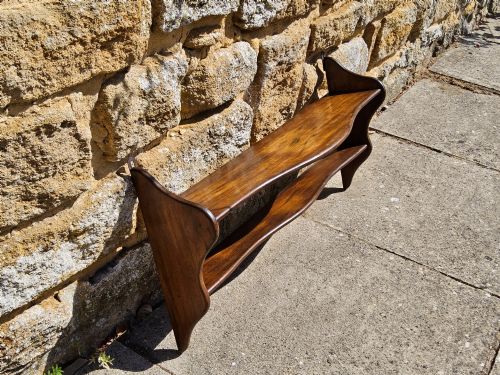
A hanging display shelf unit is a wall-mounted storage piece designed to hold books, ceramics and decorative objects off the floor. The selection spans straightforward open timber tiers to enclosed cabinets with glass or panelled doors.
Most examples date from the eighteenth century through to the early twentieth century, taking forms such as corner shelves, wall bookcases and tiered whatsits. Mahogany and oak dominate the older periods, while walnut, painted wood and exotic veneers appear across Victorian and Edwardian iterations.
How they were made
Cabinetmakers constructed these wall units using solid timbers such as mahogany, oak, walnut and cherry, joined with traditional framing and panel techniques. Backboards provide structural rigidity for hanging, while sides are often shaped or bracketed.
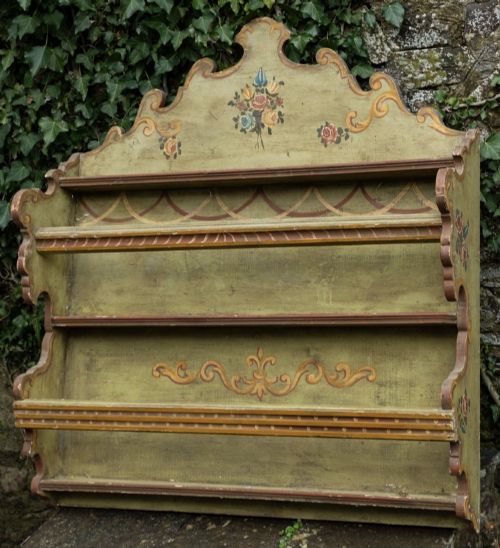
Surface ornament relies on natural timber grain enhanced by polish, or hand-painted finishes using historic colour palettes. Brass fittings, glass panels and delicate inlay work appear on more elaborate Regency and Victorian models.
Materials range from traditional mahogany and oak to decorative inlaid olive wood and cherry.
What varies in quality
Quality rests on the selection of timber figures, the crispness of moulded edges and the harmony of proportions between tiers. Better examples utilise dense, well-figured mahogany or walnut with carefully fitted joints that remain stable under load.
Decorative elements distinguish standard utilitarian units from finer parlour pieces. Hand-painted motifs, brass mounts, intricate fretwork and inlaid woods elevate a simple tier of boards into a considered piece of furniture.
The Hanging Display Shelf Unit Glossary
- Whatnot
- An open set of tiered shelves designed for displaying ornaments or books. These pieces gained immense popularity during the Victorian period.
- Inlay
- A decorative technique where contrasting pieces of wood or other materials are fitted into a recess in the primary timber. This method highlights the surface detail on late Victorian and Edwardian examples.
- Bow front
- A convex, outwardly curved front elevation often seen on corner cupboards and wall cabinets. This shape softens the room's angles.
- Étagère
- A French term for a piece of furniture consisting of a set of open shelves for displaying small objects. They often feature painted and gilt finishes.
- Corner cupboard
- A cabinet or set of shelves built specifically to fit into the ninety-degree angle of a room. These units make efficient use of otherwise neglected space.
Hanging Display Shelf Unit: Frequently Asked Questions
How do I hang a heavy timber wall shelf safely?
Wall units require secure fixing directly into masonry or through plasterboard into wooden wall studs. The weight of the timber combined with displayed items demands robust brackets or screw fixings through the internal backboard.
Professional installation ensures the piece supports its load without pulling away from the wall. Check that the original hanging loops or battens on antique pieces remain structurally sound before mounting.
What is the difference between an open shelf and a wall cabinet?
Open hanging shelves display their contents fully to the room, making them suited for frequently handled books or decorative ceramics. Wall cabinets incorporate doors, sometimes glazed, to protect delicate items from dust and accidental knocks.
Many period pieces combine both formats, offering open display tiers above a small enclosed cupboard or drawer section. This provides concealed storage alongside the display surface.
How do I care for antique polished wood shelves?
Timber surfaces respond best to occasional dusting with a soft, dry cloth and minimal moisture. Avoid modern silicone sprays, which build up a film over time and attract dust.
Applying a traditional beeswax polish once or twice a year nourishes the antique finish and maintains a gentle lustre. Keep wooden hanging units away from direct heat sources and strong sunlight to prevent warping.
How can I tell a Georgian shelf from a Victorian one?
Georgian hanging shelves often feature simpler architectural lines, heavy mahogany construction and understated bracket supports. Their proportions lean towards classical balance and functional elegance.
Victorian and later pieces introduce more varied woods such as satin birch, walnut and cherry, alongside decorative elements like fretwork, painted finishes and elaborate inlay. Gothic revival and Rococo influences also appear more frequently in nineteenth-century designs.