




Hanging Display Cupboard
A hanging display cupboard clears floor space while keeping prized collections visible, making it a practical choice for compact rooms.
Hanging Display Cupboard
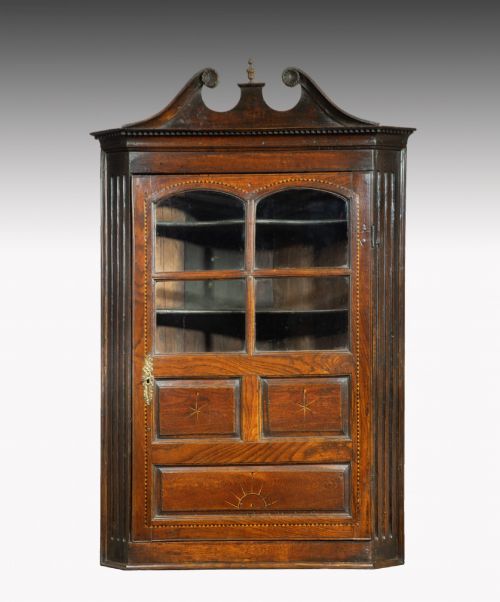
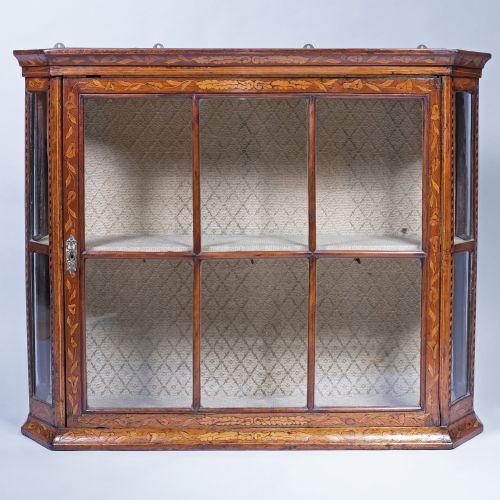
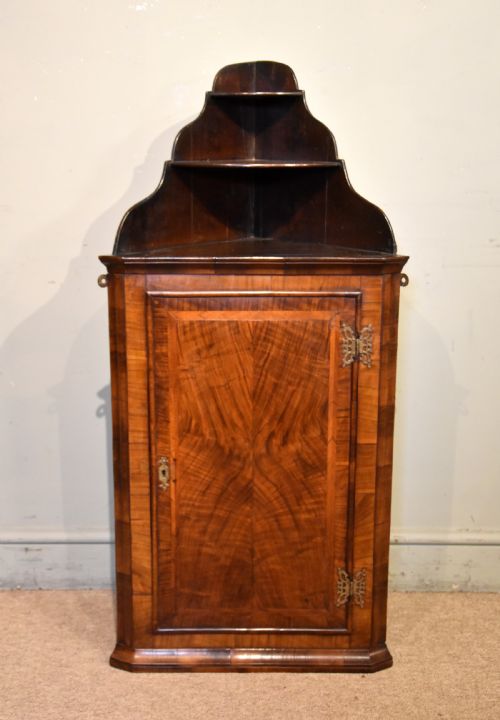
A hanging display cupboard is a wall-mounted storage piece designed to hold and showcase small objects, ceramics, or glassware. When you search this phrase, you encounter wall cabinets, corner cupboards, and open display shelves intended to fit securely onto domestic walls.
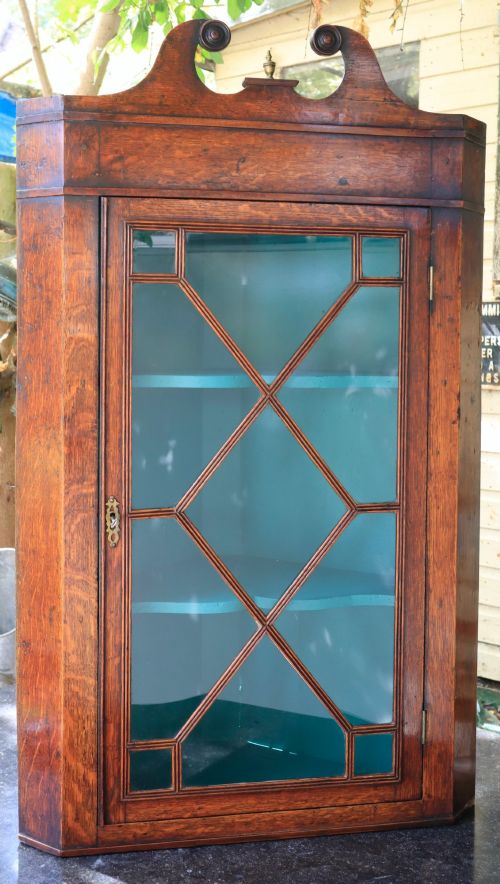
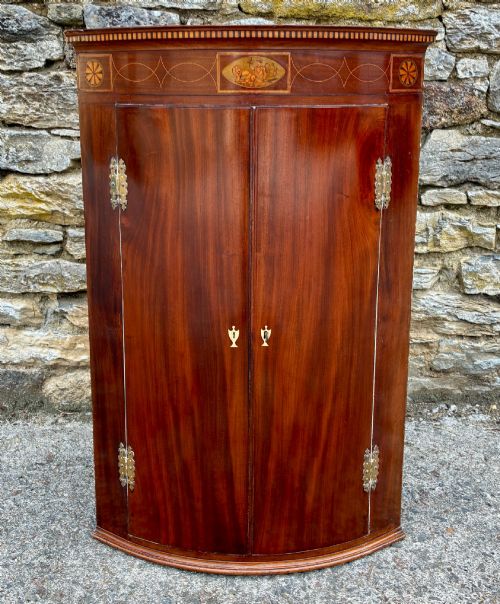
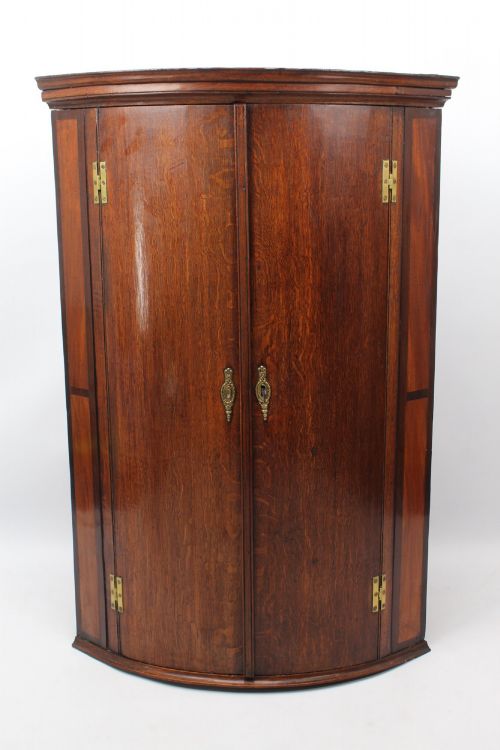
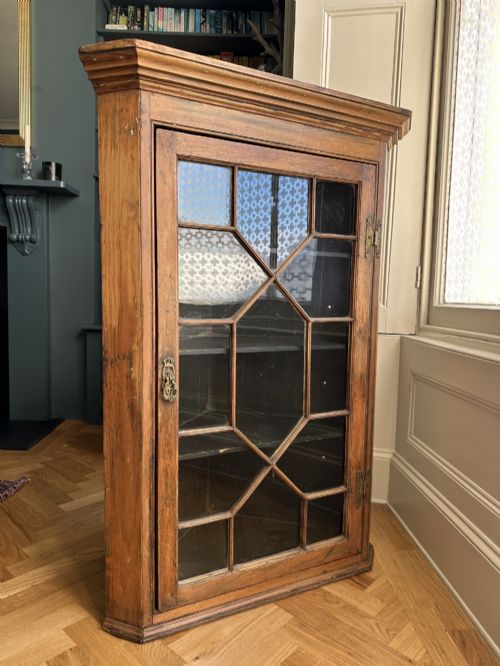
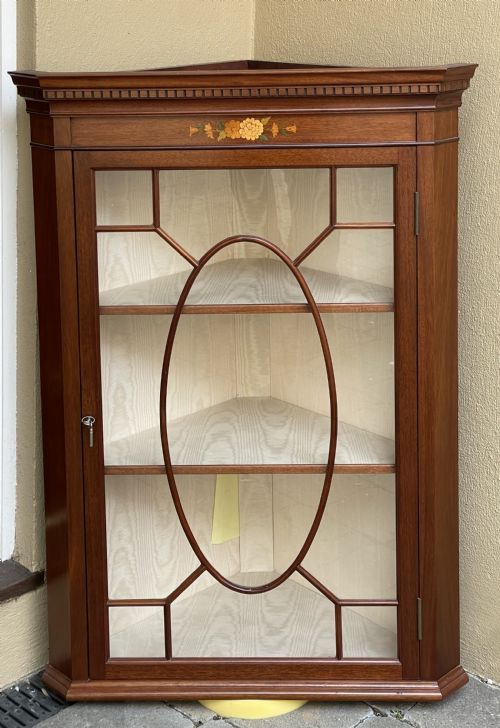
The versions you meet most frequently on this page span the Georgian and Victorian eras down to Edwardian times. Oak and mahogany corner formats dominate the selection, often featuring glazed doors or tiered internal shelving.
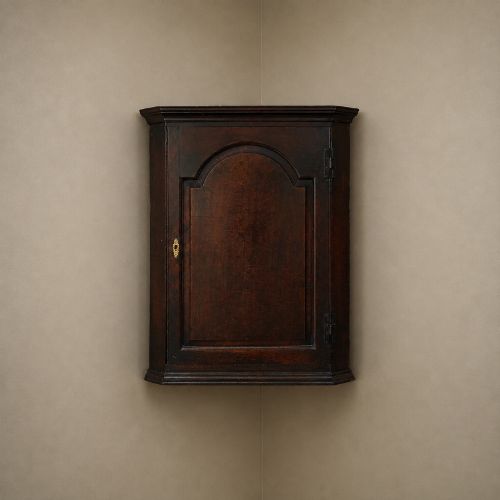
Makers from the 18th century onward adapted these forms to suit shifting domestic interiors, producing flat wall units alongside specialised corner pieces. These vessels bridge utilitarian storage and visual display, utilising vertical wall space effectively.
Materials and construction methods
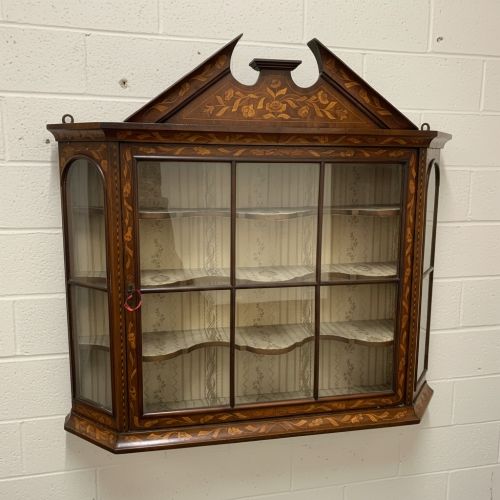
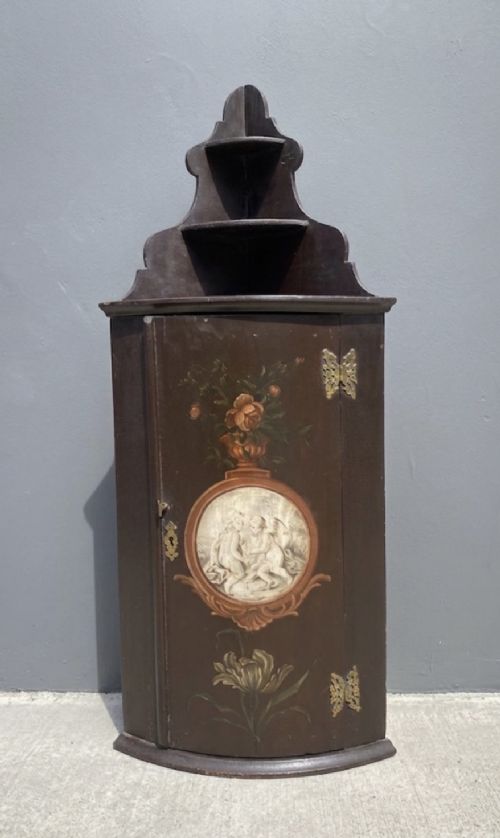
Makers utilised timber such as oak, mahogany, walnut, and satinwood, frequently applying crossbanding, marquetry inlay, or painted finishes to enrich the primary surface. Glass panels fitted into wooden frames allow visibility while protecting contents from dust.
Joinery techniques involve sturdy corner bracing and dovetailed joints necessary to support the weight of the cabinet and its contents when suspended from a wall. Brass hardware, including hinges, escutcheons, and locking keys, secures the doors and reinforces structural corners.
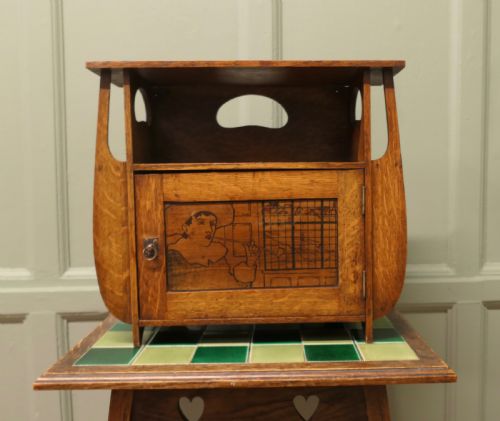
One unexpected survivor on the wall is an antique cedar cigar cabinet complete with its original Habana Cuban advertising display history.
What separates the tiers of quality
Quality rests upon the selection of timber figures, such as burr walnut or crossbanded mahogany, and the crispness of applied marquetry or carved pediments. Superior examples feature original glass panes, intact painted interiors, and well-fitted internal shelving.
Construction integrity distinguishes workshop output, seen in the thickness of the backboards, the precision of the door alignment, and the retention of original brass hardware. Pieces retaining their functional locks and keys show a higher degree of preservation.
John Moyr Smith·H. Upmann
The Hanging Display Cupboard Glossary
- Crossbanding
- A strip of veneer applied perpendicularly to the grain of the primary surface to form a decorative border. This technique highlights the geometric precision of Georgian cabinetry.
- Marquetry
- An intricate mosaic of wood veneers arranged to form pictorial or geometric patterns on cabinet doors. It appears frequently on Dutch and Edwardian pieces.
- Pediment
- The decorative structure crowning the top of a cabinet, sometimes built in a broken arch or swan neck design. It draws the eye upward and adds architectural weight.
- Bow front
- A convex, curved front profile that softens the angular lines of a corner or wall cabinet. This shape creates a more fluid appearance in the room.
- Escutcheon
- A protective brass plate surrounding the keyhole of a cabinet door. It prevents the wood from splitting around the lock.
Hanging Display Cupboard: Frequently Asked Questions
How do I hang a heavy antique cupboard safely?
These cabinets require secure fixing directly into wall studs or masonry using appropriate brackets rather than standard plasterboard anchors. The considerable weight of solid oak or mahogany frames demands robust load-bearing support.
Ensure the internal shelves are unloaded before attempting installation. Having a second person steady the cabinet while marking the fixing points prevents accidental drops.
Where were these cupboards placed in period homes?
Corner cupboards and wall cabinets typically occupied dining rooms, parlours, or hallways to store and exhibit ceramic tea services or glassware. Their wall-mounted design preserved valuable floor space in smaller domestic interiors.
Corner placements made efficient use of dead space where two walls met. Flat-backed wall cabinets sat prominently above sideboards or tables for easy access during meals.
How do I distinguish Georgian from Victorian pieces?
Georgian pieces generally display simpler, cleaner architectural lines with timber such as oak or mahogany, often featuring glazing bars and bracket feet adapted for wall hanging. Victorian iterations frequently incorporate heavier mouldings, darker woods like walnut, and more elaborate marquetry or Aesthetic Movement details.
Examination of the internal construction, backboards, and fastener types helps confirm the period. Later Victorian revival styles sometimes mimic earlier Georgian proportions but utilise machine-cut elements.
Can I store heavy books inside a hanging cabinet?
Hanging cabinets are engineered for lighter display items like porcelain, glassware, or small collections rather than heavy volumes. Overloading the shelves strains the historical wall fixings and the internal shelf supports.
Stick to displaying decorative objects or lightweight ephemera to protect the antique wood joints. If you need heavy book storage, a floor-standing bookcase remains the proper choice.