

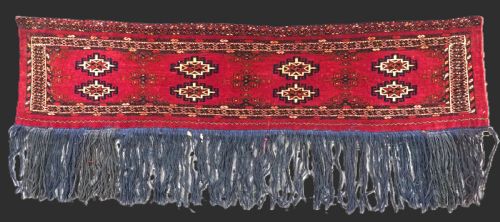


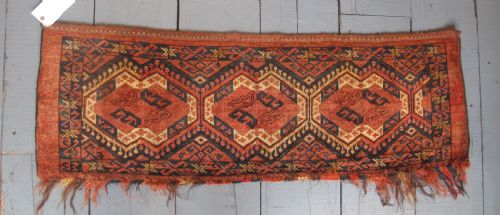


Handwoven Torba
These handwoven torba examples are tribal Turkmen storage bags crafted for nomadic life, prized by collectors for rich wool and geometric motifs.
Handwoven Torba
A handwoven torba is a traditional Central Asian tribal textile created for domestic storage within nomadic households. These pieces take the form of small bags or bag faces, often displaying the characteristic motifs of Turkmen tribes such as the Tekke, Saryk, Yomut, and Ersari.
The pieces on this page span from the late nineteenth century to the early twentieth century, specifically between 1870 and 1910. Buyers will frequently encounter either complete examples retaining their original plain weave backs or individual bag faces designed for tent storage.
Materials and Construction
The construction relies entirely on hand-spun wool, providing a sturdy foundation suitable for daily domestic use in a tribal setting. Artisans utilised natural dyes to achieve deep colour palettes that age gracefully over decades of exposure.
Weaving techniques incorporate both pile knots and flatweave structures, depending on whether the piece functions as a display face or a utility storage bag. Fine weave examples demonstrate considerable density in the knotting, particularly in pieces identified as dowry weaving.
Handwoven Torba Retail Price Guide 2026
Typical asking prices for handwoven torba among the pieces listed under this phrase on Sellingantiques today, from the lower quarter to the upper quarter. They describe what is for sale here now, not the wider market.
Nomadic weavers packed these bags with bedding and blankets inside tents, turning everyday storage into vibrant displays of tribal artistry.
Assessing Quality and Execution
Quality in these textiles rests upon the precision of the knotting and the fineness of the weave, with denser structures representing the higher end of tribal output. Dowry pieces often display superior handling of traditional guls and secondary ornaments.
The integrity of the natural dyes and the crispness of the geometric design execution also separate standard utility items from finer examples. Completeness, such as retaining an original plain weave back, adds significantly to the historical coherence of the piece.
The Handwoven Torba Glossary
- Torba
- A traditional Turkmen bag used for household storage inside a nomadic tent. These pieces are wider than they are tall.
- Gul
- A primary medallion motif repeated across Turkmen carpets and bag faces, often identifying the specific tribe that made the piece.
- Mafrash
- A larger rectangular storage sack or bedding bag associated with nomadic tribal weaving. Pieces are occasionally classified between this form and smaller storage bags.
- Flatweave
- A textile constructed without pile by intermingling warp and weft threads, seen in banded designs and bag backs.
- Natural Dyes
- Colourants derived from plants, roots, and insects before the introduction of synthetic alternatives in the nineteenth century.
Handwoven Torba: Frequently Asked Questions
What is a handwoven torba used for?
These textiles served as functional storage bags inside traditional nomadic tents, used to hold household belongings and personal items.
Families also utilised them as part of dowry furnishings, hanging them within the dwelling to display tribal identity and weaving skill.
How do I identify a Turkmen tribe?
Tribal attribution relies heavily on the specific primary gul motifs, border patterns, and overall colour palette woven into the piece.
Tekke, Saryk, Yomut, and Ersari weavers each employed distinct structural arrangements and design vocabularies passed down through generations.
Are these pieces complete bags?
Surviving examples appear either as complete storage bags with their original plain weave backs or as individual decorative bag faces.
Many pieces were separated from their backing materials over time when use patterns changed or portions sustained wear.
How should I care for a textile?
Protect the wool from direct sunlight to prevent natural dye fading and keep the environment dry to avoid moisture damage.
Gentle vacuuming with a mesh screen attachment helps remove dust without disturbing the hand-spun pile.