
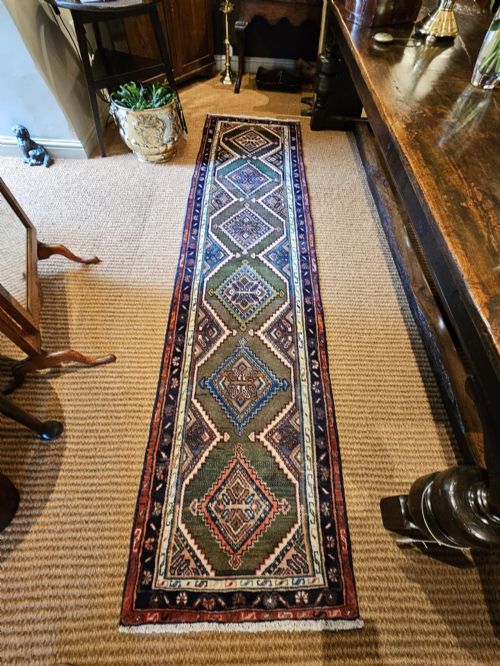
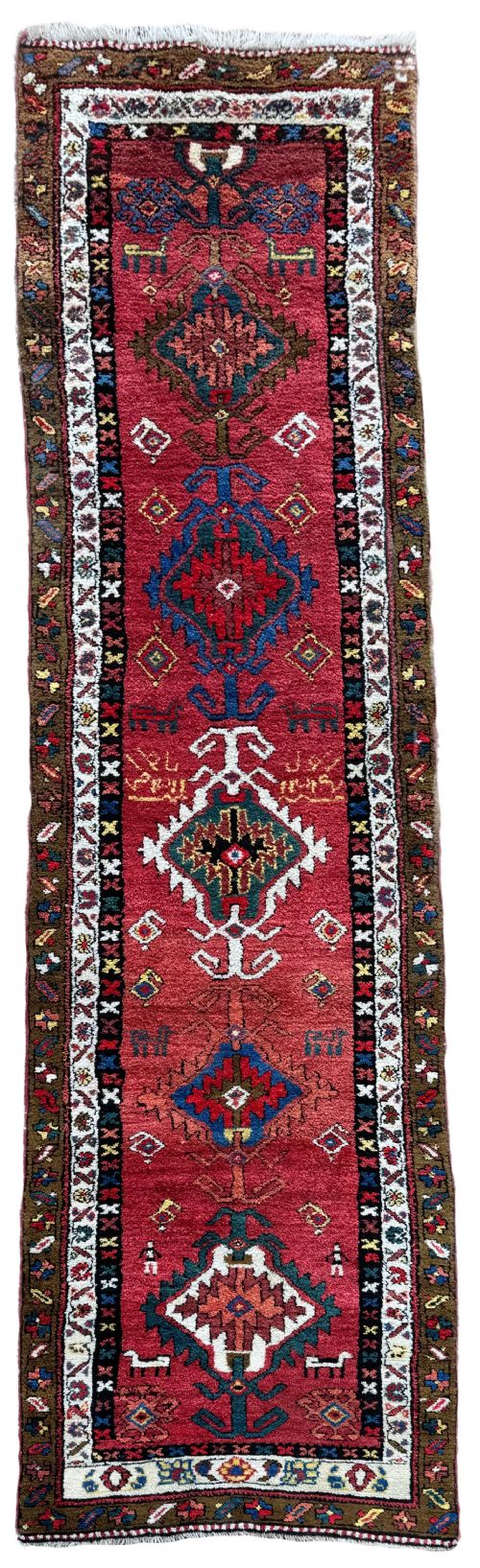
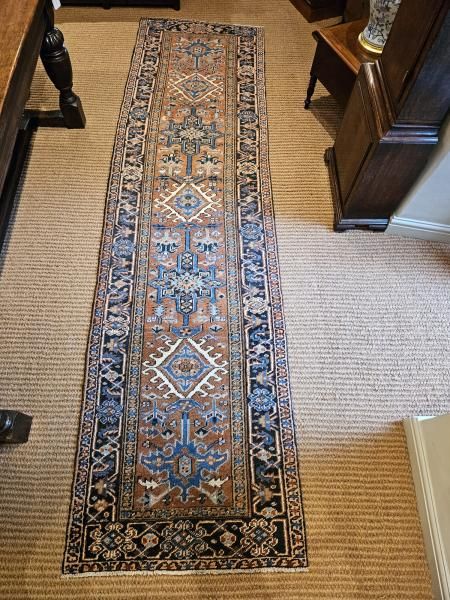
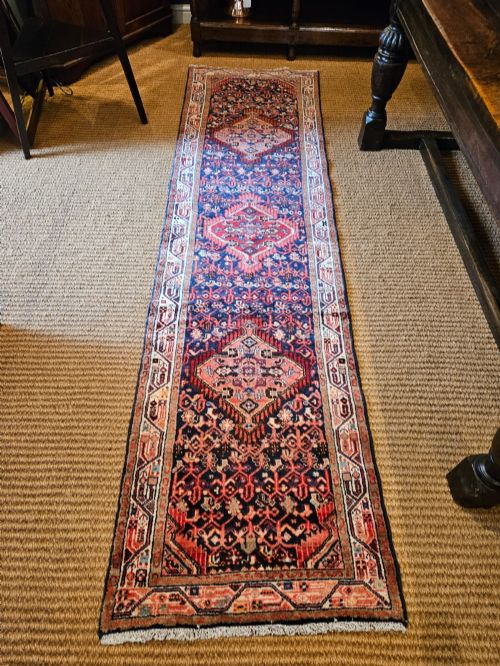


Handwoven Long Carpet Runner
A handwoven long carpet runner brings enduring warmth and texture to hallways and narrow spaces through centuries-old village and tribal traditions.
Handwoven Long Carpet Runner
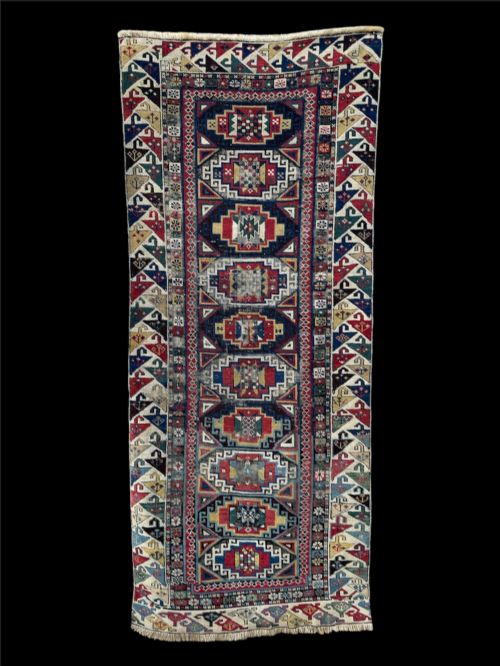
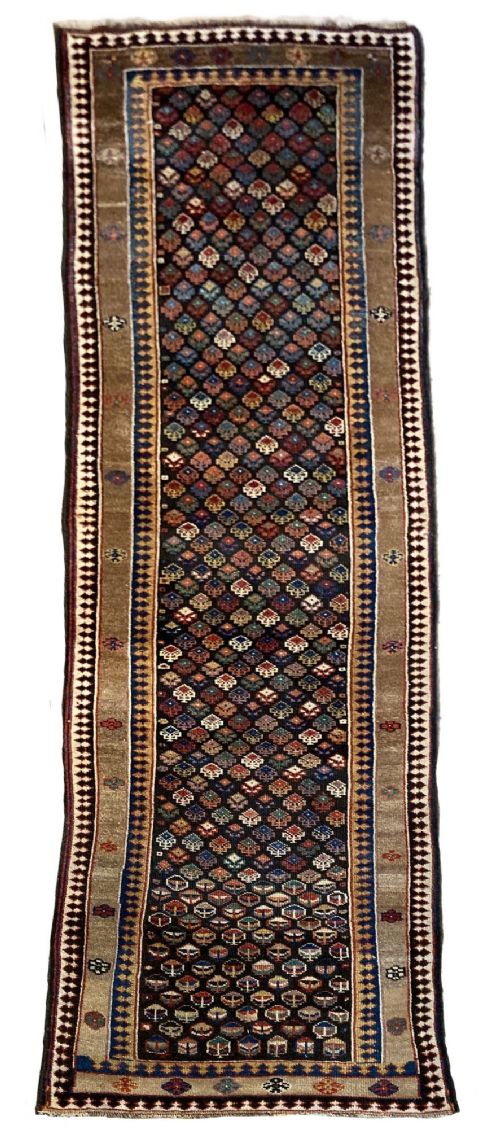
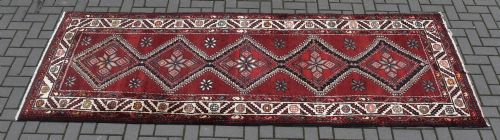
When you search for a handwoven long carpet runner, you are looking at elongated floor coverings designed specifically for corridors, hallways, and narrow living spaces. The examples on this page span from the late nineteenth century through to the 1930s, originating largely from Persian, Caucasian, Turkish, and Afghan weaving traditions. Buyers are most likely to encounter traditional tribal designs, including geometric Heriz, Kurdish, and Shirvan formats.
These pieces serve both a practical and a decorative purpose, anchoring long architectural spaces with rich visual rhythm. Many items exhibit distinct tribal characteristics, such as repeat shield motifs, diagonal stripes, or tree of life designs. Their dimensions stretch considerably in length while maintaining the narrow profile required for hallways.
Materials and construction methods
The construction of these runners relies heavily on natural fibres, predominantly wool and cotton. Many older examples utilise hand-spun wool for the pile, offering a tactile depth and resilience that changes subtly under foot. Cotton is frequently employed for the warp and weft foundations, providing structural stability to the elongated format.
Weavers employed traditional handknotting and flatweaving techniques, sometimes incorporating long kilim ends for durability and finish. The dyes applied to these wool and cotton foundations were typically derived from natural sources, yielding mellow colour palettes that age gracefully over decades.
Some runners incorporate hidden tribal symbols woven entirely from memory by village artisans.
Factors that define quality
Quality in these elongated textiles rests largely on the tightness of the weave and the precision of the knotting. A denser knot count generally allows for sharper geometric or figurative detail in patterns such as the boteh or diagonal stripe. The integrity of the foundational warp and weft threads also dictates how well a long format withstands foot traffic.
The quality of the wool itself creates a noticeable distinction across the range, with hand-spun varieties offering superior lanolin retention and softness. Additionally, the consistency of the natural dye work and the preservation of original kilim ends contribute significantly to the overall integrity of the piece.
The Handwoven Long Carpet Runner Glossary
- Runner
- A long, narrow carpet format designed primarily for hallways, corridors, and stairs. These pieces balance length with a restricted width to fit architectural spaces.
- Kilim
- A flatwoven carpet or rug made without a pile, often utilised at the ends of a runner for structural reinforcement and visual framing.
- Warp
- The vertical foundation threads stretched lengthwise on a loom before the weaving begins. Cotton is frequently used for this supportive structure.
- Weft
- The horizontal threads passed across the warp to hold the knots and rows in place. Together, warp and weft form the hidden skeleton of the textile.
- Boteh
- An almond-shaped or pine-cone motif with a curved upper end, frequently seen in Persian and tribal designs. This ancient symbol represents life and eternity.
Handwoven Long Carpet Runner: Frequently Asked Questions
Where should I place a long runner?
These narrow floor coverings suit high-traffic thoroughfares such as corridors, hallways, and entrance passages. Their elongated dimensions help to soften hard wooden or tiled floors while visually connecting different rooms.
In addition to hallways, they can line the length of a large bedroom or anchor a narrow gallery space. Care should be taken to measure the corridor width and length accurately before selecting a piece.
How do I care for an antique wool runner?
Regular, gentle vacuuming without a rotating brush roll prevents dust from settling into the wool pile. Professional cleaning suited for antique textiles is recommended every few years to preserve the natural fibres.
Rotating the runner periodically ensures even wear across the length of the carpet, especially in high-traffic hallways. Using a quality underlay prevents slipping and cushions the natural fibres against hard subfloors.
How do I identify a tribal design?
Tribal designs often feature bold geometric patterns, stylised animals, or repeated motifs like diagonal stripes and shields rather than sweeping floral curves. These patterns were woven from memory by nomadic or village weavers rather than urban workshops.
Regional characteristics, such as the distinct borders found in Caucasian Shirvan pieces or the robust structures of Heriz runners, help pinpoint their origins. Irregularities in symmetry often indicate authentic hand-woven tribal work.
What does a kilim end mean?
A kilim end refers to the flatwoven section at the top and bottom of a pile rug or runner. These un-knotted areas protect the structural foundation from fraying and provide a finished border.
Surviving kilim ends indicate that the runner retains much of its original length and integrity. They add a distinct textural contrast to the plush knotted wool pile of the central field.