
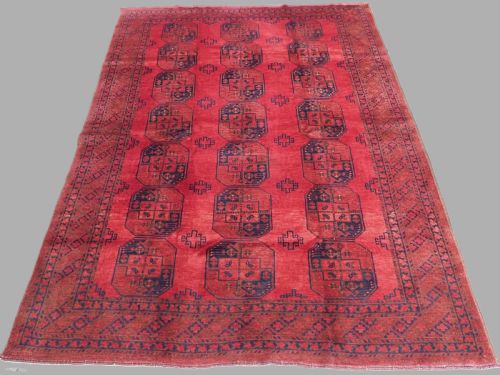


Handwoven Ersari Carpet
A handwoven ersari carpet brings deep red tones and geometric tribal patterns into a room, rooted in Central Asian weaving traditions.
Handwoven Ersari Carpet
A handwoven ersari carpet represents a distinct branch of Central Asian tribal textiles, produced across periods spanning from the mid-nineteenth century to the early twentieth century. These pieces encompass large carpets, village rugs, and smaller functional formats such as chuval and torba bag faces.
The objects seen here reflect tribal weaving traditions originating from Turkmen and Afghan makers, categorised under styles like Turkmen Tribal, Afghan Tribal, and Turkoman Tribal. Buyers will encounter full-scale carpets alongside smaller Ensi and rug panels showing classic medallion and gul layouts.
Examples range from early nineteenth-century village rugs down to heavy duty twentieth-century Afghan village carpets. Each piece relies on traditional formats that served practical domestic or nomadic purposes before entering the antique market.
What varies in quality
Quality differences stem from the handling of natural dyes and the depth of the wool pile, separating standard village items from exceptionally early or finely worked examples. The density of the weave and the clarity of tribal motifs such as the schemle gul design dictate the overall visual weight.
Condition and scale also define the hierarchy, ranging from heavy duty hard wearing utilitarian carpets to decorative Torba faces of unusual design. Early examples from the mid-nineteenth century display distinct textural characteristics distinct from later twentieth-century productions.
Nomadic weavers occasionally embedded small asymmetry quirks into repeating guls to ward off the evil eye.
The Handwoven Ersari Carpet Glossary
- Chuval
- A large storage bag face produced by Turkmen weavers, often featuring repeated gul medallions.
- Torba
- A smaller wall-hanging or tent-bag face used in nomadic households for storage.
- Ensi
- A tribal door hanging rug featuring a characteristic cross-panel design layout.
- Gul
- An octagonal primary medallion motif repeated across Turkmen and Ersari carpets.
- Beshir
- A sub-style associated with Ersari weavers known for flowing ikat designs and large formats.
Handwoven Ersari Carpet: Frequently Asked Questions
Where were these carpets made?
These textiles originate from Central Asian regions associated with Turkmen and Afghan tribal groups. Weavers produced them within village and nomadic environments.
Production methods remained traditional, passing down local patterns through generations of makers using regional wool and natural dyestuffs.
How do I care for an antique wool carpet?
Maintenance requires gentle vacuuming without a rotating brush bar to protect the hand-spun wool pile. Professional cleaning suited to antique textiles preserves the natural dyes.
Keep the carpet away from prolonged direct sunlight to prevent fading of the warm red tones characteristic of these pieces.
How are different tribal designs told apart?
Distinctions rely upon primary motifs such as the gul shape, border structures, and overall colour palette. Ersari and Saryk pieces display specific regional drawing styles.
Secondary patterns like ikat influences in Beshir pieces further separate one tribal workshop tradition from another.