


Woven Wool Door Rug
A woven wool door rug brings rich tribal texture to an interior, and these pieces offer authentic Central Asian craftsmanship.
Woven Wool Door Rug
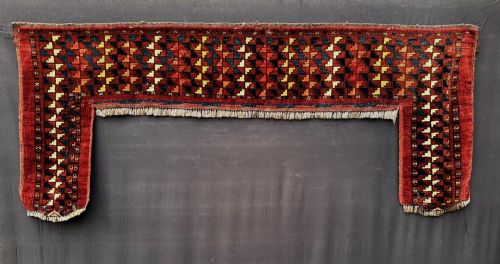
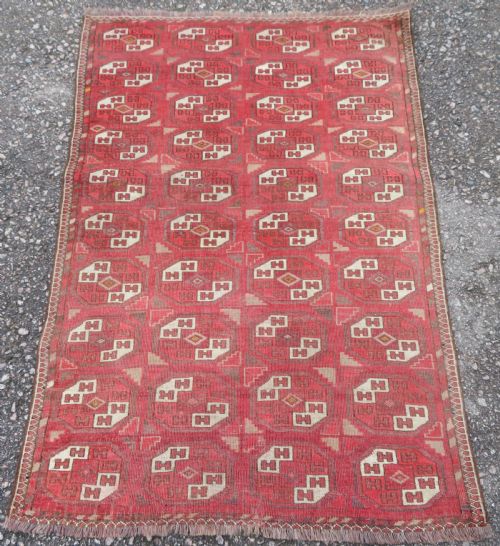
A woven wool door rug encompasses tribal tent door hangings and portieres originating from Central Asia, particularly associated with Turkmen groups such as the Ersary, Tekke, Saryk, and Yomut tribes. These textiles served functional purposes in nomadic dwellings as tent door coverings, possessing distinct layouts designed to ward off misfortune.
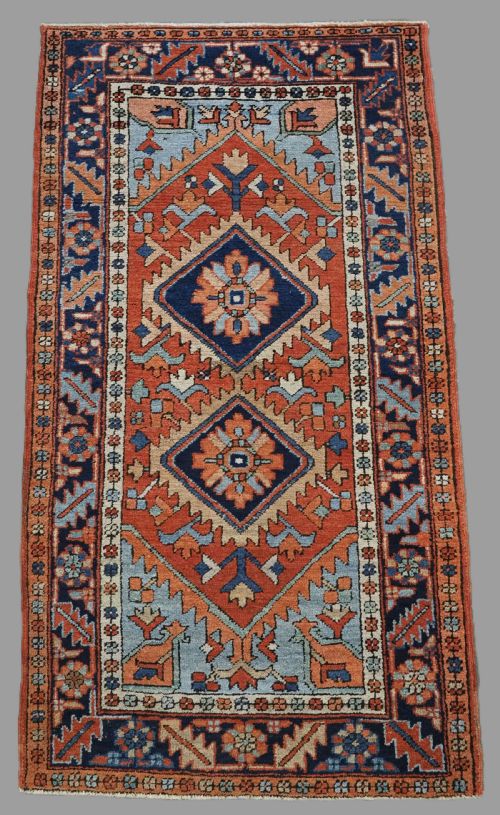
The selection on this page centres on nineteenth-century and early twentieth-century examples, spanning periods from eighteen-fifty to nineteen-thirty. Forms include engsis, kapunuks, and gapylyks, alongside regional Persian tribal pieces like Karaja and Heriz region rugs.
Most items function as area rugs or wall hangings, displaying structured field designs divided by candelabra or cross motifs. Buyers encounter wool pile constructions often utilising cotton for white elements and occasionally incorporating glass beads.
How they were made
Weavers constructed these pieces using wool pile knotted onto foundational warps and wefts, producing a dense and durable textile suited for heavy domestic use at tent entrances. Cotton appears specifically for white details within the patterns, creating sharp tonal contrast against the predominant wool grounds.
Natural dyeing traditions governed the creation of the rich colour palettes seen across these rugs, yielding deep reds, browns, and contrasting accents. Artisans hand-knotted the complex geometric fields and elem panels according to specific tribal traditions passed down through generations.
Materials recorded across the inventory include wool, cotton, and glass beads, structured into area rugs and wall hangings.
What varies in quality
Quality in a woven wool door rug rests upon the precision of the tribal drawing and the depth of the wool pile. Well-drawn elem panels and balanced proportions distinguish finer weaving from simpler output.
The vibrancy and condition of the wool directly influence the visual impact of the piece, alongside the clarity of traditional motifs such as the central cross design on an ensi.
The Woven Wool Door Rug Glossary
- Engsi
- A tribal door rug or tent hanging featuring a characteristic cross pattern dividing the field into four quadrants. These textiles traditionally hung inside nomadic yurts over the doorway.
- Kapunuk
- A decorative tent door surround or hanging placed around the entrance of a yurt. They often accompany ensis in nomadic interiors.
- Elem
- The decorative lower panel of a rug or door hanging, frequently featuring distinct tribal motifs or well-drawn design elements.
- Ersary
- A major Turkmen tribe known for producing distinctive tent door rugs and portieres with rich colouration and bold geometric drawing.
- Tekke
- A prominent Turkmen tribe recognised for finely knotted ensis displaying disciplined geometric layouts and recurring guls.
Woven Wool Door Rug: Frequently Asked Questions
Where did woven wool door rugs hang?
These textiles served as functional door coverings inside nomadic tents and yurts across Central Asia. They regulated temperature and marked the threshold of the dwelling.
Today, collectors typically display them as wall hangings or place them in low-traffic areas of a home to preserve the wool pile.
What materials make up these rugs?
The primary material is wool, used for both the knotted pile and the foundational structure. Artisans also utilised cotton specifically to render white details sharply.
Some specialised decorative hangings occasionally incorporate glass beads alongside the traditional woven elements.
How are different tribes told apart?
Tribal attribution relies on specific drawing styles, secondary ornament structures, and structural proportions unique to groups like the Tekke, Ersary, Saryk, and Yomut. Colour saturation and wool quality also offer clues to origin.
Comparing the border designs and the treatment of the central field helps distinguish one regional weaving tradition from another.