

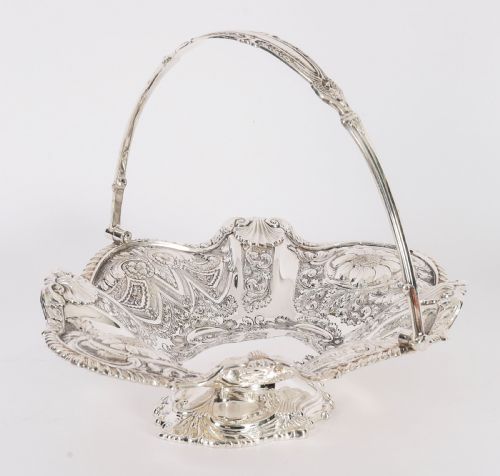
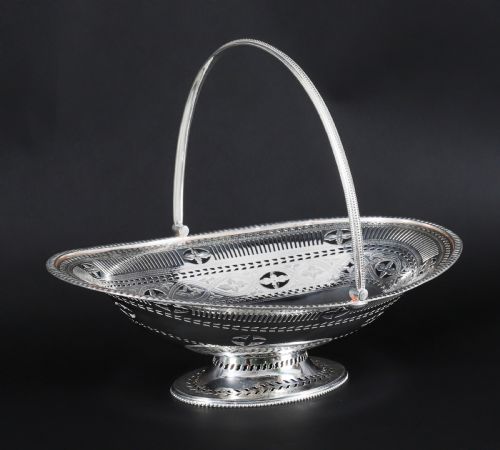
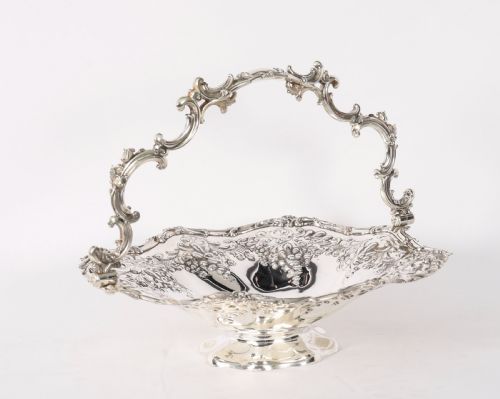
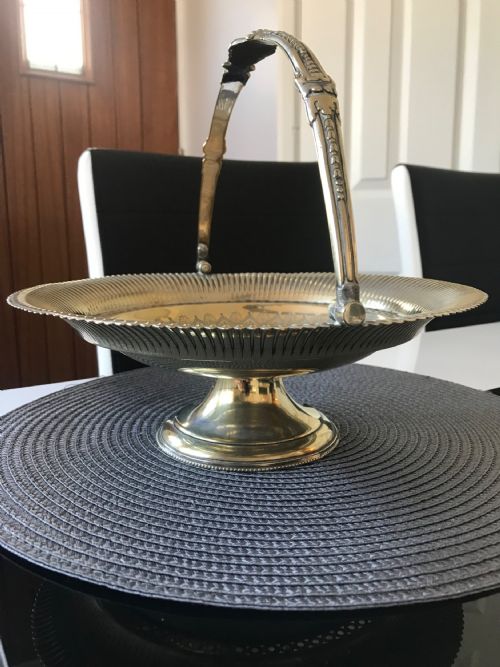
Handled Silver Basket
When you handle a handled silver basket, you hold centuries of refined dining tradition shaped from sterling silver, silver plate, and coloured glass.
Handled Silver Basket
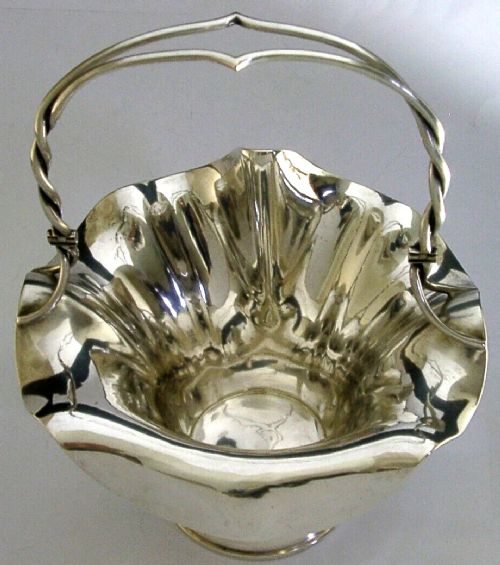
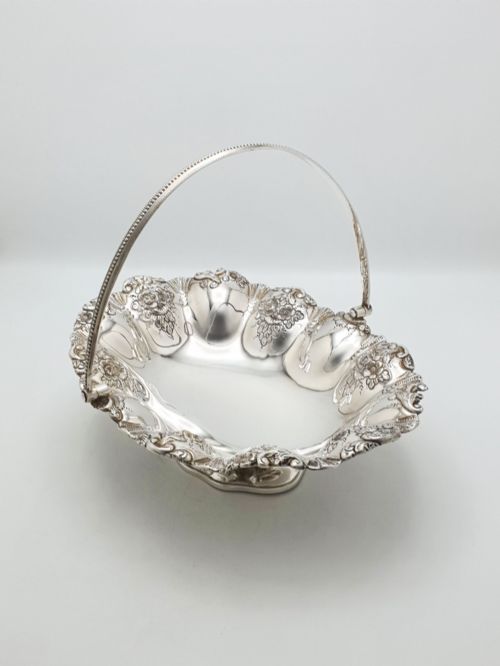
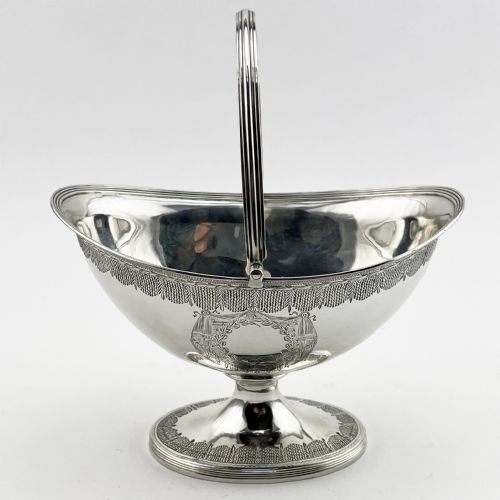
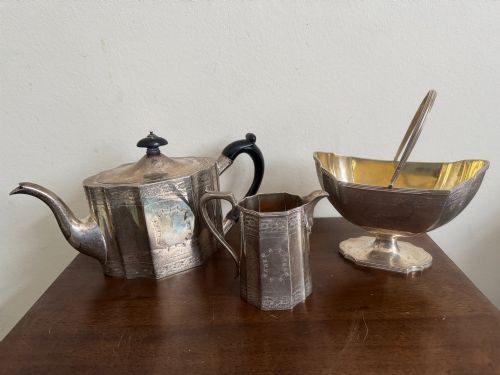
A handled silver basket is a domestic vessel designed for holding fruit, bread, sugar, or confectioneries during formal dining and tea service. These pieces range from small sugar pails and sweetmeat dishes to large fruit and bread baskets intended as centrepieces.
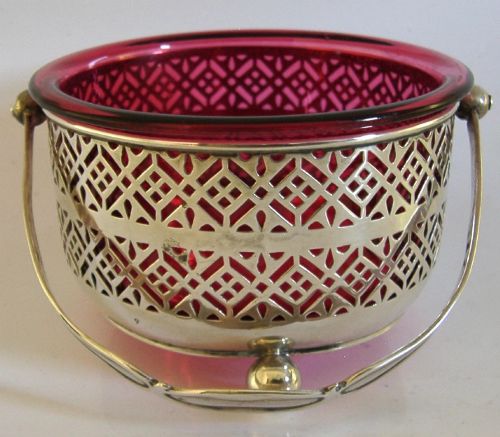
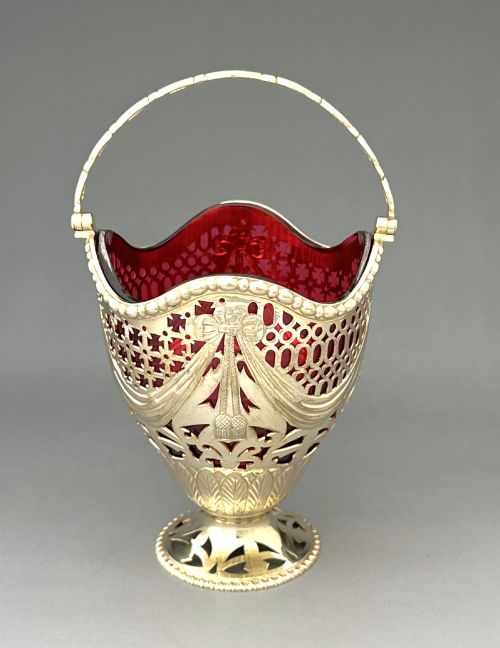
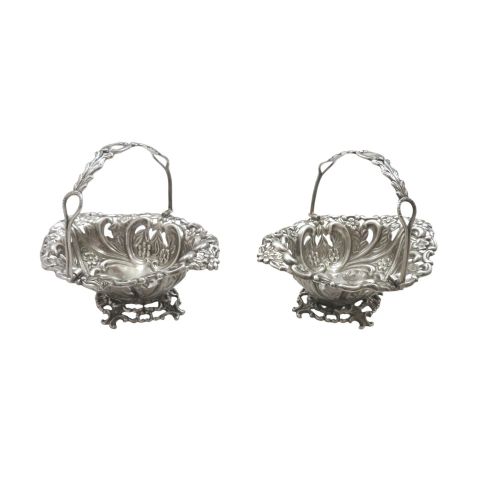
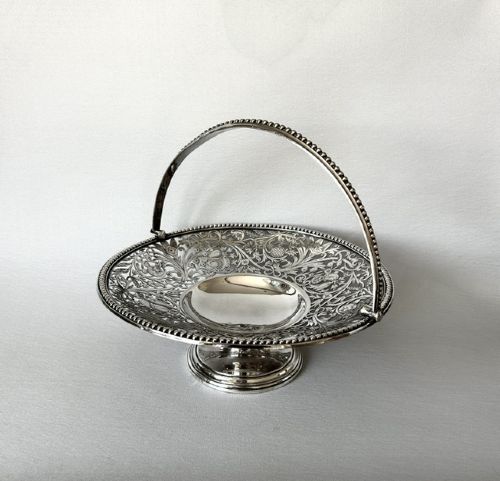
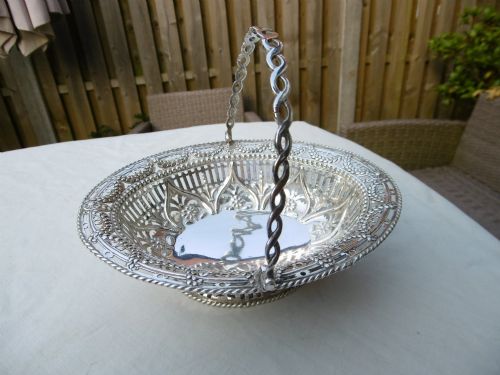
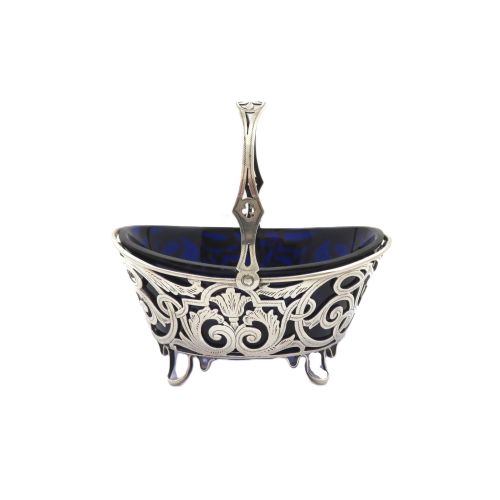
The handled silver basket most often encountered on this page originates from the Georgian, Victorian, or Edwardian eras. They frequently feature swing handles, pierced lattice designs, and occasionally coloured glass liners in cranberry, blue, or green hues.
Makers produced these containers in various forms, including oval, round, and boat-shaped profiles, reflecting changing tastes from Neoclassical austerity to Art Nouveau fluidity and Edwardian ornamentation.
How they were made
Silversmiths constructed these objects using sterling silver or copper fused with silver through Old Sheffield plating, later transitioning to electroplated nickel silver. Artisans shaped the metal bodies by hammering, casting, or spinning, before applying decorative elements.
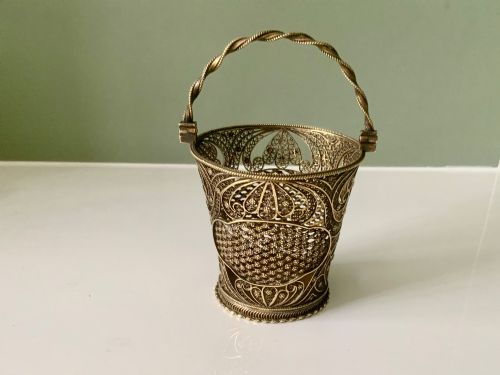
Piercing and wirework formed the intricate openwork walls seen on many examples, while repoussé and chasing techniques added raised floral and scroll motifs to the rims and handles. Glass liners, where present, were blown and fitted to match the interior contours of the basket.
Some delicate wirework baskets resemble woven birdcages, designed to hold sweetmeats while convincing nobody they contained live birds.
What varies in quality
Quality in a handled silver basket depends upon the precision of the piercing, the weight and gauge of the metal, and the crispness of the chased or cast ornament. Pieces featuring substantial weight and well-defined maker marks command greater interest.
The preservation of original components, such as matching coloured glass liners and sturdy swing handles that move smoothly on their pins, distinguishes superior examples from altered or heavily worn pieces.
Aldridge And Green·Henry Chawner·George W Scott And Sons Ltd·Thomas Bradbury·John Hunt·Samuel Herbert·Bateman·William Plummer·Solomon Houghman
The Handled Silver Basket Glossary
- Swing handle
- A movable bail handle attached to pivots on opposite sides of the basket rim, allowing the handle to fold down flat. This feature appears frequently on sugar and fruit baskets from the eighteenth century onwards.
- Pierced work
- A decorative technique involving the cutting or sawing of patterns through the metal sheet to create openwork lattices. Silversmiths employed this method extensively on Georgian and Victorian baskets.
- Old Sheffield plate
- An early composite material made by fusing a thin sheet of silver to a thicker copper base under heat. This technique predates electroplating and exhibits a characteristic rich warmth.
- Repoussé
- A metalworking method where the artisan hammers the design from the reverse side to form a raised relief on the front. It is often combined with chasing to sharpen surface details on Edwardian rims.
- Sweetmeat basket
- A small decorative vessel intended for serving bite-sized confections, nuts, or dried fruits. These diminutive items often incorporate delicate glass liners and intricate wirework.
Handled Silver Basket: Frequently Asked Questions
What were handled silver baskets used for?
These vessels served various functions on the dining table, holding items such as bread, fruit, sugar lumps, or small sweets. Depending on their size, they moved from tea tables to formal dinner service as decorative receptacles.
Smaller versions like cream pails and sweetmeat baskets held specific condiments or confections, while larger fruit and bread baskets occupied central positions on the dining board.
How do I date an antique silver basket?
Dating relies heavily upon the hallmarks stamped into the metal, which indicate the assay office, year letter, and maker's mark. Stylistic indicators also help, such as Neoclassical festoons in the late eighteenth century or flowing lines in Edwardian pieces.
Unmarked items, particularly older silver-plated wares like Old Sheffield plate, require evaluation based on manufacturing techniques, weight, and edge construction.
Are glass liners original to these baskets?
Many baskets designed for moist or sticky foods like fruit or preserves included fitted glass liners to protect the metal interior. These liners appear in colours such as cranberry, blue, and green, matching the aesthetic of the period.
Finding a piece retaining its matching period glass liner enhances the completeness of the object, though many survived solely in metal.
How should I clean my silver basket?
Maintenance requires gentle cleaning with a specialised silver cloth or mild non-abrasive polish to preserve the patina and details of the metal. Excessive scrubbing can wear away thin silver plating, particularly on nineteenth-century plated wares.
Glass liners can be washed separately in warm soapy water, taking care to avoid thermal shock.