


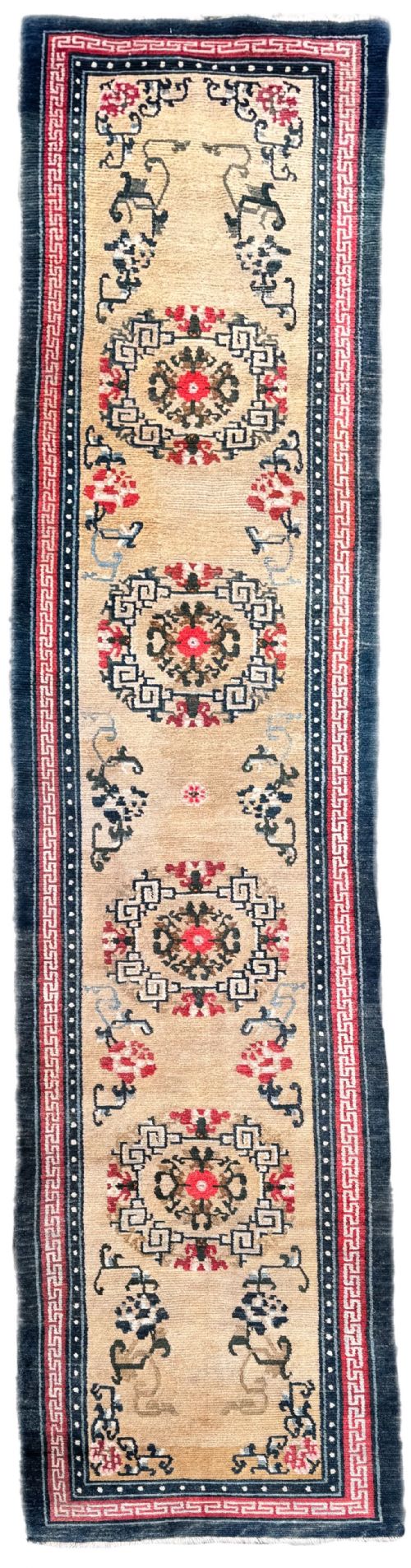

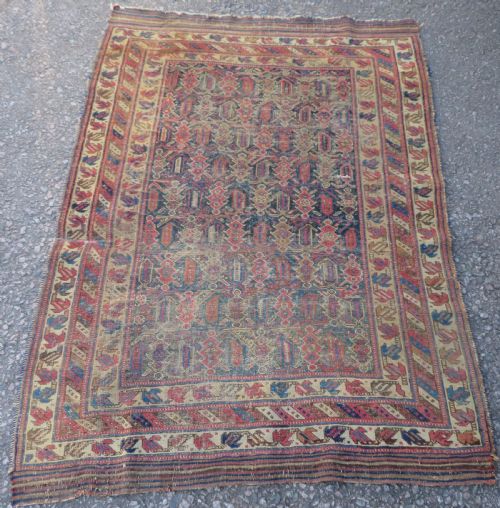

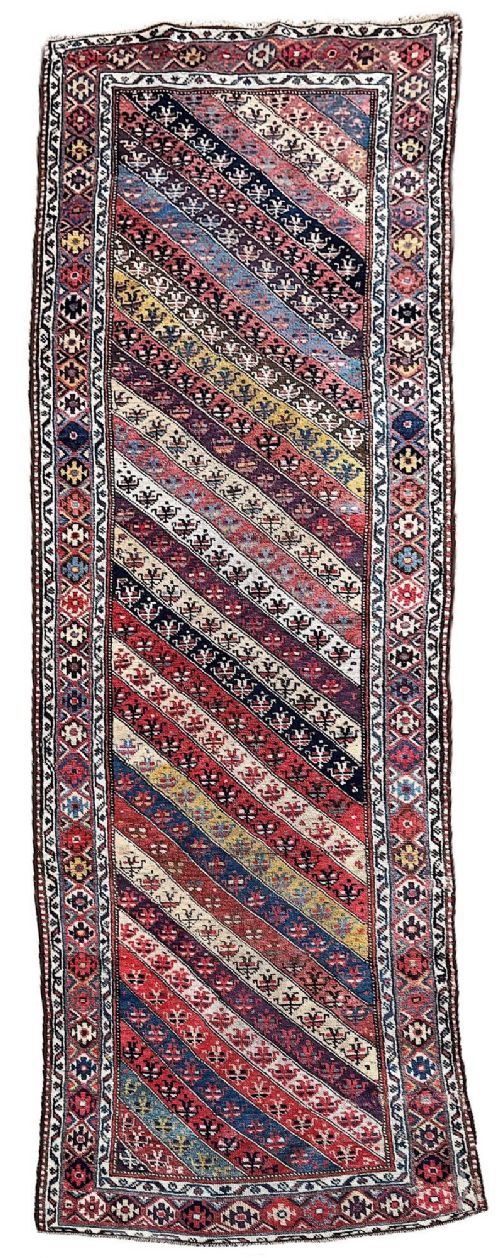


Hand Woven Hallway Carpet
A hand woven hallway carpet anchors an interior with geometry and history.
Hand Woven Hallway Carpet
When you search for a hand woven hallway carpet, you encounter elongated formats designed specifically for narrow spaces, corridors and passages. The selection centres on antique runners and long rugs originating from Persian, Caucasian, Turkish and Tibetan traditions. These textiles bring character and warmth to transitional spaces through traditional village and tribal designs.
The pieces available span from the late nineteenth century into the early decades of the twentieth century, including examples woven by Kurdish, Afshar, Luri and Bakhtiari makers. You will find formats ranging from narrow corridor lengths to broader long rugs that suit substantial entrance halls. Regional patterns such as Heriz, Kazak, Bidjar and Hamadan appear frequently across the listings.
Village and nomadic pieces dominate the selection, offering geometric medallions, repeated boteh motifs and expressive tribal borders. These floor coverings were produced for domestic use in residential homes and country houses, acquiring a rich patina through decades of daily footfall. Their enduring appeal lies in the organic dye colours and spontaneous composition that machine-made carpets cannot replicate.
Evaluating quality and execution
Knot density and structural tightness distinguish finer town pieces from coarser tribal work. A denser weave allows for sharper definition in intricate geometric and floral motifs. Materials also play a role, with hand-spun wool offering a greater depth of texture and tactile richness.
Design coherence and the handling of natural dyes separate standard examples from exceptional ones. The vitality of the palette and the confidence shown in drawing tribal patterns reflect the weaver's individual skill. Proportion and balance across exceptionally long formats dictate the visual success of a runner.
Some runners measure over seven metres long, proving that past generations took very long walks indoors.
The Hand Woven Hallway Carpet Glossary
- Runner
- A long, narrow carpet format specifically proportioned for hallways, corridors and stairs. These pieces direct movement through architectural spaces.
- Kelleh
- A large rectangular rug format, broader than a runner yet longer than a standard room-size carpet. They were traditionally used in Persian domestic interiors.
- Boteh
- A stylised almond or paisley motif representing a floral spray, cypress tree or flame. This ancient Persian symbol appears frequently in tribal and village weaving.
- Warp
- The vertical foundation threads stretched lengthwise on the loom before weaving begins. Weft threads are interlaced across these structural elements.
Hand Woven Hallway Carpet: Frequently Asked Questions
How do I choose the right runner length?
Measure your hallway while leaving a uniform border of exposed floorboards around the perimeter. Account for door clearance to ensure the carpet does not obstruct movement.
Consider the visual proportions of the corridor. Extremely long narrow formats suit extended hallways, while broader long rugs anchor wider entryways.
Where were these hallway carpets made?
Production spans various weaving regions including Persia, the Caucasus, Anatolia and Tibet. Village workshops, nomadic tribes and regional centres each contributed distinct aesthetic traditions.
Persian districts such as Heriz, Bidjar and Hamadan produced resilient formats tailored for domestic passages. Caucasian and Kurdish weavers focused on bold geometric designs.
How should I care for an antique wool runner?
Use a quality underlay beneath the carpet to prevent slipping and reduce friction against the floorboards. Vacuum gently with the suction attachment rather than a rotating brush bar.
Rotate the runner periodically to ensure even wear across high-traffic areas. Professional cleaning preserves the integrity of natural wool fibres and organic dyes.
What distinguishes tribal designs from town pieces?
Tribal and village rugs feature geometric memory patterns, spontaneous layouts and expressive tribal motifs. These designs reflect the local heritage of nomadic and pastoral makers.
Town workshops produced more formal, symmetrical compositions with precise floral medallions. The handling of the wool and the structure of the foundation often indicate the origin.