
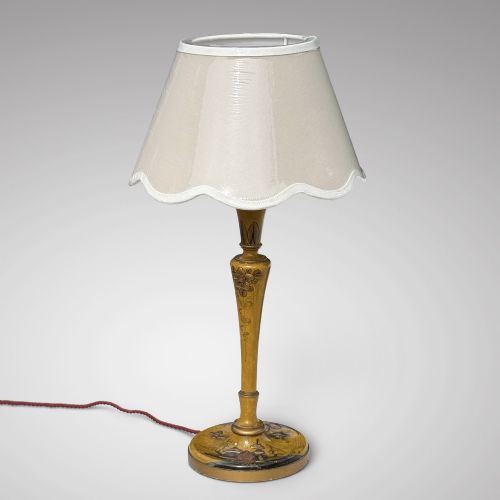
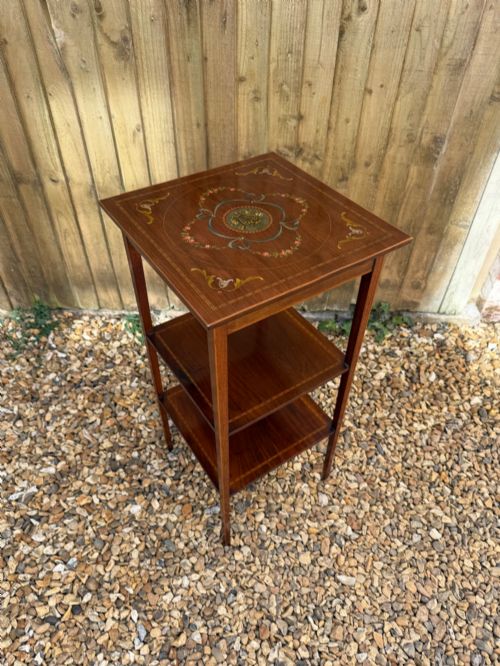
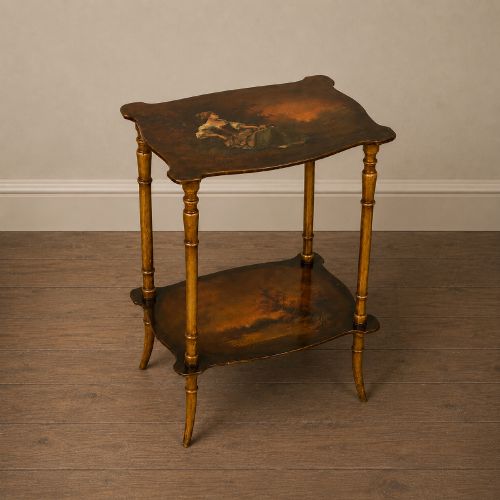

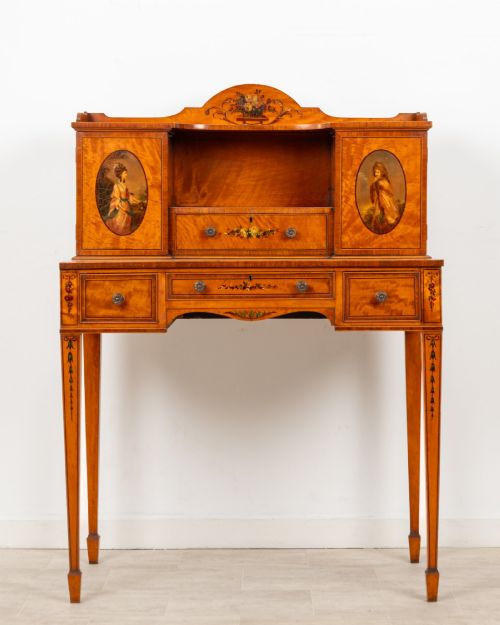
Hand Painted Wood Table
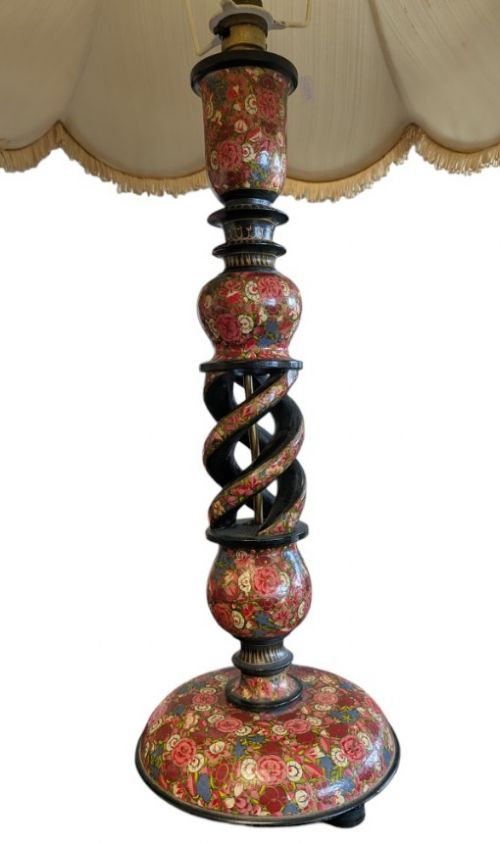
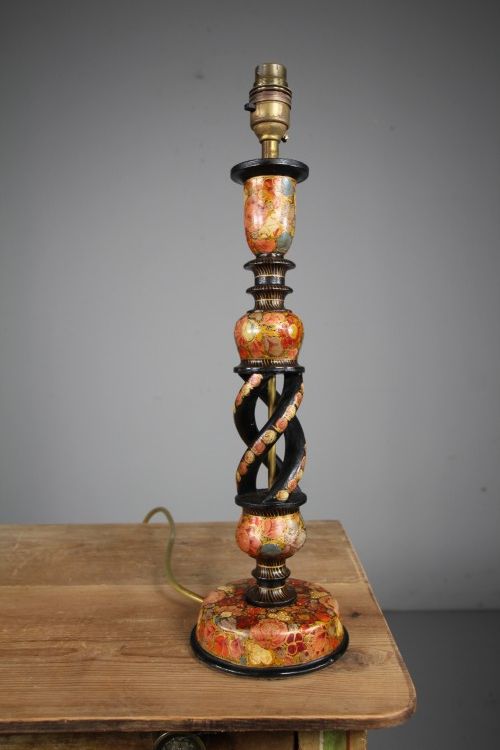
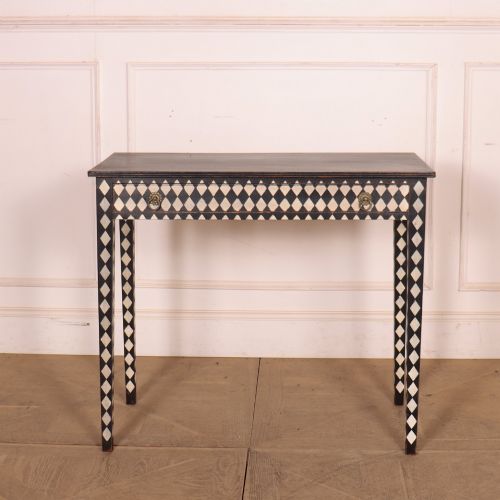
When you want a hand painted wood table, you are choosing furniture that combines practical form with expressive surface decoration.
Hand Painted Wood Table
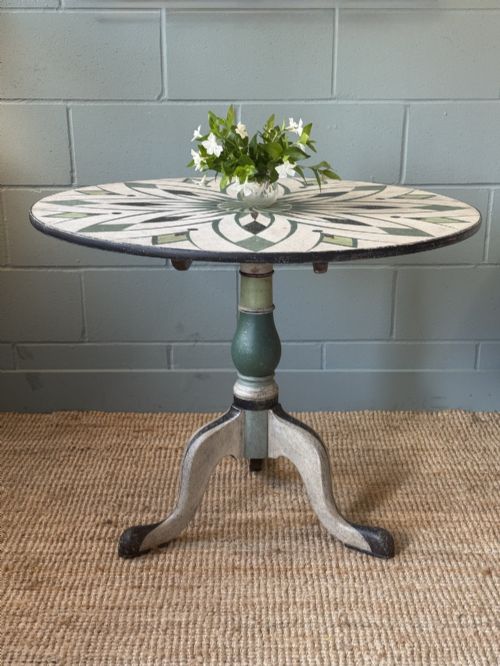
A hand painted wood table provides a functional surface enriched by decorative motifs applied directly to the timber. These pieces appear across various forms, including occasional tables, side tables, coffee tables, and writing desks, spanning from the nineteenth century through the Edwardian era and into the nineteen-thirties.
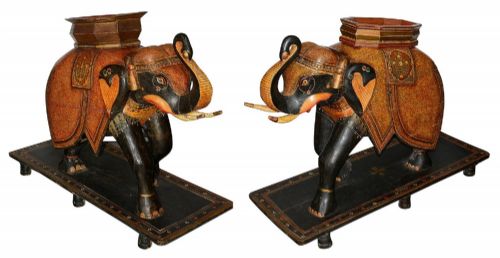
The selections frequently manifest distinct stylistic traditions such as Chinoiserie, Sheraton Revival, and Anglo-Indian aesthetics. Buyers will regularly encounter compact occasional tables and nests of tables alongside larger console and serving tables originating from English, Continental, and Asian workshops.
How They Were Made
Craftsmen built the foundations using timbers like mahogany, satinwood, oak, and birch, often shaping them into tilt-top tables, drums, or multi-tiered etageres. Structural joinery supported the form before surface decoration took place.
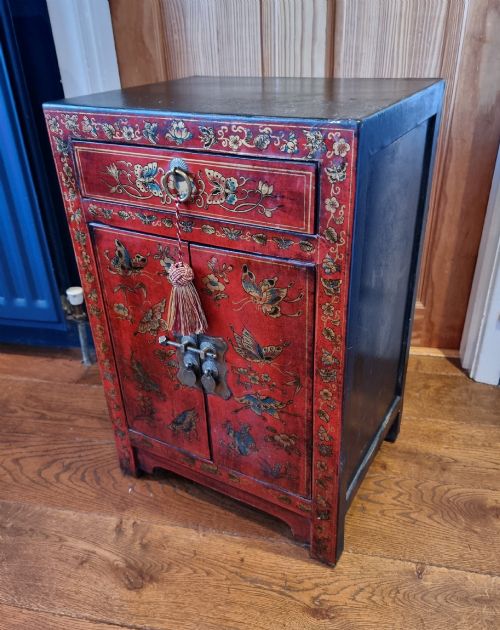
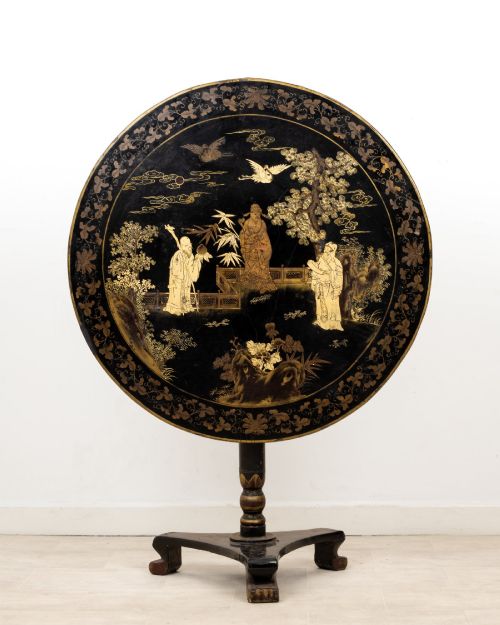
Makers applied paint, lacquer, gesso, and gold leaf directly to the wood or over a prepared base. Floral patterns, pastoral scenes, and orientalist motifs were meticulously hand brushed, sometimes complemented by inlaid elements or later decorative additions.
Listings feature woods like mahogany and satinwood alongside decorative applications of lacquer, gesso, and gold leaf across multiple centuries.
What Varies in Quality
The standard of a hand painted wood table depends heavily on the precision of the underlying cabinetmaking and the finesse of the brushwork. Finely figured satinwood or mahogany providing a stable, well-joined carcase elevates an example above simpler rustic builds.
The refinement of the painted decoration dictates visual success. Delicate, well-preserved floral panels and intricate Chinoiserie lacquering demonstrate superior execution compared to simpler or heavily restored surface designs.
The Hand Painted Wood Table Glossary
- Satinwood
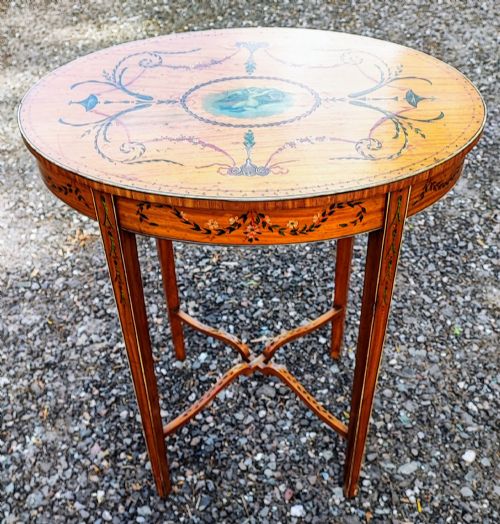
- A durable, yellowish wood with a lustrous sheen, frequently utilised for fine Edwardian tables and writing desks. It provides a smooth canvas for delicate hand-painted floral borders.
- Chinoiserie
- A European decorative style reflecting Chinese artistic influences, characterised by lacquered surfaces and illustrative motifs of figures, pagodas, and landscapes. It appears prominently on green, ochre, and red tables from the early twentieth century.
- Tilt-top table
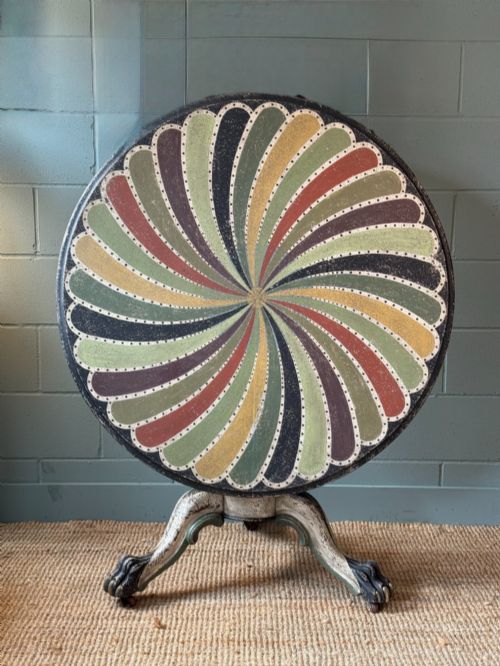
- A form featuring a hinged tabletop that can be rotated to a vertical position when not in use. These practical pieces often showcase painted floral or petal designs upon the circular top.
- Étagère
- A piece of furniture consisting of open shelves for displaying small objects, often configured as a side table with multiple tiers. They frequently incorporate painted and gilt finishes.
- Gesso
- A plaster-like mixture applied to wood surfaces to create a smooth base for painting and gilding. It allows for crisp relief details beneath the pigmented layers.
Hand Painted Wood Table: Frequently Asked Questions
What periods do these painted tables come from?
The pieces span the nineteenth century, the Victorian period, the Edwardian era, and into the nineteen-thirties. Many reflect revival styles popular during the late Victorian and Edwardian decades.
Craftsmen also produced distinctive lacquered and painted forms through the early decades of the twentieth century, particularly in Anglo-Indian and Chinoiserie traditions.
How do I distinguish between original and later painted designs?
Examination of the surface integration and the wear patterns helps determine the age of the decoration. Some pieces, such as certain Victorian tilt-top tables, feature later painted floral or petal designs applied over older timber.
Original Edwardian satinwood pieces generally show pigment settled evenly into the grain alongside the natural ageing of the clear varnish layers above.
Where were these tables used in a home?
Smaller occasional tables, nests, and lamp tables served flexible functions in sitting rooms and drawing rooms for holding books, lamps, or tea. Card tables and demi-lune console tables provided surfaces for parlor games and formal displays.
Writing desks and serving tables offered dedicated workspaces or utility in studies and reception rooms.
What is the difference between satinwood and mahogany pieces?
Satinwood offers a pale, golden-yellow ground that reflects light and provides a bright backdrop for detailed polychrome painting, favoured by Sheraton Revival makers. Mahogany provides a darker, denser brown foundation.
Mahogany tables with painted decoration often rely on contrasting borders or later sign-writing rather than overall light-ground floral compositions.
How should I care for a lacquered wood table?
Lacquered and painted wooden surfaces require protection from direct sunlight and excessive moisture to prevent fading or lifting of the gesso and paint layers. Gentle dusting with a dry, soft cloth maintains the finish without abrasion.
Harsh chemical cleaners must be avoided entirely to preserve the integrity of the original binders and gold leaf.