

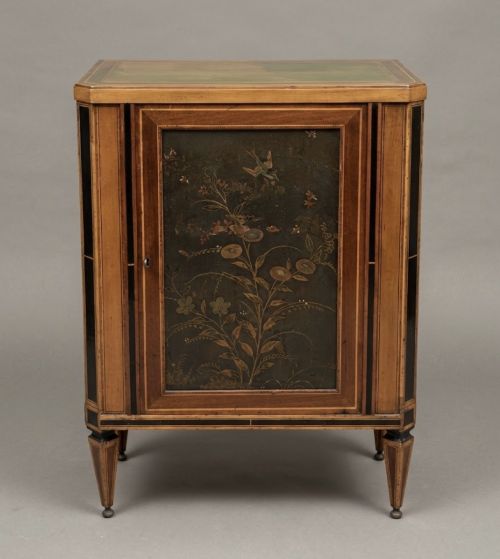
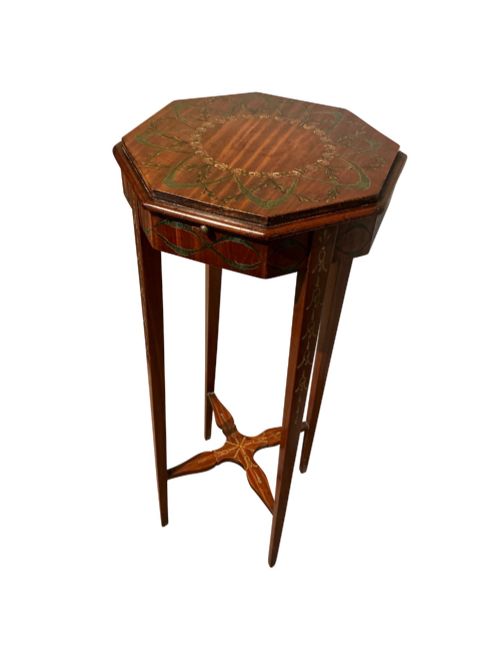
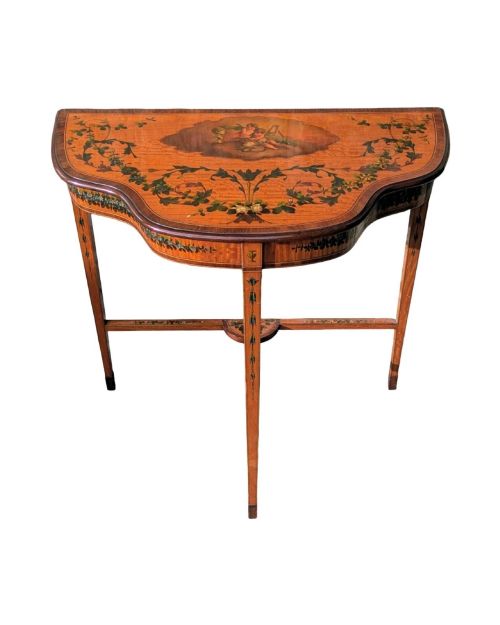
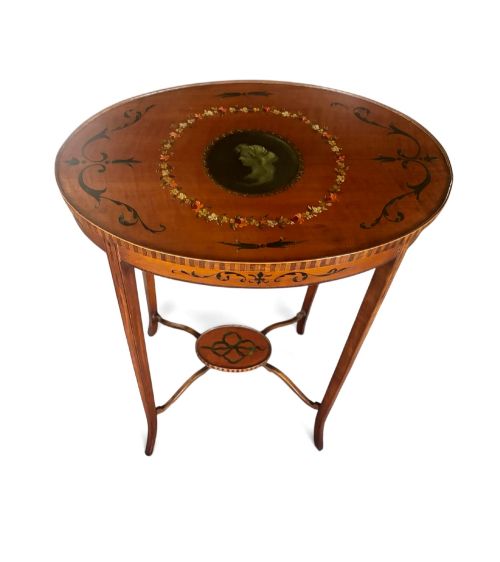






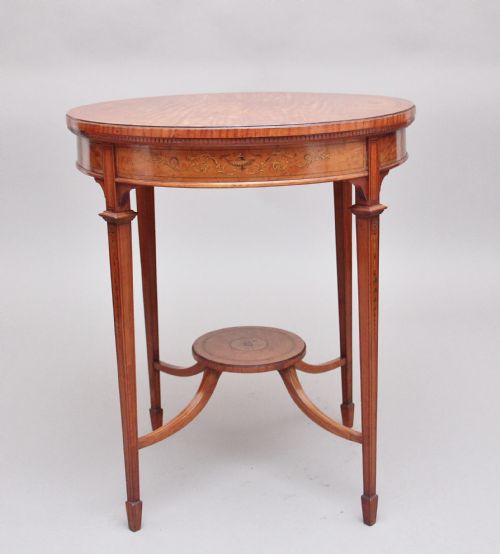
Painted Satinwood Accent Table
These painted satinwood accent table pieces bring delicate neoclassical colour and refined timber work to a room.
Painted Satinwood Accent Table
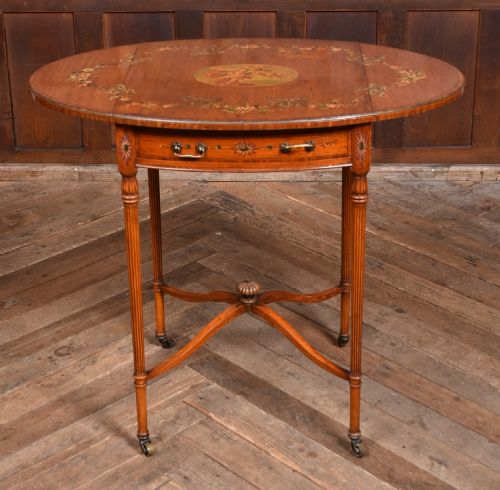
A painted satinwood accent table brings lighter timber tones and hand-painted ornament into interior spaces. These pieces span periods from the eighteenth century to the twentieth century, taking the form of occasional tables, side tables, drop-leaf tables, and Pembroke tables.
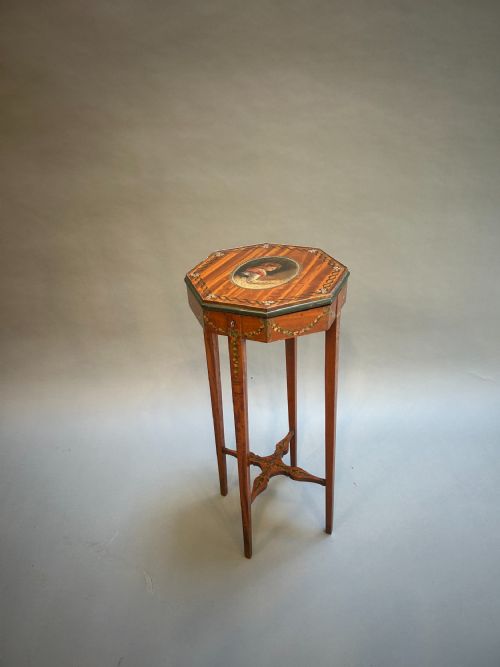
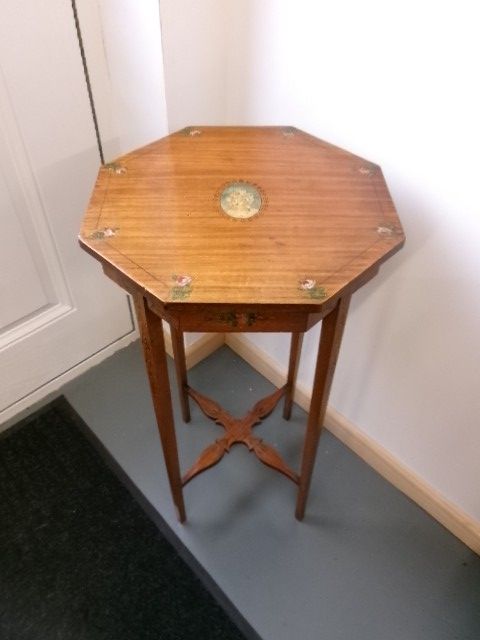
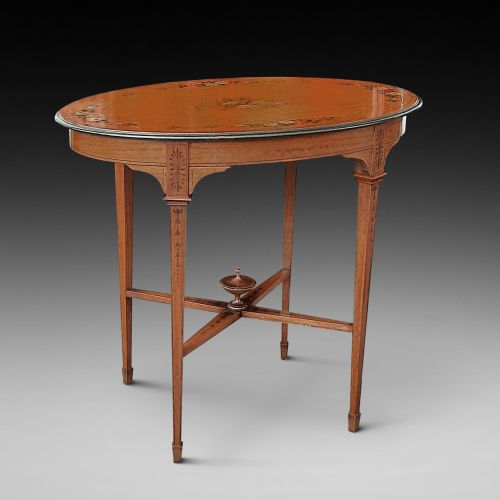
The Edwardian era and the Sheraton Revival style dominate the selection, alongside Victorian and Georgian examples. Such tables often feature octagonal or oval tops supported by slender legs designed for display and light service.
How they were made
Cabinet makers utilised satinwood timber, frequently paired with mahogany or enhanced by inlay and marquetry work. Surfaces were polished to a smooth finish before artists applied hand-painted floral decoration and neoclassical scenes.
Drop-leaf and Pembroke forms incorporated hinged flaps supported by pivoting wooden brackets. Brass fittings appeared on select designs, while structural joinery maintained the lightweight elegance required for occasional use.
Painted Satinwood Accent Table Retail Price Guide 2026
Typical asking prices for painted satinwood accent table among the pieces listed under this phrase on Sellingantiques today, from the lower quarter to the upper quarter. They describe what is for sale here now, not the wider market.
Several tables retain their original drop-leaf hinges, ready to deploy extra flaps whenever unexpected tea guests arrive.
What varies in quality
The precision and detail of the hand-painted decoration separate finer examples from standard production. Artisans who rendered floral motifs and neoclassical scenes with depth and fine brushwork elevated the entire piece.
The choice of timber figure and the crispness of the inlay or marquetry dictate the upper tier of the range. Tables displaying balanced proportions and careful integration of painted elements with the underlying satinwood grain command greater appreciation.
The Painted Satinwood Accent Table Glossary
- Satinwood
- A dense, lustrous tropical timber with a golden sheen that accepts polish and paint exceptionally well. It forms the primary visual surface of these tables.
- Pembroke table
- A small occasional table featuring two hinged drop leaves on opposing sides. It often includes a drawer and slender tapering legs.
- Marquetry
- The art of applying pieces of veneer to a structure to form decorative patterns and pictures. Makers used contrasting timbers to create geometric or pictorial designs.
- Neoclassical manner
- A design style drawing inspiration from classical antiquity, featuring symmetrical motifs, urns, swags, and classical figures. It heavily influenced the painted decoration on these surfaces.
- Occasional table
- A small, movable table designed for a specific, transient use in a sitting room or parlour. These pieces prioritize elegance and portability over heavy service.
Painted Satinwood Accent Table: Frequently Asked Questions
Where should I place an occasional table?
These tables suit sitting rooms, hallways, and drawing rooms where their decorative surfaces remain visible. They function well beside a chair or against a wall for lamps and small objects.
Because satinwood is sensitive to strong sunlight and excessive moisture, position the table away from direct heat sources and uncovered windows.
How do I clean a painted satinwood surface?
Dust the timber gently with a soft, dry cloth to prevent the accumulation of grit. Avoid chemical sprays, abrasive cleaners, and excessive water, which can damage the paintwork.
Maintain a stable indoor humidity level to protect the timber grain and the delicate painted decoration from cracking over time.
What is a drop-leaf table used for?
Drop-leaf tables offer flexibility by allowing the leaves to drop down when space is limited. Raising the flaps creates a larger surface for writing, sewing, or serving.
Pembroke variations typically include small drawers for storage, making them versatile additions to smaller rooms.
How can I tell a Sheraton Revival piece from an original eighteenth-century table?
Sheraton Revival pieces date predominantly from the late nineteenth and early twentieth centuries, drawing inspiration from earlier Georgian designs. Construction details, tool marks, and secondary timbers often help distinguish the revival period from the original Georgian era.
Examine the secondary woods beneath the table and the characteristics of the paint medium to understand the period of manufacture more clearly.