

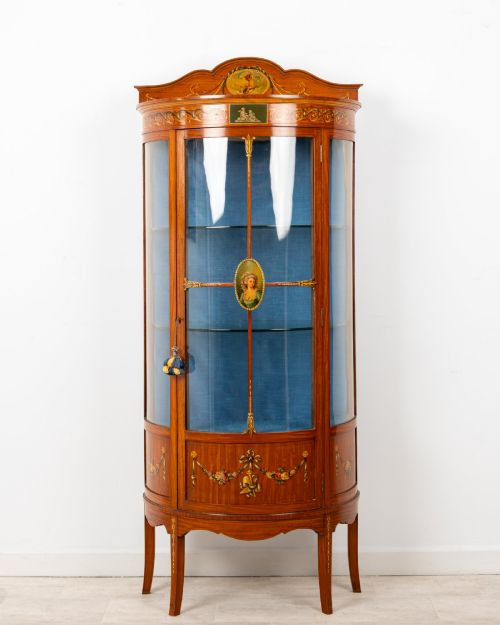


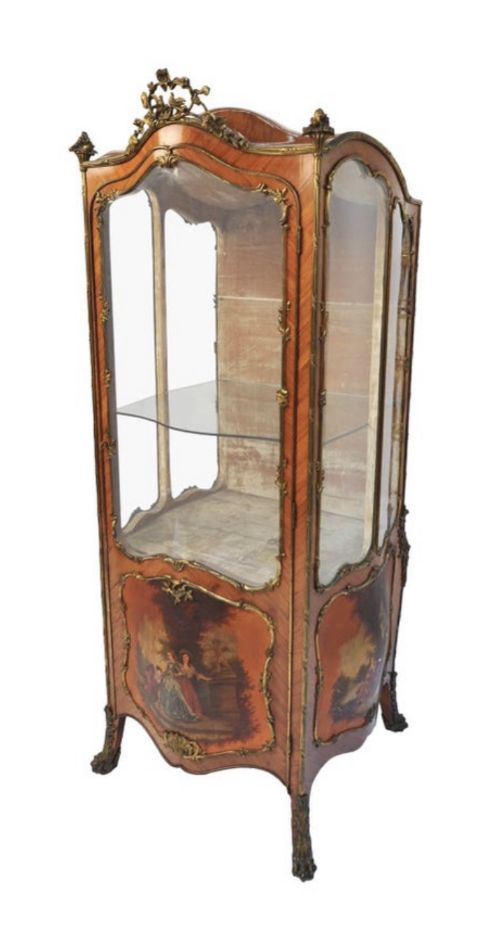


Hand Painted Vitrine Cabinet
These hand painted vitrine cabinet pieces are glazed display furniture decorated with delicate brushwork, offering collectors an elegant way to showcase porcelain and small objects.
Hand Painted Vitrine Cabinet
A hand painted vitrine cabinet brings together fine timber structures and detailed surface art, designed primarily to protect and display precious items in a drawing room or parlour. Buyers seeking this phrase will encounter various forms ranging from corner cabinets to freestanding bow front display cases and bijouterie tables.
The pieces available span the nineteenth century into the early twentieth century, drawing heavily on Edwardian tastes alongside French Rococo Revival and Louis XV styles. Makers of the period utilised forms such as serpentine fronts, sedan styles, and cabinets on stands to create diverse visual impacts.
Most examples rely on mahogany or satinwood carcasses, often enriched with satinwood inlay, kingwood, or lacquered finishes in the Chinoiserie taste. Glass panels dominate the upper sections to ensure light reaches the interior shelves where collectibles sit.
How they were made
Cabinet makers constructed the foundational frames using dense timbers like mahogany, kingwood, and satinwood, frequently applying fine veneer and decorative inlay to the exterior surfaces. Glass was carefully fitted into doors and side panels to enclose the display space securely.
Surface decoration involved delicate hand painted floral motifs or scenic panels executed in the Vernis Martin style, requiring steady brushwork directly onto the prepared wood or lacquer. Metal elements such as brass, gilt bronze, and ormolu mounts were cast and applied to frame corners, legs, and cornices.
Marble tops occasionally crowned the finest French pieces, adding weight and a contrasting cooling texture to the warm tones of the timber and paintwork.
Hand Painted Vitrine Cabinet Retail Price Guide 2026
Typical asking prices for hand painted vitrine cabinet among the pieces listed under this phrase on Sellingantiques today, from the lower quarter to the upper quarter. They describe what is for sale here now, not the wider market.
Surviving examples utilise decorative elements including brass, gilt bronze, ormolu mounts, and glazed display compartments.
What varies in quality
The refinement of the hand painted decoration dictates much of the distinction between standard and superior pieces, with skilled brushwork displaying greater depth, shading, and botanical accuracy in floral motifs. Cabinets featuring complex Vernis Martin pastoral scenes or elaborate Chinoiserie lacquer demand higher levels of artisan competency.
Selection of primary timbers and secondary veneers also determines value, as figured satinwood and richly grained kingwood demand more careful matching and joinery than plain mahogany. Furthermore, the presence of substantial cast ormolu and gilt bronze mounts rather than simpler brass hardware elevates the overall execution of the cabinet.
The Hand Painted Vitrine Cabinet Glossary
- Vitrine
- A glass-fronted display cabinet or case designed specifically for showing porcelain, curiosities, and fine ornaments. The form became particularly popular in French and English parlours during the eighteenth and nineteenth centuries.
- Vernis Martin
- A type of decorative lacquer finish developed by the Martin brothers in eighteenth-century France, imitating Japanese lacquer. It involves multiple layers of varnish applied over painted scenes.
- Satinwood
- A durable, yellowish timber prized for its lustrous, satiny sheen and smooth grain. It served as a primary wood and a decorative veneer in late eighteenth and Edwardian furniture.
- Ormolu
- Gilded bronze mounted onto furniture and decorative objects as hardware or ornamentation. The technique involves applying a gold amalgam to cast bronze before heating.
- Bijouterie table
- A glazed display table with a glass top and upper compartment intended for displaying jewellery and small trinkets. These tables share stylistic traits with standard vitrines of the period.
Hand Painted Vitrine Cabinet: Frequently Asked Questions
What rooms suit a hand painted vitrine cabinet?
These cabinets suit drawing rooms, dining rooms, or quiet studies where their glass panels and painted surfaces can catch natural light. They provide a secure focal point while keeping dust away from delicate collections.
Placement away from direct sunlight protects both the painted panels and the timber finishes from fading over time.
How do I clean the glass and painted panels?
Glass doors require gentle wiping with a soft, lint-free cloth and mild glass cleaner applied to the cloth rather than sprayed directly onto the wood. Painted surfaces need only a dry feather duster or extremely soft cloth.
Avoid chemical polishes or water on the painted areas, as moisture can lift old varnish and delicate pigments.
Can these cabinets hold heavy porcelain?
Most vitrines feature relatively thin wooden or glass interior shelves designed for light decorative objects like teacups, figurines, and small silver pieces. Heavy ceramic dinner services or thick books exceed the weight capacity of antique shelving.
Distributing weight evenly prevents sagging and protects the internal framing from undue strain.
How do I distinguish Edwardian pieces from nineteenth-century ones?
Edwardian examples often lean towards lighter satinwood and mahogany frames with restrained floral decoration influenced by Sheraton revivals. Nineteenth-century French pieces frequently incorporate heavier gilt bronze mounts, marble tops, and more dramatic serpentine or Vernis Martin finishes.
Examining the interior construction, drawer linings, and hardware styles helps clarify the likely manufacturing era.