
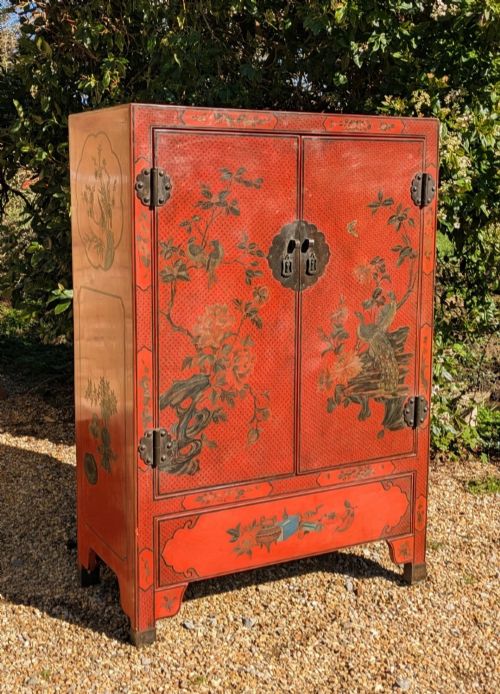
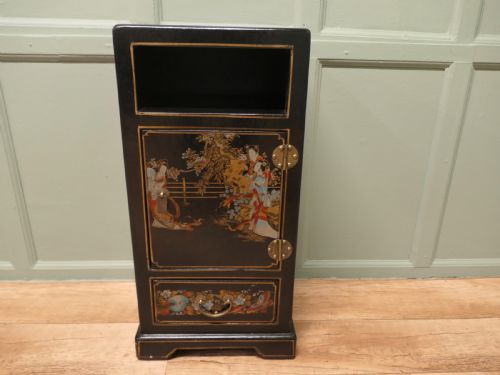
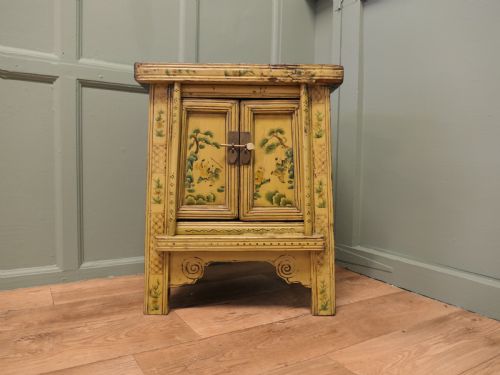
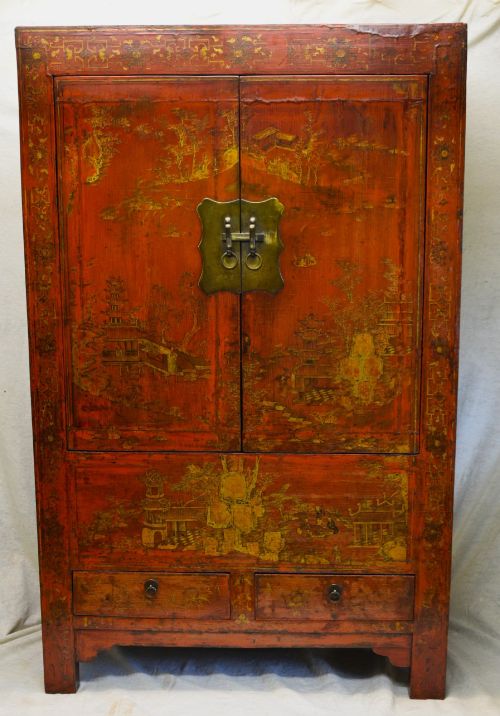

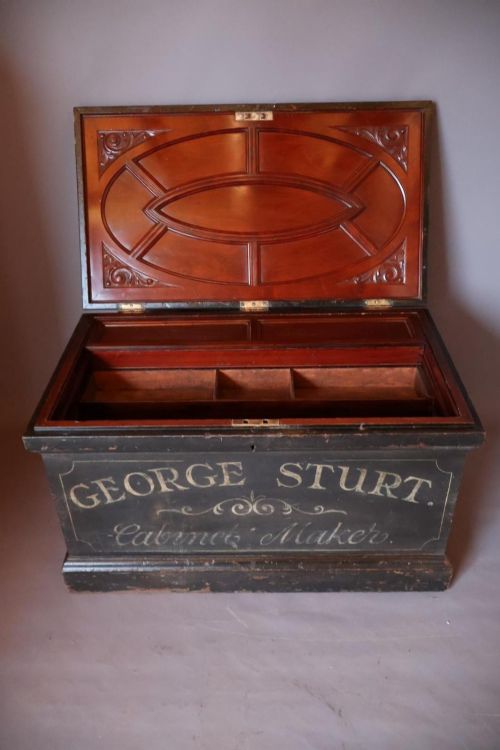


Hand Painted Storage Cabinet
A hand painted storage cabinet brings decorative surface work and practical organisation together, spanning Chinoiserie lacquer to European folk art.
Hand Painted Storage Cabinet
When searching for a hand painted storage cabinet, buyers encounter pieces designed to conceal household items while displaying elaborate surface decoration. The selection includes tall marriage cupboards, side cabinets, corner cupboards, and chests of drawers spanning from the eighteenth century into the twentieth.
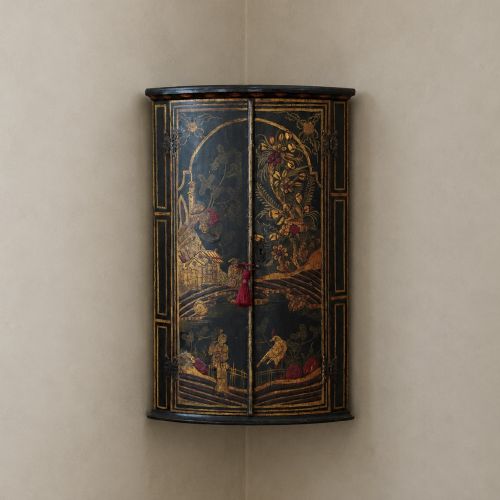
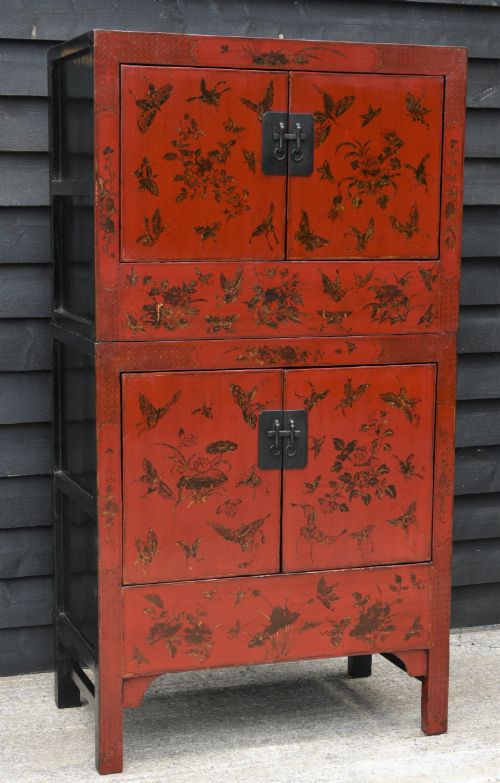
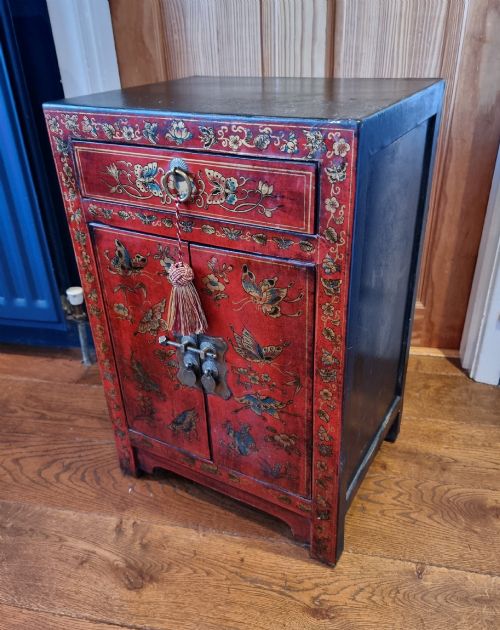
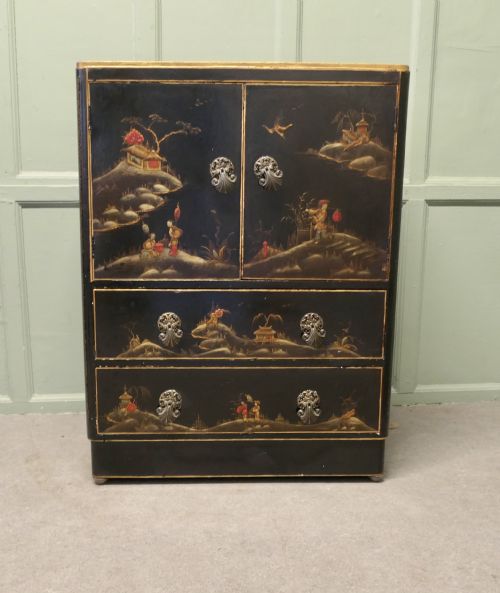
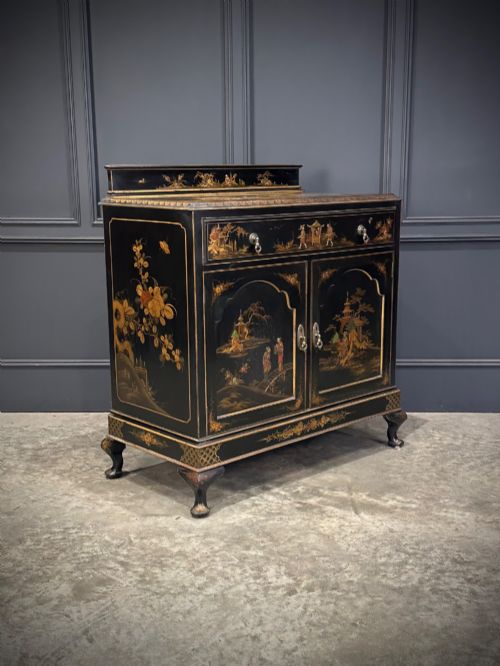
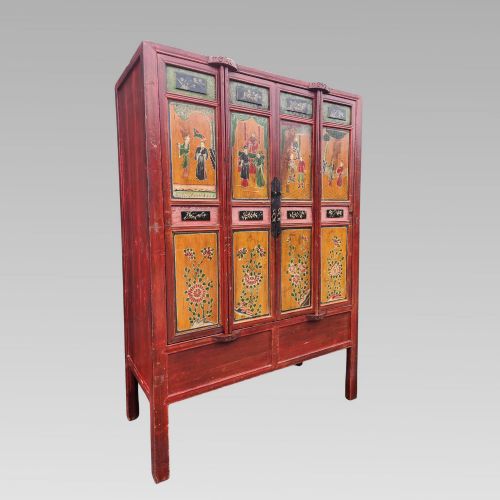
The most frequent examples on this page are Chinoiserie and Japanned cupboards finished in red or black lacquer, alongside European pine pieces decorated in folk art or regional styles. Cabinets originate from diverse workshops across China, Tibet, India, and European countries including Sweden, France, Hungary, and England.
Forms range from compact corner cupboards and commodes to substantial wardrobes and larder cupboards. Each piece uses painted or lacquered surfaces to transform utilitarian pine, hardwood, or lacquered wood into a focal point for a room.
How They Were Made
Construction relies on solid timbers such as pine, ash, and satinwood, combined with specialised framing for lacquered Asian furniture and European case pieces. Carcase construction follows traditional joinery methods suited to the regional origin of the timber.
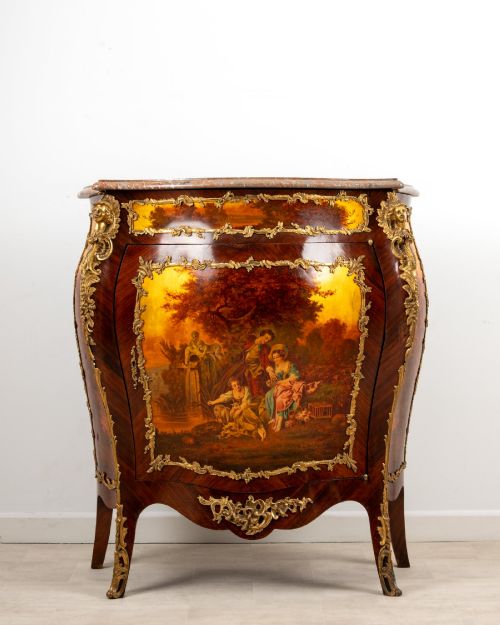
Surface finishes involve layers of paint, gesso, and lacquer applied to wood, occasionally augmented with ormolu mounts, brass hardware, or marble tops. Artisans built up decorative schemes using hand-painted pigments, gilding, and varnishing techniques unique to periods like the Qing Dynasty or the Victorian era.
Listings feature pieces from the 18th Century through the 1930s, utilising materials including pine, brass, marble, and lacquered wood.
What Varies in Quality
Quality rests in the execution of the painted or lacquered decoration and the preservation of the original surface. Pieces retaining their primary polychrome or lacquer work display finer detail and greater integrity than later redecorations.
The sophistication of the joinery and the selection of materials, from basic pine to finely figured satinwood or kingwood, distinguish standard storage items from exceptional cabinet work. Hardware integration, such as brass mounts and fitted interiors, also separates simpler regional pieces from high-style examples.
Melissa White
The Hand Painted Storage Cabinet Glossary
- Chinoiserie
- European imitation and adaptation of Chinese artistic traditions, popular in furniture decoration. This style employs motifs of figures, landscapes, and pagodas rendered in lacquer or paint.
- Japanned
- European technique of finishing furniture in imitation of Japanese lacquer work. The process involves layering dark varnishes and hand-painted details.
- Vernis Martin
- Eighteenth-century French imitation lacquer developed by the Martin brothers. It produces a glossy, translucent finish often seen on commodes and cabinets.
- Polychrome
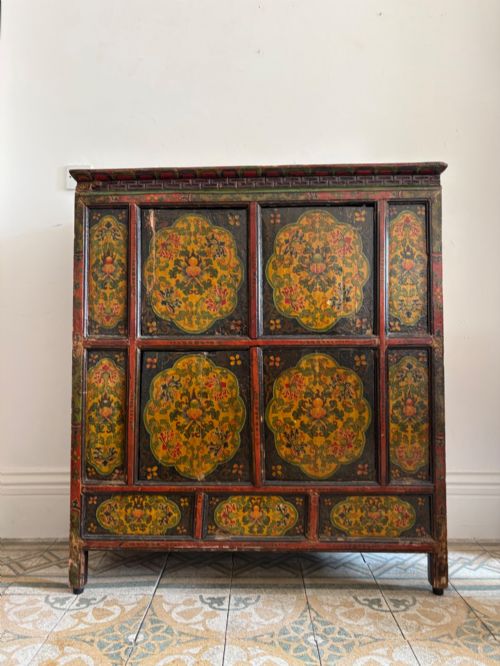
- Painted or decorated in several colours. This term describes surfaces featuring multi-coloured floral or figural designs.
- Gustavian
- Swedish neoclassical style associated with lighter painted furniture. It reflects a Scandinavian interpretation of French court styles from the eighteenth century.
Hand Painted Storage Cabinet: Frequently Asked Questions
What rooms suit a painted storage cabinet?
These cabinets work effectively in living rooms, dining spaces, and bedrooms where concealed storage is required alongside decorative impact. Tall cupboards and side cabinets accommodate dinnerware, linens, or books.
Smaller corner cupboards and commodes fit into hallways or compact spaces to provide surface area and internal shelving.
How do I identify Chinese lacquered cabinets?
Chinese lacquered cabinets typically feature red or black lacquer applied over wooden carcases, often with gilt motifs depicting figures, landscapes, or marriage symbols. Dating relies on construction methods and the wear of the lacquer layers.
Many examples originate from the nineteenth or early twentieth century and serve as wedding or marriage cabinets.
What is European folk art furniture?
European folk art furniture comprises regionally made pieces, often from pine, decorated by local craftspeople with hand-painted floral or geometric patterns. These items originate from countries such as Sweden, Hungary, and Italy.
They reflect rural traditions rather than formal court styles and often retain their original paint layers.
How do I care for antique painted surfaces?
Antique painted and lacquered surfaces require protection from direct sunlight and excessive humidity to prevent fading or cracking of the finish. Dusting should be done gently with a dry, soft cloth without chemical polishes.
Maintaining stable indoor temperatures preserves the original paint and prevents the underlying wood from moving.