



Hand Painted Rose Basin
These hand painted rose basin pieces bring vibrant floral motifs and rich historical craftsmanship straight into your interior.
Hand Painted Rose Basin
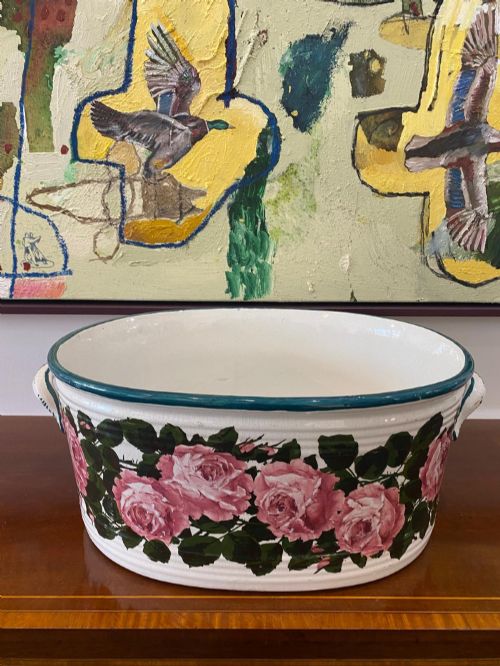
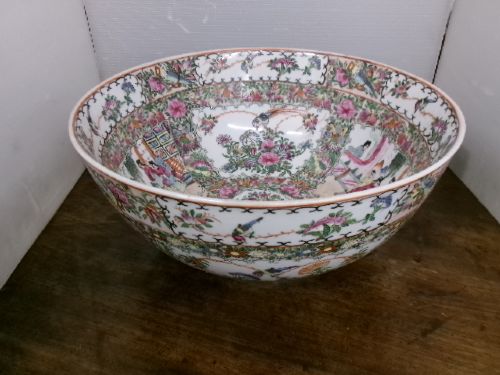
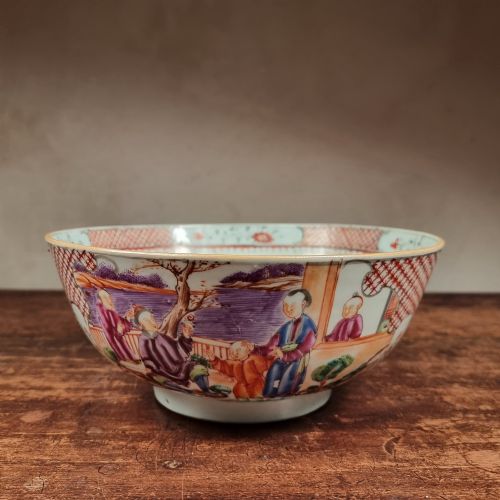
When you search for a hand painted rose basin, you encounter an array of large decorative vessels, footbaths, and punch bowls originating mainly from nineteenth-century China and European potteries. These items range from expansive Chinese Canton Famille Rose bowls to distinct Scottish earthenware footbaths bearing floral studies.
The pieces you are most likely to meet on this page span the eighteenth, nineteenth, and mid-twentieth centuries, featuring classic forms such as lobbed rectangular bowls, large jardinières, and wide punch bowls. Each example displays characteristic hand-applied floral detail across earthenware and porcelain bodies.
Originating from diverse traditions including Chinese Export porcelain and Victorian studios, these items serve as striking decorative centerpieces. Their generous dimensions and painted botanical scenes reflect the specific aesthetic preferences of their respective periods.
Materials and Methods
Potters shaped these vessels from high-fired porcelain and earthenware before applying detailed overglaze enamel pigments by hand. The botanical motifs take form through careful brushwork that integrates finely mixed mineral colours onto the white or turquoise ground.
Gilding and gold leaf often accent the rims, panels, and floral edges of nineteenth-century export wares, requiring meticulous firing techniques to bond the precious metal to the glaze. Enamel layers build up texture across the surface, giving the painted roses and medallion details their characteristic raised depth.
Hand Painted Rose Basin Retail Price Guide 2026
Typical asking prices for hand painted rose basin among the pieces listed under this phrase on Sellingantiques today, from the lower quarter to the upper quarter. They describe what is for sale here now, not the wider market.
The available selection includes diverse forms such as punch bowls, footbaths, and lobbed rectangular bowls from Chinese and European makers.
Judging Quality and Execution
The distinction between standard production and superior examples lies in the precision and density of the hand-painted brushwork. Finer pieces demonstrate confident, fluid lines in the floral rendering and balanced composition across complex forms like lobbed rectangular bowls or large punch bowls.
Material refinement and the successful application of overglaze enamels and gilding also dictate the grade of a piece. High-quality vessels maintain crisp detail and rich colour saturation that withstands centuries of handling without fading.
The Hand Painted Rose Basin Glossary
- Famille Rose
- A palette of opaque enamels dominated by pink or rose colours, introduced in Chinese ceramics during the Qing dynasty. This technique allowed artists to create shaded floral and figural designs with remarkable nuance.
- Canton
- A major port in southern China from which vast quantities of decorated porcelain were exported to Western markets during the eighteenth and nineteenth centuries. Wares from this region typically feature vibrant panelled designs alongside dense floral borders.
- Jardiniere
- A large ornamental pot or basin designed to hold growing plants or flowers. These vessels often feature sturdy porcelain or earthenware walls capable of supporting soil and moisture.
- Overglaze Enamel
- A technique where decorative colours are painted onto a previously fired and glazed ceramic surface, then fixed with a lower-temperature firing. This method yields bright, varied hues that sit slightly proud of the glaze.
- Rose Medallion
- A specific style of nineteenth-century Chinese export porcelain characterised by alternating panels of figures and birds, surrounded by dense green and pink floral motifs. The rose flower frequently serves as the focal point of the decorative scheme.
Hand Painted Rose Basin: Frequently Asked Questions
How were these large bowls used?
Historic households utilised these substantial vessels for various domestic and social functions, ranging from cooling punch at dining tables to bathing feet in large ceramic basins.
Over time, many of these utilitarian objects transitioned into purely decorative roles, serving as centrepieces or indoor planters for grand rooms.
Can I plant directly inside a jardiniere?
While these vessels were built from durable porcelain and earthenware, planting directly into antique pieces can expose the historic glaze and body to persistent moisture and mineral salts.
Using a separate inner pot protects the interior surfaces from potential staining and moisture damage while keeping the decorative exterior safe.
How do I date a Chinese export bowl?
Dating relies on examining the specific characteristics of the porcelain body, the palette of the overglaze enamels, and any reign marks present on the base. Nineteenth-century Canton pieces often display distinct dense floral borders and panel arrangements.
Comparing the weight, glaze thickness, and painting style against documented pieces helps narrow down the period of production.
Where should I place a heavy punch bowl?
Because these pieces often feature wide diameters and heavy porcelain bodies, they require a stable, sturdy surface such as a large low table or a dedicated stand.
Keeping the bowl away from high-traffic edges prevents accidental knocks while allowing the hand-painted rose motifs to remain fully visible.