


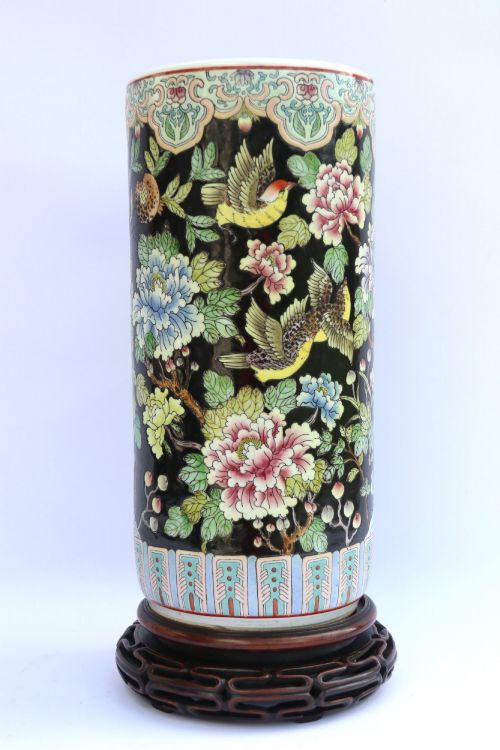


Hand Painted Porcelain Stand
These hand painted porcelain stand examples encompass vessels and their supports spanning the eighteenth century through the twentieth.
Hand Painted Porcelain Stand
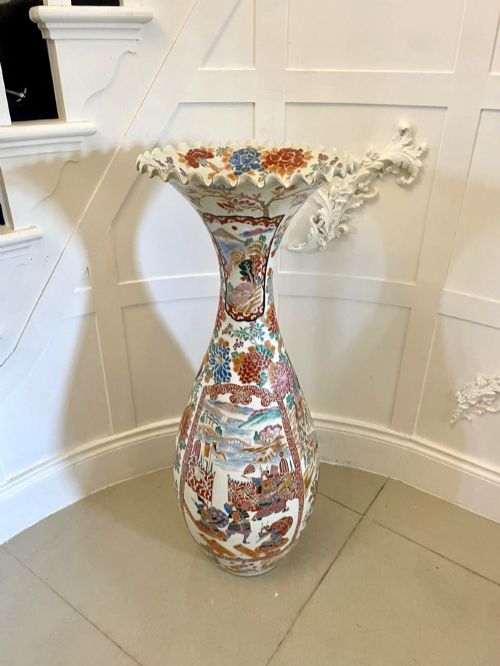
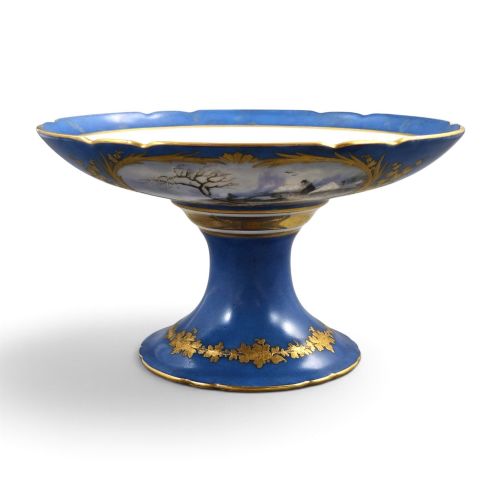
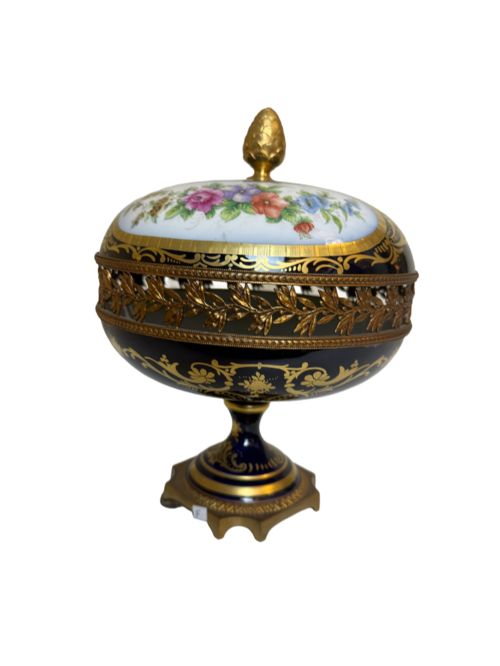
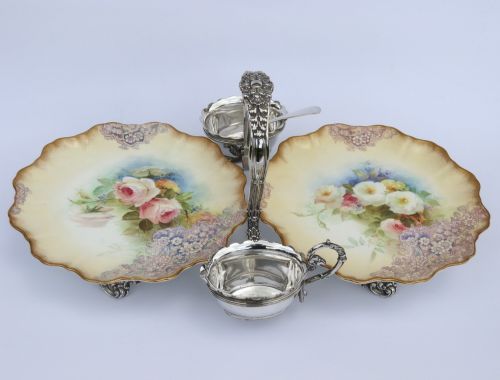
A hand painted porcelain stand typically serves as a matching base for a bowl, vase, urn, or teapot, or exists as a pedestal dish, tazza, or cake stand with its own integrated support. The materials span porcelain, ceramic, and ironstone, frequently paired with fitted hardwood or mahogany stands.
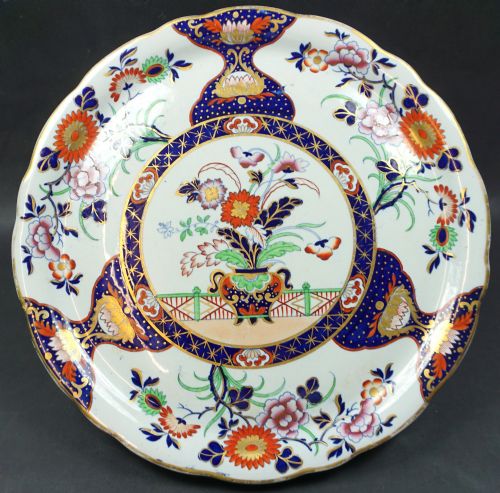
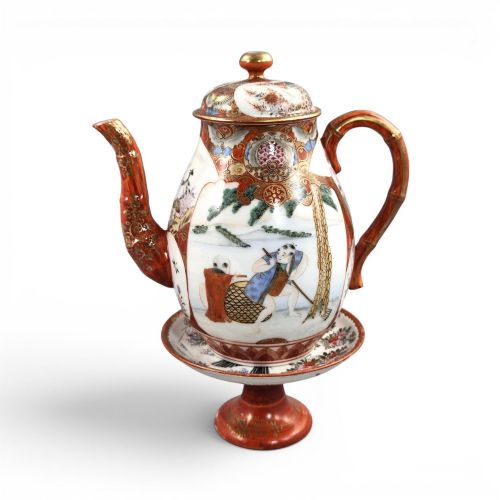
The selection here ranges widely in origin, featuring English manufactories, French studios, and Asian export wares from the Qing Dynasty and Meiji period. Pieces include garden seats, umbrella stands, dessert services, and lidded tureens with matching trays.
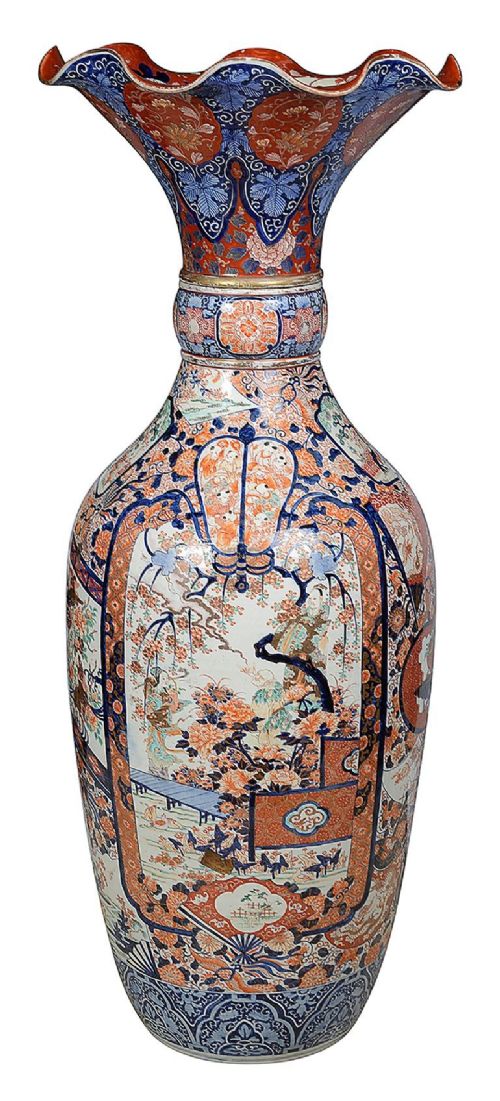
Victorian and Regency examples demonstrate European interpretations of classical and oriental motifs, whilst Chinese Export and Japanese pieces show traditional painted enamel and cobalt blue decoration. Buyers encounter everything from small cabinet cup stands to monumental floor vase pedestals.
Materials and construction
Makers utilised ceramic bodies finished with varied glazes, then applied hand painted enamel decoration often heightened with gold leaf, gilt, and gilding. Enamels were fired onto the porcelain surface to achieve permanent coloration, sometimes accompanied by transfer-printed outlines.
Woodworking played a crucial role in presentation, with craftsmen carving fitted hardwood and mahogany stands to cradle rounded porcelain bottoms securely. Metal components appear selectively, including silver plated frames and mounts that complement the ceramic elements.
A barbershop collection once supplied thirty-six American shaving mugs accompanied by their own mahogany stand.
Evaluating craftsmanship and condition
Quality rests heavily on the precision of the hand painting, where crisp brushwork and detailed enamel execution separate superior artistic efforts from standard production. The preservation of original gilding and the integrity of the glaze strongly influence a piece's standing.
The relationship between the vessel and its stand dictates overall merit, particularly when hardwood bases are original to the piece rather than later replacements. The complexity of the ceramic form, whether an intricate rococo revival tazza or a grand floor vase, also reflects the maker's ambition.
Sèvres·Derby Porcelain·Limoges·Hicks & Meigh·Grainger's Worcester·Walker and Hall·Coalport·Mintons·Chamberlain Worcester·Meissen·Dresden·KPM·Fukagawa·Royal Worcester
The Hand Painted Porcelain Stand Glossary
- Tazza
- A shallow bowl or cup mounted on a stem and foot, often used for serving fruit or desserts. These frequently include a matching stand or base.
- Cachepot
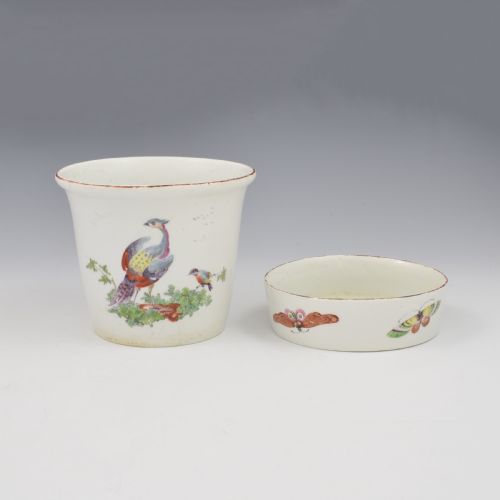
- An ornamental flowerpot holder designed to contain a plain inner pot. Examples in this category feature hand painted porcelain bodies.
- Comport
- A decorative dish or bowl elevated on a high foot, traditionally part of a larger dessert service. They appear alongside matching stands or underplates.
- Imari
- A style of Japanese porcelain decorated in underglaze blue, iron red, and gold. Pieces of this type frequently date to the late nineteenth century.
- Hardwood stand
- A separate carved wooden base made to support oriental porcelain vessels such as bowls and vases. These stands are often fashioned from dense timbers like mahogany.
Hand Painted Porcelain Stand: Frequently Asked Questions
What is the difference between a tazza and a comport?
A tazza generally refers to a single elevated shallow vessel on a central foot, often functioning as a standalone decorative piece or dessert dish.
A comport is historically part of a larger matched dessert service, designed alongside matching stands and plates for formal dining tables.
Are wooden stands usually original to the porcelain?
Many Asian export pieces and decorative bowls retain their original fitted hardwood or mahogany stands, which were custom-carved to match the exact contours of the ceramic base.
Collectors examine the fit, timber patina, and wear patterns to determine if the wooden support has accompanied the porcelain since its creation.
How do I care for hand painted porcelain?
Hand painted porcelain requires gentle cleaning with a soft, dry cloth or lukewarm water without harsh detergents to protect delicate surface enamels and gold leaf.
Display areas should avoid direct, prolonged sunlight to prevent the hand painted pigments and gilding from fading over time.