


Hand Painted Porcelain Putto
These hand painted porcelain putto figures and vessels bring sculptural grace to a room through delicate modelling and hand-painted detail.
Hand Painted Porcelain Putto
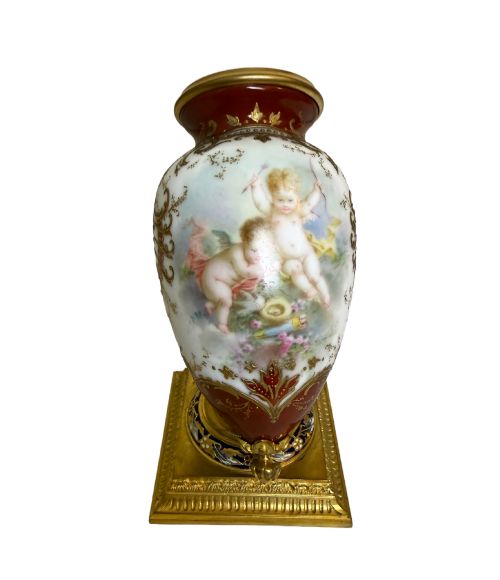
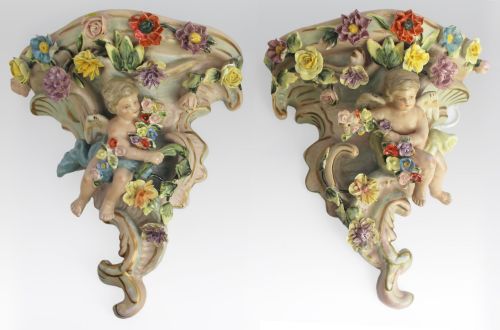
When you search for hand painted porcelain putto, you encounter figures and decorative vessels populated by winged cherubs, often modelled alongside floral motifs or shells. These pieces emerge primarily from nineteenth-century continental workshops, spanning the Victorian era back to earlier revival styles.
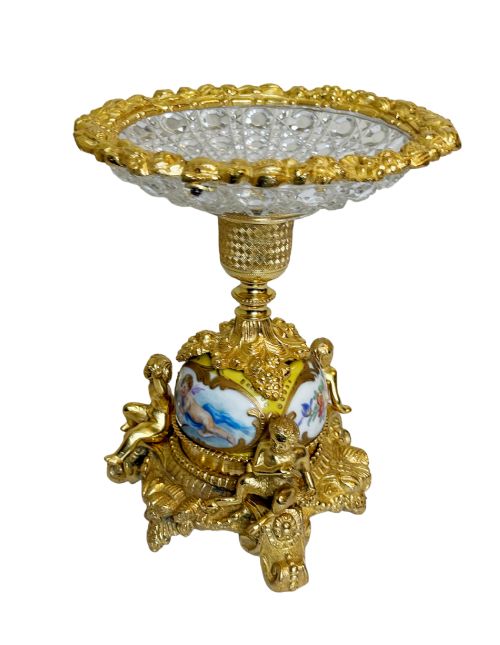
The objects take many forms, including large centrepieces, lidded vases, wall corbels, and table salts. Centrepieces and vases dominate the selection, frequently combining moulded porcelain putti with gilt bronze or cut crystal elements.
The styling draws heavily on Rococo Revival aesthetics, echoing French eighteenth-century designs through asymmetric curves and elaborate scrollwork. You will find both standalone figures and functional decorative objects intended for display.
Materials and manufacture
The primary material is hard-paste porcelain, shaped into intricate figures and vessels before undergoing high-temperature firing. Enamel paints are then applied by hand to the surface, bringing colour to the flesh tones, drapery, and surrounding flora.
Gold leaf and gilt highlights are frequently added to accent the porcelain frames, mounts, and Rococo scrollwork. In more complex assemblies, these porcelain bodies are paired with cast gilt bronze mounts and cut crystal vessels.
Cherubs occasionally trade their traditional wings for goat companions or disguised identities.
Assessing quality
Quality rests upon the crispness of the porcelain modelling and the finesse of the hand-painted enamels. Finer examples display delicate facial expressions on the putti and precise brushwork on the decorative details.
The integration of mixed materials also defines the tier of the piece. Superior centrepieces and vases feature finely chased gilt bronze mounts and heavy, clear cut crystal rather than simpler base metals.
Sevres·Edme Samson·KPM Berlin·Veuve Perrin·Meissen
The Hand Painted Porcelain Putto Glossary
- Putto
- A plump, often winged male child figure frequently depicted in classical and Renaissance art. These figures appear widely in nineteenth-century porcelain sculpture.
- Rococo Revival
- A nineteenth-century design style that revives the ornate, curving lines of the mid-eighteenth-century Rococo period. It is characterised by C-scrolls, asymmetry, and natural motifs.
- Hard-Paste Porcelain
- A dense ceramic material fired at very high temperatures, composed of kaolin and petuntse. It provides a durable, smooth white body suitable for detailed sculptural work.
- Gilt Bronze
- Bronze metal treated with a thin layer of gold or gold-coloured alloy. It is commonly used for mounts and bases supporting porcelain centrepieces.
Hand Painted Porcelain Putto: Frequently Asked Questions
How were these centrepieces used?
These large porcelain centrepieces served as decorative focal points for formal dining tables and sideboards during the nineteenth century. They often held flowers, fruit, or served as elaborate table salts.
Over time, their function shifted from dining accessories to purely decorative display objects within period drawing rooms and cabinets.
How do I identify a Rococo Revival piece?
Rococo Revival works are recognised by their flowing, asymmetric lines, scrollwork, and organic motifs like shells and acanthus leaves. The putti figures are typically arranged in dynamic, theatrical poses.
This style draws direct inspiration from mid-eighteenth-century French design, though it was largely produced during the nineteenth century.
What is hard-paste porcelain?
Hard-paste porcelain is a durable ceramic compound made from china clay and china stone, fired at extremely high temperatures. This process vitrifies the body, making it impermeable and giving it a bright white appearance.
It allows for sharp sculptural definition, which explains its widespread use in detailed nineteenth-century figures and decorative vessels.
How should I clean porcelain putto figures?
Dust these delicate figures gently with a soft, dry brush to prevent accumulating dirt in the crevices of the modelling. Avoid using harsh chemical cleaners or submerging pieces that feature gilt bronze mounts.
Take particular care around hand-painted enamel areas, as aggressive wiping can wear away the surface decoration over time.