




White Porcelain Cherub
White porcelain cherub figures and decorative objects bring the sculptural grace of eighteenth-century and nineteenth-century kilns directly into domestic spaces.
White Porcelain Cherub
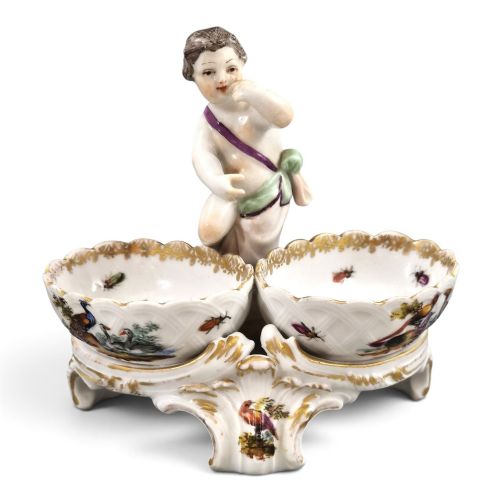
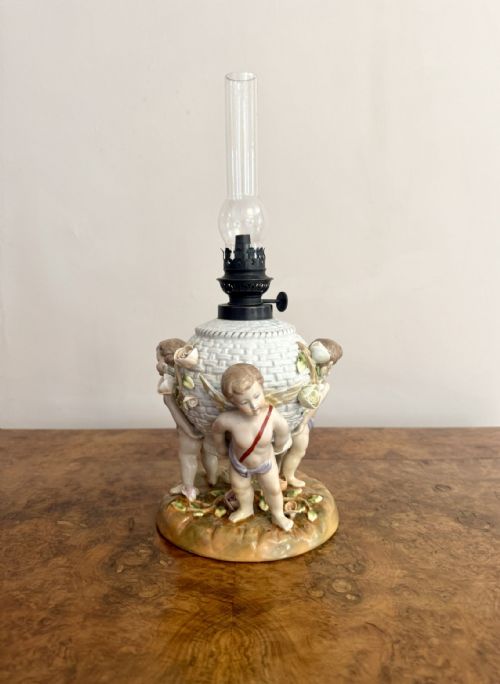
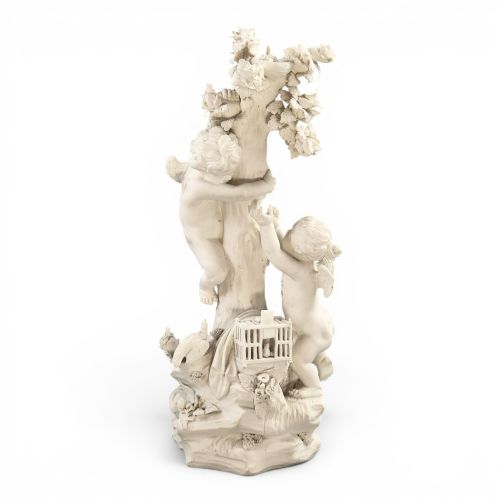
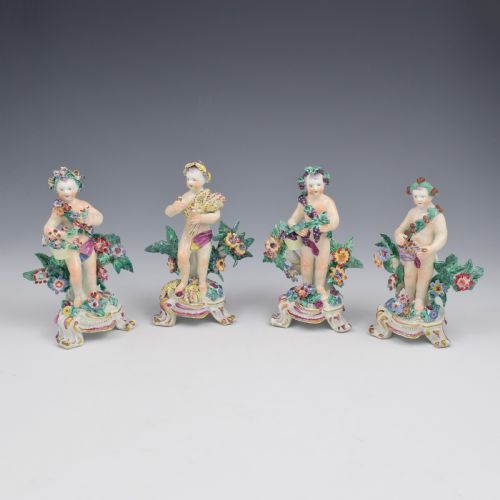
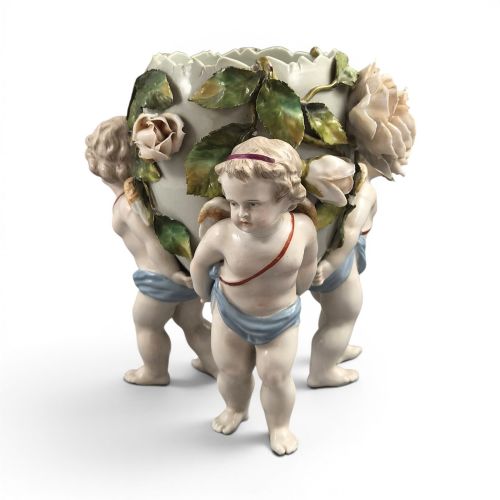
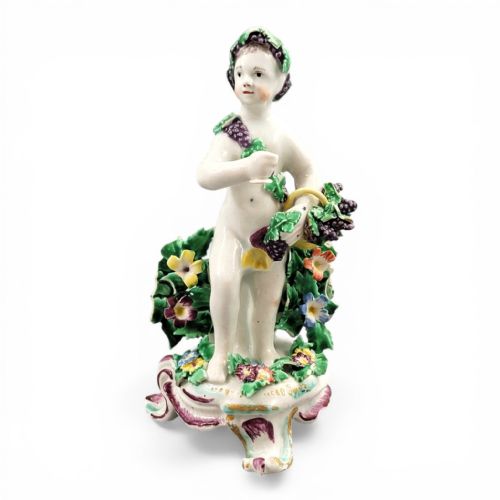
White porcelain cherub figures encompass putti, amorini, and winged allegorical figures modelled in biscuit and glazed porcelain across European factories. The forms appear as freestanding figures, candlesticks, salt cellars, oil lamps, centrepieces, and clock mounts.
Most examples on this page date from the nineteenth century, including Victorian and Edwardian interpretations, alongside eighteenth-century Georgian productions from English and continental kilns.
Continental workshops from Germany, France, and Italy dominate the surviving record, spanning periods from the 1700s through the Edwardian era.
Materials and Technique
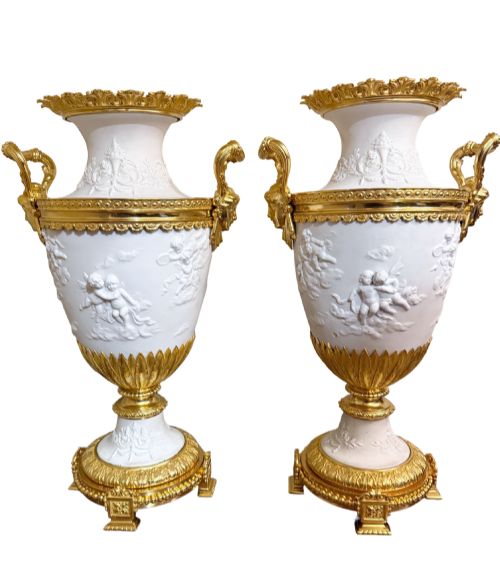
Makers utilised hard-paste and soft-paste porcelain, alongside biscuit porcelain which leaves the ceramic unglazed to mimic carved marble. Hand-painted enamels, gilding, and applied porcelain roses frequently complement the white figures.
Mounts in gilt bronze, brass, and glass support or enclose the ceramic bodies, particularly in French mantel clocks, lamps, and large vases from the nineteenth century.
Listings feature porcelain materials alongside gilt bronze, brass, and glass across Georgian, Victorian, and Edwardian periods.
Craftsmanship and Definition
The quality of the glaze or the smoothness of the biscuit surface dictates visual refinement, while secondary materials such as fire-gilt bronze mounts demonstrate the overall ambition of the piece.
Sevres·KPM Berlin·Sitzendorf·Derby·Bow·Meissen·Paul Scheurich·Edme Samson·Schierholz·Chelsea·Royal Worcester·Minton·Volkstedt·Veuve Perrin·Dresden·Capodimonte·Karl Tutter
The White Porcelain Cherub Glossary
- Putto
- A plump, naked male child figure often depicted with wings, frequently used in Renaissance and later decorative arts. These figures form the primary subject of many eighteenth-century and nineteenth-century porcelain table pieces.
- Biscuit porcelain
- Unfired or single-fired porcelain left unglazed to produce a matte, white surface resembling marble. This finish highlights subtle sculptural modelling on figures and plaques.
- Soft-paste porcelain
- An artificial porcelain composition fired at lower temperatures than hard-paste, common in early English factories. It produces a warm body with a distinctive glaze texture.
- Salt cellar
- A small open vessel or dish designed to hold salt at the dining table. Elaborate figural versions often incorporate putti supporting the receptacle.
- Centrepiece
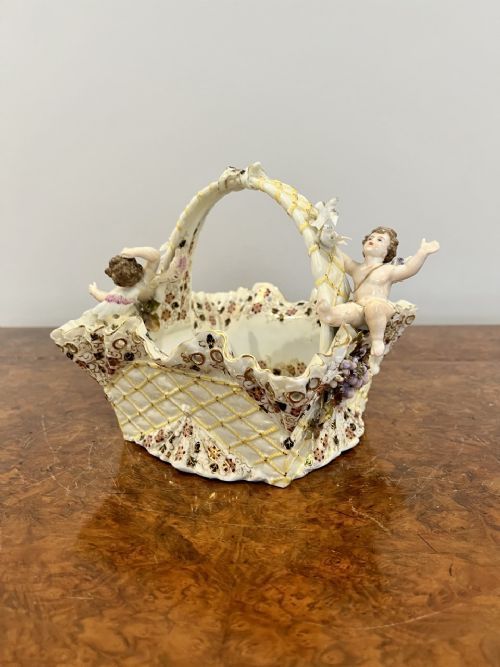
- A large decorative object placed in the middle of a dining table or sideboard. These often combine porcelain figures with bowls, baskets, or candelabra branches.
White Porcelain Cherub: Frequently Asked Questions
What is a white porcelain cherub?
A white porcelain cherub is a sculptural ceramic figure of a winged infant, often integrated into functional or decorative objects such as lamps, clocks, and vases.
These figures draw on classical and rococo design traditions spanning several centuries of European ceramic manufacturing.
How do I date a porcelain cherub?
Dating relies on factory marks, paste composition, style, and secondary materials like gilt bronze mounts or brass hardware.
Eigteenth-century pieces often display characteristic soft-paste bodies or early anchor and cross swords marks, whereas Victorian and Edwardian items reflect revival styles.
Where were these figures made?
Major production centres included Germany, France, Italy, and England, with notable factories operating in Meissen, Berlin, Dresden, and Staffordshire.
Continental porcelain houses frequently exported elaborate figural groups and tablewares across Europe and Britain.
How do I care for antique porcelain?
Antique porcelain requires gentle cleaning with a soft, dry brush or a barely damp cloth without chemical detergents.
Fragile applied elements like flowers, wings, and fingers demand careful handling to prevent accidental breakage.