





Chelsea Porcelain Figures
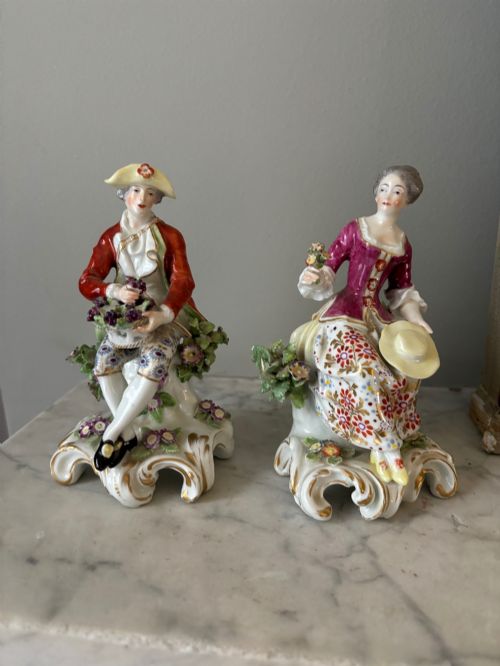
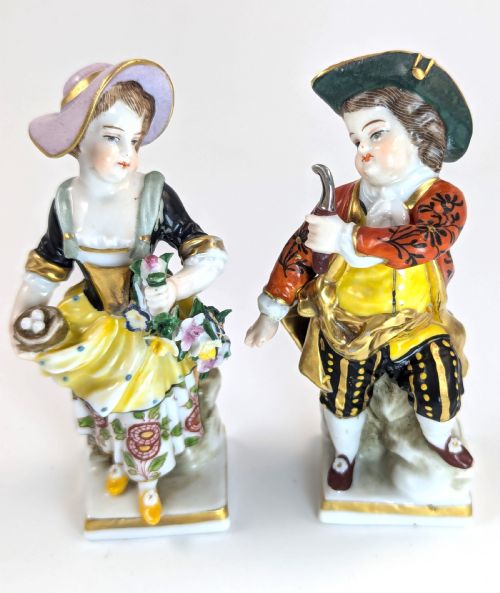
These chelsea porcelain figures bring spirited mythological deities, pastoral characters and allegorical subjects to life in delicate glazed ceramic.
Chelsea Porcelain Figures
When you search for chelsea porcelain figures, you encounter both authentic 18th-century English output from the Georgian era and later 19th-century interpretations created in the Victorian period. The original pieces date from the 1760s and 1770s, depicting classic allegories, mythical figures like Diana, and seasonal representations.
Alongside these early examples, this selection contains numerous 19th-century revival pieces made in the French capital. Makers such as Edme Samson produced skilled Paris porcelain figures and candlesticks explicitly in the Chelsea taste, often incorporating characteristic gold anchor marks.
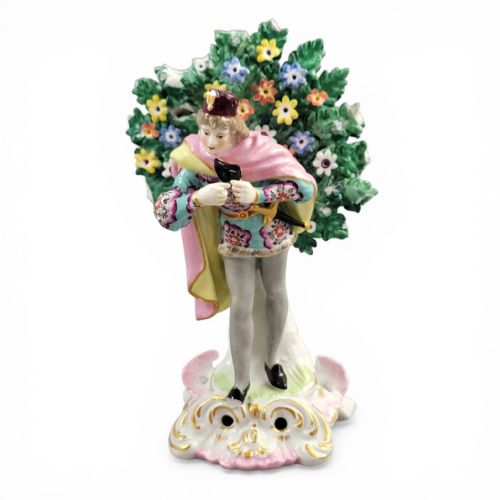
The subjects range from solitary actors with masks and shepherds with sheep to paired putti with goats and personifications of continents like America and Asia. These decorative objects display elaborate modelled details, frequently set against leafy backgrounds known as bocage.
Materials and construction
The physical composition of these items shifts between periods, utilising soft-paste porcelain in the 18th century and harder porcelain pastes in later Victorian reproductions. Soft-paste versions possess a distinctive warmth and glaze texture that earlier English kilns achieved through specific ground glass and clay mixtures.
Materials span soft-paste porcelain, hard-paste porcelain, enamel, and gold leaf.
Assessing craftsmanship and finish
Quality in these figures depends heavily on the precision of the modelling and the crispness of the applied details. Superior examples maintain sharp facial expressions and cleanly articulated fingers, drapery, and bocage leaves rather than softened outlines.
The painted decoration also dictates standard, with finer pieces exhibiting controlled enamel work and generous, well-preserved gilding. Period authenticity and the fidelity of the interpretation, whether an 18th-century original or a later Samson homage, influence the character of each piece.
Edme Samson·Samson Paris·Samson of Paris
The Chelsea Porcelain Figures Glossary
- Soft-paste porcelain
- An early artificial porcelain body composed of white clay and glass frit, fired at lower temperatures than true hard-paste porcelain. This material creates a characteristic soft glaze pool.
- Gold anchor mark
- A small painted symbol used by the Chelsea factory during its final period, replicated later by Continental copyists. It denotes specific production phases of the 18th century.
- Bocage
- An intricate background of applied ceramic foliage and flowers wrapping around the central figures. This technique adds fragility and depth to pastoral scenes.
- Rococo revival
- A 19th-century design movement that imitated the asymmetrical scrolls, shell motifs and ornate curves of the mid-18th century. It heavily influenced Victorian porcelain production.
Chelsea Porcelain Figures: Frequently Asked Questions
How do I spot a reproduction?
Distinguishing between 18th-century originals and 19th-century Paris copies involves examining the paste, weight, and painting style. Later pieces often bear imitation gold anchor marks alongside harder ceramic bodies characteristic of Victorian manufacturing.
Studying the crispness of the modelling and the ageing of the enamel provides further clues to a piece's true age and origin.
What are bocage figures?
Bocage figures feature a dense background of modelled ceramic leaves and blossoms framing the main subject. This style became particularly popular for pastoral and allegorical subjects in the mid-18th century.
The fragile foliage requires careful handling due to the intricate nature of the fired porcelain branches.
Who was Edme Samson?
Edme Samson ran a prominent Paris workshop during the 19th century specialising in high-quality replicas and homages to historic porcelain factories. His firm produced numerous figures in the Chelsea style, often utilising faux anchor marks.
These pieces are now collected in their own right as fine examples of Victorian ceramic artistry.
Where should I display porcelain figures?
These delicate decorative objects require stable environments away from direct sunlight and heavy foot traffic vibrations. Enclosed glass cabinets protect the fragile enamel surfaces and protruding elements like bocage leaves from accidental damage.
Adequate spacing allows each statuette to be viewed clearly from multiple angles.