
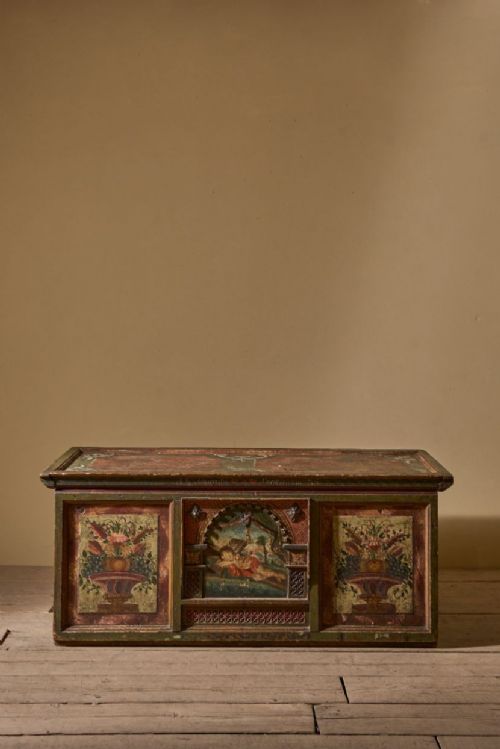
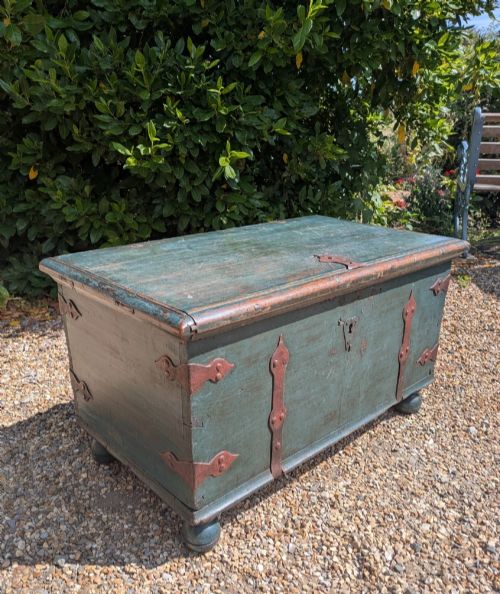
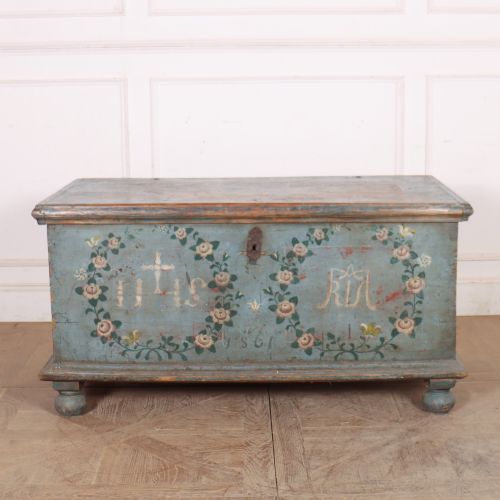


Hand Painted Pine Coffer
A hand painted pine coffer is a robust storage piece bearing folk decoration, offering practical utility alongside distinct regional character.
Hand Painted Pine Coffer
Every hand painted pine coffer combines utilitarian storage with surface decoration, serving as trunks, blanket boxes, marriage chests, and strong boxes across residential interiors.
The versions most commonly met here span the nineteenth century, including specific decades like eighteen sixty and eighteen ninety, alongside Victorian and Georgian examples.
Origins stretch across European and international regions, yielding Scandinavian, Alpine, Spanish Colonial, and Hungarian folk art traditions within the inventory.
Distinctions in Quality
Quality rests upon the preservation and complexity of the surface pigment, separating simple utilitarian boxes from richly decorated folk art marriage chests.
The integrity of the structural pine and the craftsmanship of the hand forged iron hardware distinguish standard estate made pieces from finer regional workshop productions.
Several Swedish marriage chests preserve centuries-old paint layers intended to bring good fortune to rural newlyweds.
The Hand Painted Pine Coffer Glossary
- Cofer
- A large strong box or chest used for valuable storage, often featuring a heavy lid and robust iron fittings.
- Strapwork
- Ornamental bands of iron or brass fixed across the exterior of a chest to reinforce the timber joints.
- Pigment
- Coloured powder mixed with a binder to create the decorative paint layers applied to the pine surface.
- Marriage chest
- A specially decorated box commissioned to celebrate a wedding, frequently inscribed with dates or initials.
- Folk art
- Traditional decorative work produced by regional artisans outside academic fine art circles.
Hand Painted Pine Coffer: Frequently Asked Questions
What is a hand painted pine coffer?
A hand painted pine coffer is a wooden storage chest decorated with pigments, often originating from nineteenth-century European folk traditions.
These pieces served functional purposes in homes for holding textiles, valuables, or household goods while displaying regional decorative styles.
How were these chests used originally?
These trunks and boxes functioned as portable storage for blankets, personal belongings, and estate documents.
Many specific variants, such as marriage chests, held dowry items and were central to family celebrations in Scandinavian and Alpine regions.
Where do most of these coffers come from?
The available pieces originate largely from nineteenth-century European regions, with strong representation from Swedish, Alpine, Hungarian, and Spanish workshops.
Each geographic area developed distinct painting techniques and colour palettes on pine timber.
How do I care for painted pine?
Keep painted pine coffers away from direct sunlight and excessive humidity to protect the original mineral pigments and surface decoration.
Gentle dusting with a dry cloth preserves the fragile historic paint layers without disturbing the wood beneath.
How are different periods identified?
Periods are recognised through a combination of construction methods, ironwork styles, and the specific composition of the paint layers.
Earlier eighteenth- and nineteenth-century examples often display hand forged iron strapwork and primitive construction distinct from later Victorian or twentieth-century items.