
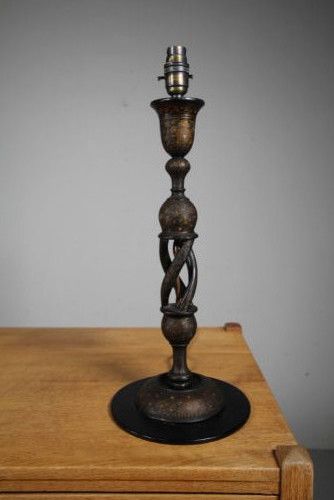
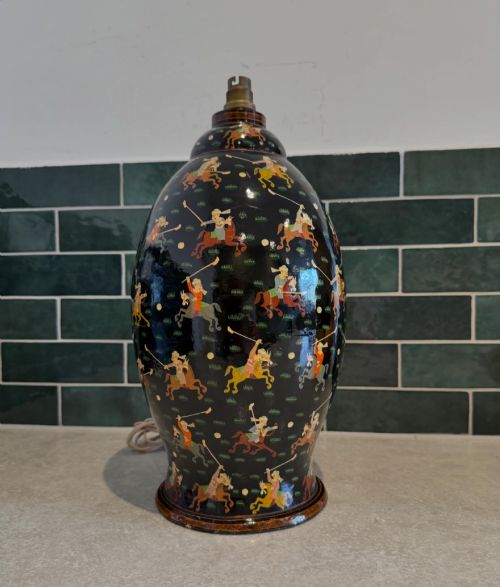
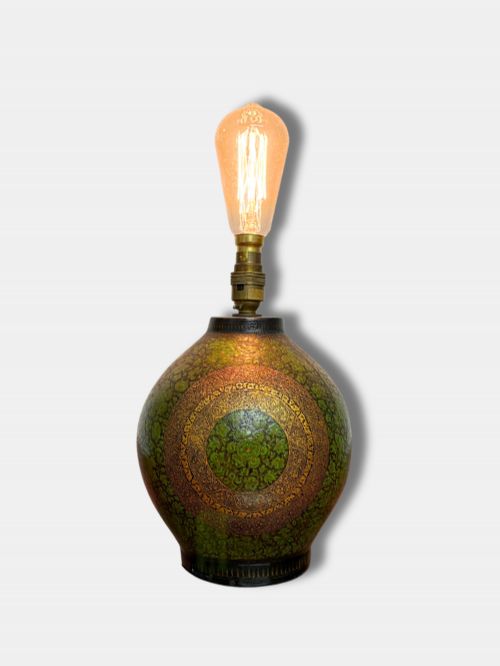
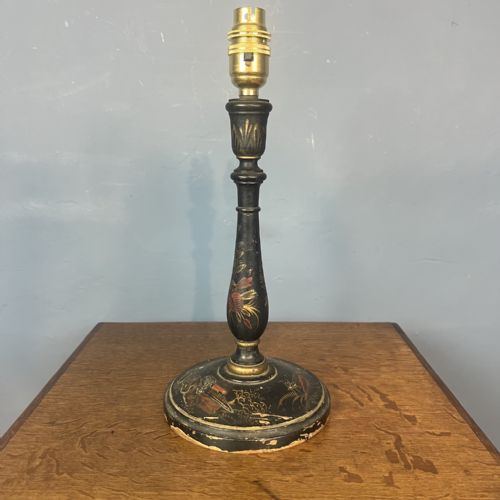
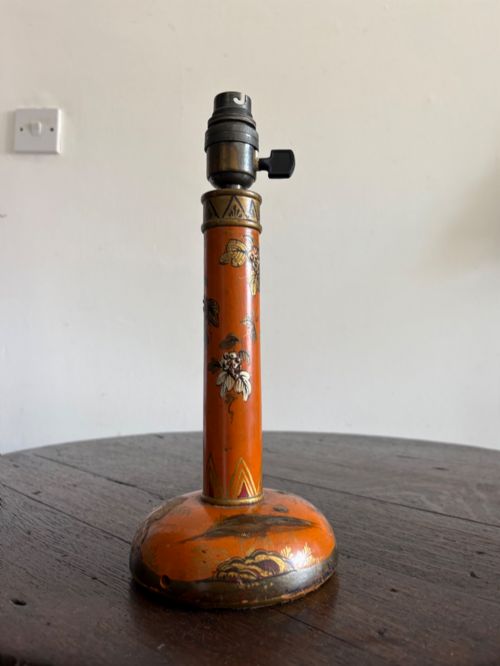
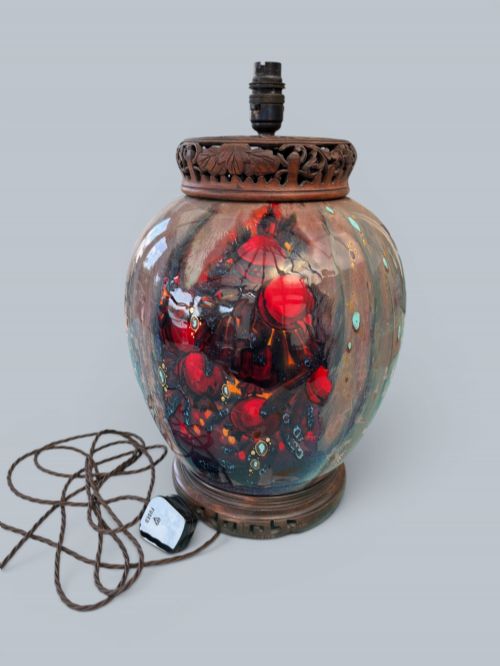
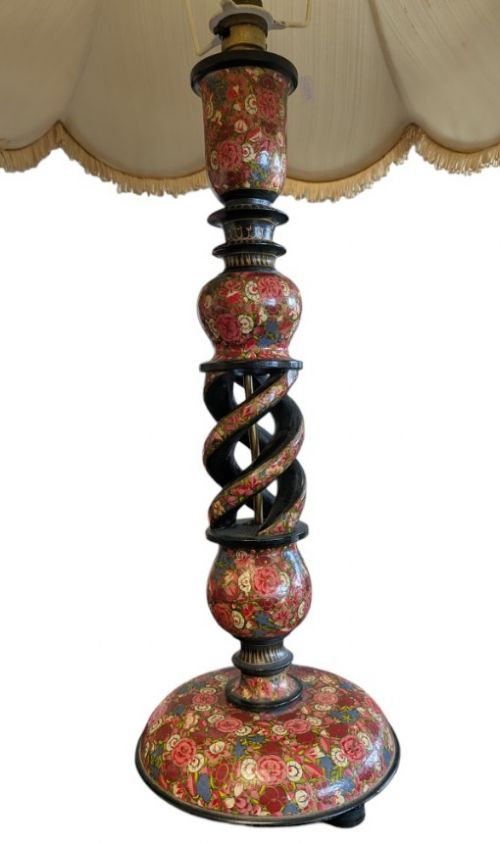
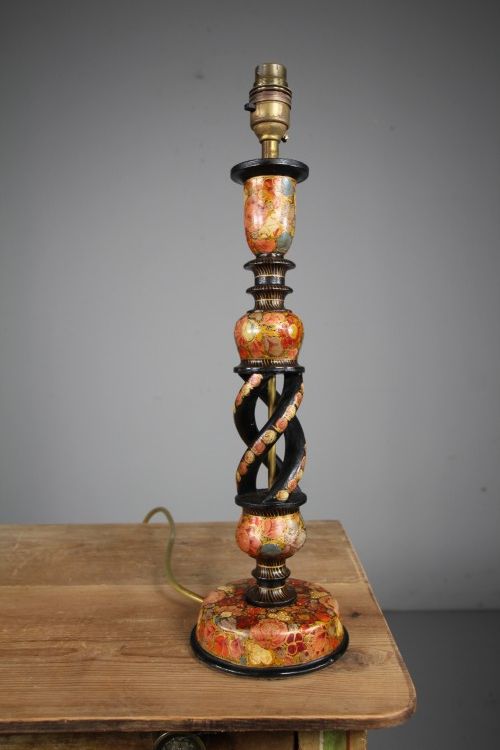
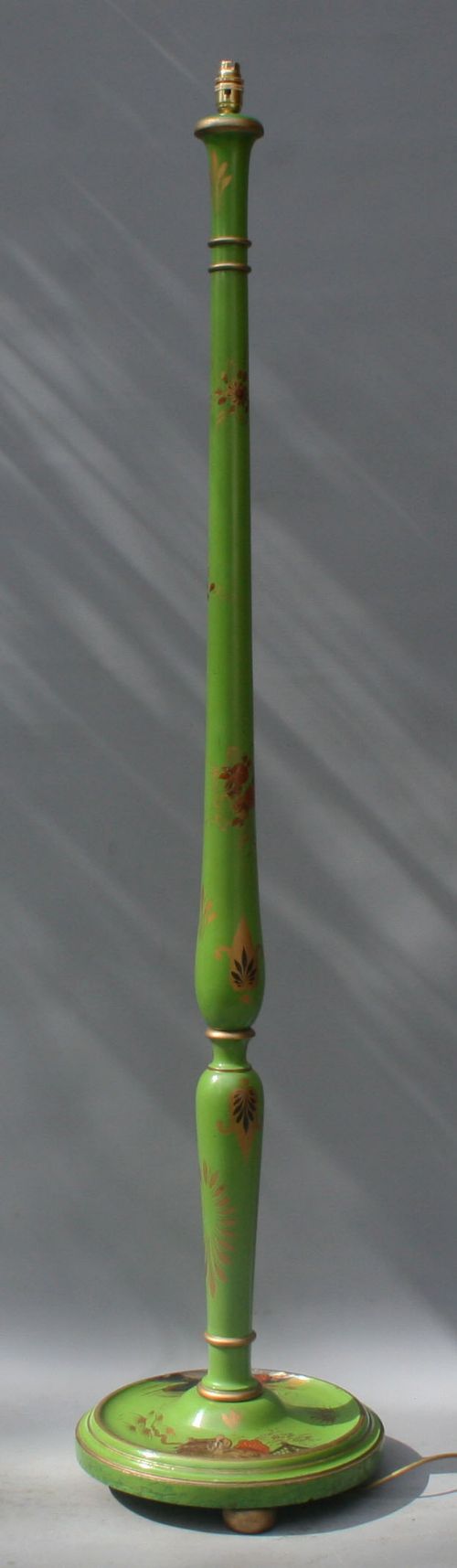


Hand Painted Lamp Base
A hand painted lamp base brings depth and colour to a room, turning ceramics and lacquer into functional lighting.
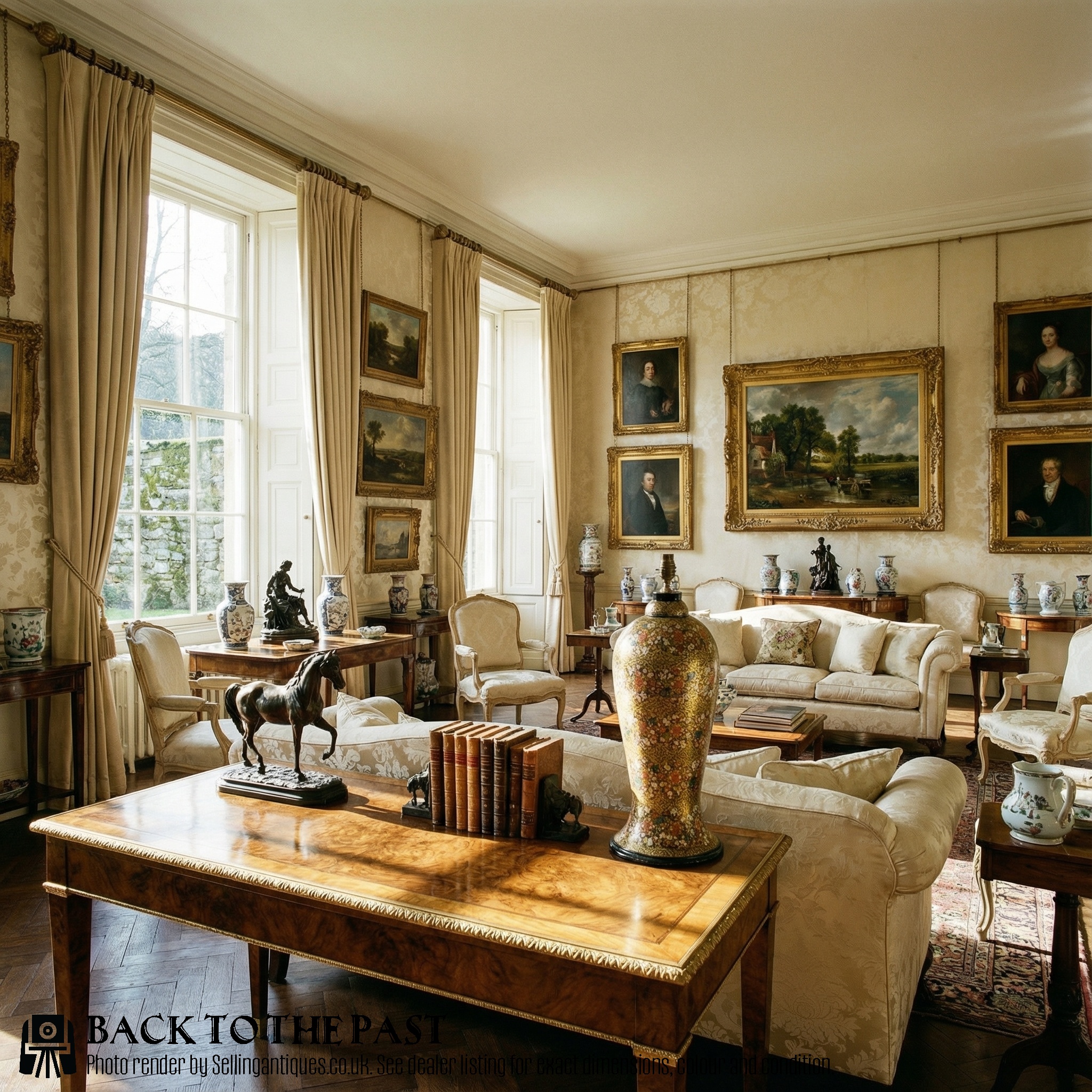
Hand Painted Lamp Base
A hand painted lamp base transforms decorative ceramics, glass, and wood into functional room lighting. When looking for a hand painted lamp base, buyers frequently encounter pieces fashioned from converted vases, ginger jars, and tea canisters.
The selection ranges across several centuries, including Victorian, Edwardian, and earlier periods. Table lamps and standard lamps dominate the forms, originating from workshops in China, Japan, Kashmir, and Europe.
Kashmiri papier-mache and Chinese export porcelain form a large portion of the available items. These pieces span varied aesthetic traditions, from Chinoiserie lacquer to Arts and Crafts pottery.
How they were made
Pottery and porcelain bodies receive hand-painted decoration in cobalt blue, famille rose, or gilt pigments before being glazed and fired. Many bases incorporate brass or wood mounts to secure the electrical fittings.
Kashmiri examples employ papier-mache or wooden structures finished with painted lacquer, often featuring intricate floral or foliate motifs. Glass pieces utilise opaline or blown vessels painted by hand on the exterior surface.
Hand Painted Lamp Base Retail Price Guide 2026
Typical asking prices for hand painted lamp base among the pieces listed under this phrase on Sellingantiques today, from the lower quarter to the upper quarter. They describe what is for sale here now, not the wider market.
Materials across the listings include porcelain, brass, wood, lacquer, fabric, and papier-mache.
What varies in quality
The finesse of the brushwork largely defines the distinction between standard and superior examples. Crisp detailing on porcelain and neatly executed lacquer work indicate higher skill.
Integrity of form and the proportion of the original vessel relative to the lighting hardware affect overall success. Balanced mounts and well-chosen brass fittings enhance the visual unity of the piece.
Moorcroft Art Pottery·Samuel Alcock
The Hand Painted Lamp Base Glossary
- Chinoiserie
- European decorative style reflecting Chinese artistic influences. This aesthetic appears frequently on lacquered wood bases and ceramic lamps.
- Famille rose
- Chinese porcelain palette dominated by opaque pink enamel colours. Pieces featuring this palette date primarily across the nineteenth and early twentieth centuries.
- Papier-mache
- Composite material made of paper pulp or layers of paper glued and pressed. Kashmiri makers utilise this medium for lightweight painted lamp bases.
- Ginger jar
- Coved ceramic vessel originally used for spices. These jars often convert successfully into table lamp bases.
- Opaline glass
- Opaque or translucent pale glass popular during the Victorian era. It provides a smooth surface for hand-painted floral designs.
Hand Painted Lamp Base: Frequently Asked Questions
How do I choose the right shade?
Match the scale of the shade to the width of the painted base, keeping proportions balanced so the lamp stands securely.
Consider the dominant colours in the hand-painted motifs to select fabric tones that complement the body.
Can I use these with modern wiring?
Most antique bases accommodate updated electrical components and standard bulb fittings. Many listings note whether the piece has been recently rewired.
Consult a qualified electrician to ensure safety when connecting older lamp bodies to contemporary power sources.
How should I clean my lamp base?
Dust ceramic and glass surfaces gently with a dry microfibre cloth. Avoid harsh chemical cleaners that might damage painted details.
Lacquer and papier-mache require particular care, needing only a soft, dry touch to preserve the delicate finishes.
Were these originally made as lamps?
Many lamp bases started life as vases, ginger jars, tea canisters, or decorative vessels before conversion. Artisans later fitted them with electrical hardware to serve as lighting.
Certain pieces, particularly standard lamps and specific Kashmiri forms, were designed as lighting fixtures from the outset.