


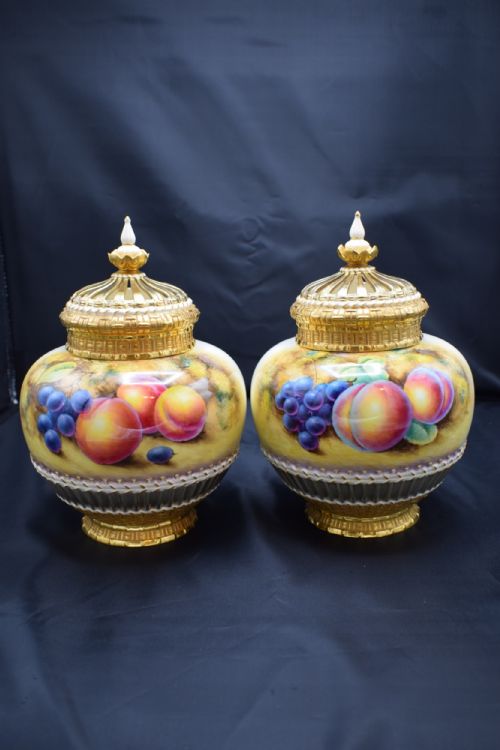


Hand Painted Fruit Vase
A hand painted fruit vase combines botanical study with fine ceramics, bringing rich colour and historic craftsmanship to any room.
Hand Painted Fruit Vase
A hand painted fruit vase is a ceramic vessel decorated with detailed studies of apples, pears, berries, and foliage. The pieces on this page span from the Victorian era through the mid-twentieth century, including the 1900s, 1910s, 1920s, 1930s, 1940s, 1950s, and 1960s.
The selection ranges from ginger jars and decorative ewers to pot pourri vases and spill vases. Most examples stem from English traditions, with a strong representation of Edwardian and Art Deco forms alongside traditional styles.
How they were made
Makers utilised porcelain, bone china, fine bone china, and glazed earthenware as the primary foundation for these vessels. Artisans then applied enamel pigments by hand to capture the texture and colour of fruit.
Gilding, gold leaf, and gilt accents frequently frame the painted panels, highlighting the shoulders, handles, and covers of the jars and urns.
Artists frequently snuck tiny hidden caterpillars into the lush leaf foliage surrounding the painted apples and pears.
What varies in quality
Quality rests primarily on the skill of the brushwork within the fruit panels and the reputation of the artist whose signature appears on the ceramic. Pieces bearing the names of known decorators demonstrate superior botanical precision.
The weight of the porcelain, the crispness of the moulded forms such as crown tops or twin handles, and the richness of the underlying gilding further distinguish the finer vessels from standard production.
Royal Worcester·Coalport·William Moorcroft·Charlotte Rhead
The Hand Painted Fruit Vase Glossary
- Pot pourri vase
- A vessel featuring a pierced cover designed to diffuse scent from dried flower petals and spices.
- Ewer
- A large jug with a wide spout and handle, often created as a decorative pairing.
- Ginger jar
- A covered ceramic jar with a broad body and flat base, originally used for storage but later produced purely for display.
- Spill vase
- A tall, slender vessel intended to hold thin wood spills used for lighting fires.
- Gilding
- The application of gold leaf or gold powder to ceramic surfaces to create metallic highlights.
Hand Painted Fruit Vase: Frequently Asked Questions
How do I date a hand painted fruit vase?
Dating relies on the factory marks stamped on the underside of the ceramic, which changed by year and period. Stylistic clues such as Art Deco shapes or Edwardian proportions also help narrow the decade.
Comparing the signature of the artist to known working dates provides further chronological precision for individual pieces.
Who painted these fruit vases?
Specialised studio artists working within major porcelain factories painted the fruit scenes by hand. Many signed their work directly onto the ceramic body.
Well-documented decorators include painters whose names appear across multiple surviving pieces from the early and mid-twentieth century.
Where should I display a pot pourri vase?
Pot pourri vases look best on sturdy wooden surfaces where their pierced covers and colourful fruit panels catch the light. They function well as centrepieces on mantelpieces or side tables.
Keeping them away from direct sunlight preserves the vibrancy of the hand painted enamel colours.