


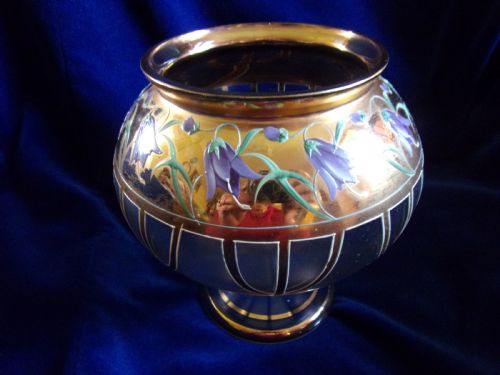

Hand Painted Enamel Glass
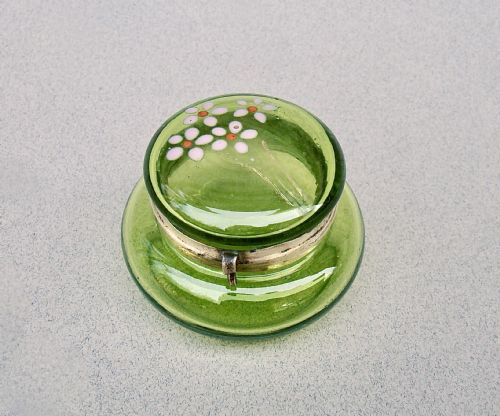
Hand painted enamel glass pieces bring together vibrant colour, raised polychrome motifs and rich historical styles for the collector.
Hand Painted Enamel Glass
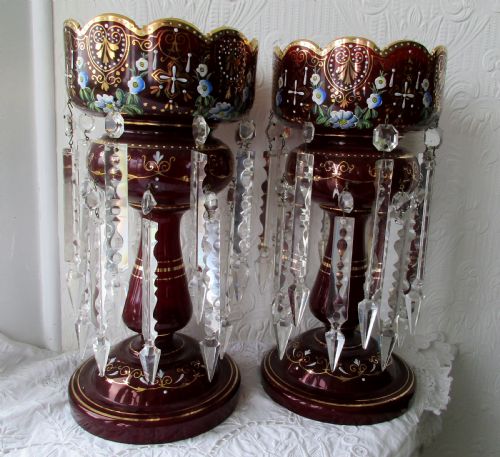
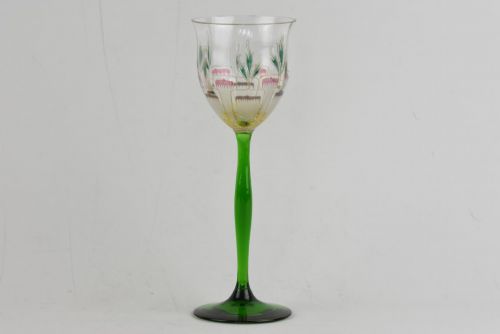
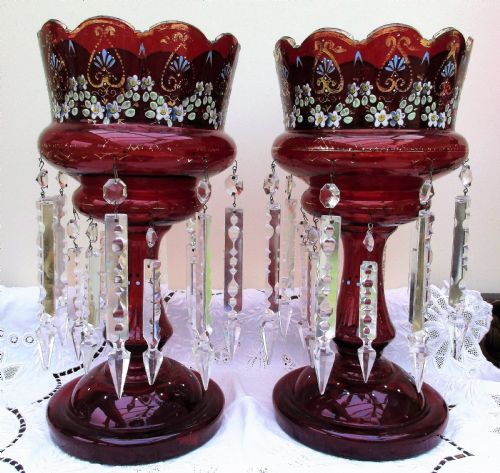
Hand painted enamel glass encompasses a broad spectrum of decorative and utilitarian vessels, from nineteenth-century Victorian vases and mantel lustres to twentieth-century wine glasses and dressing table jars.
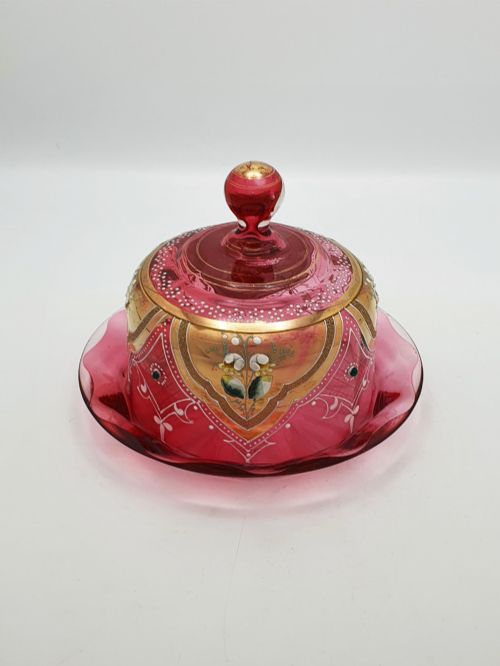
The selection frequently includes ruby, cranberry, Bristol blue and green glass forms, often enriched with gilt decoration, floral scenes or heraldic motifs originating from English, Bohemian and continental workshops.
Buyers will encounter diverse utilitarian and display objects such as biscuit barrels, liquor stands, decanters, ewers and inkwells spanning the Victorian, Edwardian, Art Nouveau and Art Deco periods.
How they were made
Makers utilised blown glass, crystal, opaline and coloured glass as the foundational substrate, shaping them into vases, jugs and covered dishes.
Decorators applied powdered glass enamel mixed with a medium, fusing the pigments to the vessel surface through careful firing.
Many items received supplementary embellishments including gold leaf, gilding and wrought iron mounts, particularly during the late nineteenth and early twentieth centuries.
One green glass vase bears a hand-painted enamelled fox hunting scene, bringing the English countryside straight into the Victorian drawing room.
What varies in quality
The refinement of the hand-painted enamel work dictates much of the distinction, separating simple dotted borders from intricate, multi-layered figural and floral compositions.
The weight, clarity and colour depth of the underlying glass - whether cranberry, ruby, opaline or crystal - influence the overall presence of the piece.
The precision of the gilding and the preservation of the applied enamel without rubbing or loss determine the desirability among collectors.
Theresienthal·Fritz Heckert·Lobmeyer·Moser
The Hand Painted Enamel Glass Glossary
- Enamel
- A vitreous composition fused to the surface of glass through heat decoration. It provides durable colour and opaque detail.
- Lustre
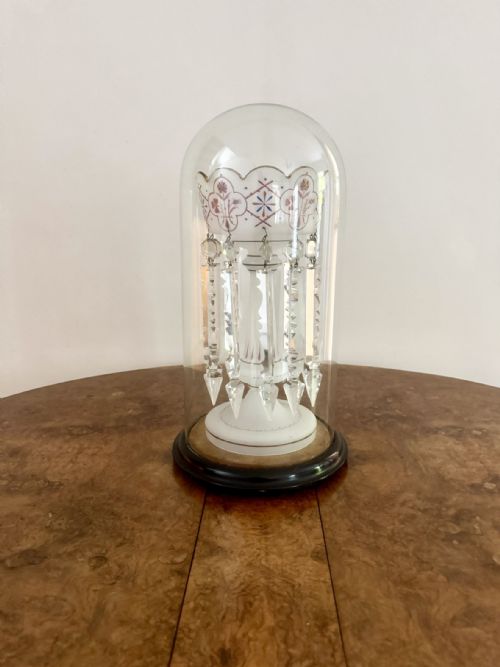
- A decorative glass vase or candlestick fitted with hanging crystal prisms designed to catch and reflect candlelight. Victorian examples often feature hand-painted enamel flowers.
- Mary Gregory glass
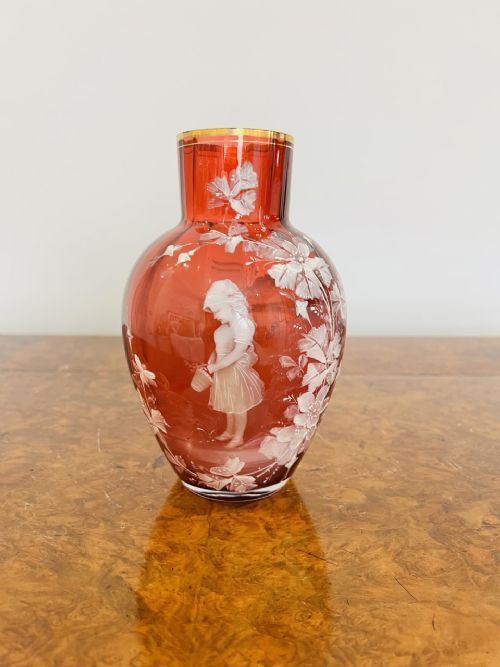
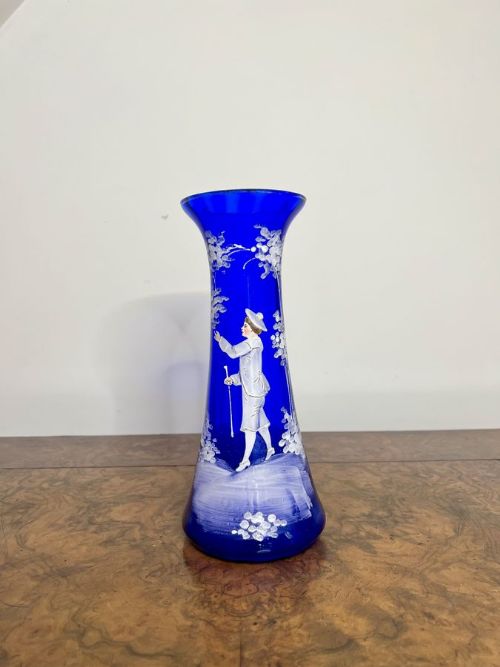
- Victorian glassware decorated with silhouette-style white enamel figures, typically children playing amidst foliage. It appears frequently on cranberry and green glass bodies.
- Opaline glass
- An opaque, pastel-coloured glass popular during the nineteenth century. It provides a smooth matte ground for brightly coloured enamel painting.
- Roemer
- A traditional Germanic wine glass featuring a wide bowl atop a cylindrical stem studded with prunts. Enamelled versions often display armorial or heraldic motifs.
Hand Painted Enamel Glass: Frequently Asked Questions
How do I clean hand painted enamel glass?
Wash pieces gently by hand using lukewarm water and mild soap, avoiding harsh scrubbing or soaking.
Dry immediately with a soft lint-free cloth to protect the delicate enamel and gilding from moisture damage.
Are these pieces safe for holding liquids?
While decanters, jugs and wine glasses were originally made for functional use, historical enamel and gilding degrade over time.
It is generally safer to treat older decorative vessels and glassware as display items rather than daily tableware.
How can I tell Victorian pieces from later items?
Victorian examples often rely on rich cranberry or green glass grounds paired with heavy gilding and traditional Mary Gregory motifs.
Later pieces from the twentieth century typically adopt cleaner lines associated with Art Nouveau, Jugendstil or Art Deco design movements.
What is the difference between opaline and cranberry glass?
Opaline glass is an opaque, milky substance created by adding bone ash or other agents to the melt, offering a solid pastel background.
Cranberry glass is a transparent or translucent red-pink glass achieved by introducing gold chloride into the molten mixture during production.