
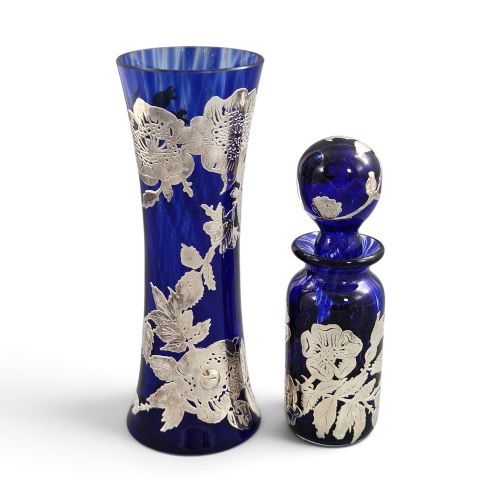
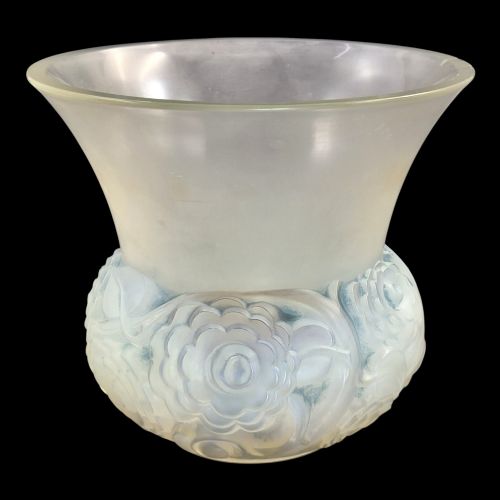


Blue Floral Glass Vase
These blue floral glass vase pieces bring rich colour and botanical design into a room, combining vibrant glasswork with delicate floral motifs.

Blue Floral Glass Vase
A blue floral glass vase draws the eye with deep cobalt, pale tones, or opalescent shades paired with painted, enamelled, or cameo floral decoration. When searching for a blue floral glass vase, collectors encounter a diverse span of periods ranging from the Victorian era through Art Nouveau and Art Deco up to mid-century modern design.
The selections on this page include decorative vases, vanity glassware, and even complementary items such as matching perfume bottles alongside oil paintings depicting similar floral themes. Forms vary from simple bulb shapes to dramatic banjo profiles and intricate cameo creations.
Originating from British, French, and Welsh makers, these pieces demonstrate how different European traditions approached coloured glass production. Buyers frequently find matching pairs alongside single statement pieces suited for display on mantelpieces or occasional tables.
Materials and production methods
Makers utilised various glass types including cobalt glass, frosted glass, opalescent glass, and crystal as the foundation for their designs. These base materials were often worked into distinct shapes through blowing and moulding techniques.
Surface decoration required specialised skills such as acid etching for cameo glass, hand-painting with enamel, and mounting with sterling silver or pewter overlay. These combined processes created tactile depth and contrasting textures between the glass body and the floral ornamentation.
Some vessels double as portable tokens of affection, pairing cobalt glass with lucky lily of the valley motifs designed to charm admirers.
Distinguishing quality in the range
Quality rests primarily on the crispness of the glass formation and the precision of the floral decoration, whether applied through cameo carving, enamel painting, or metal overlay. Superior examples exhibit balanced proportions and confident execution in every botanical detail.
The integration of precious metal mounts, such as sterling silver or pewter, also influences the standing of a piece, requiring secure attachment and clean metalwork that complements the underlying glass colour.
Laugharne Glass Wales·René Lalique·Emile Gallé·George Tye
The Blue Floral Glass Vase Glossary
- Cameo glass
- A vessel formed with multiple layers of glass of contrasting colours, carved or acid-etched away to leave a raised design in relief. This technique creates a distinct two-tone visual effect.
- Cobalt glass
- Deep blue glass produced by adding cobalt oxide to the molten batch during manufacturing. It provides an intense coloured ground for subsequent decoration.
- Opalescent glass
- Glass that diffuses light and displays a milky or pearlescent sheen, often shifting in tone depending on the angle of illumination. It was widely utilised by twentieth-century French makers.
- Enamel
- Opaque vitreous composition applied to the glass surface in floral patterns and fixed by firing. It sits slightly raised above the transparent or coloured glass body.
- Sterling silver overlay
- Decorative silverwork applied directly onto the exterior of a glass vessel, often taking botanical forms. It securely grips the body of the vase.
Blue Floral Glass Vase: Frequently Asked Questions
How do I clean my blue floral glass vase?
Wash the glass gently in lukewarm water using mild soap and a soft cloth, avoiding abrasive pads that might scratch the surface or damage enamel details.
Dry the piece thoroughly with a lint-free towel, taking particular care around any metal mounts or painted areas to preserve the finish.
Were these vases meant for holding water?
Many historical glass vases served primarily as decorative ornaments rather than functional vessels for fresh flowers, especially those featuring delicate enamel or silver overlay.
Check the interior condition before use, as some pieces from the Victorian and Art Nouveau periods are best kept dry to protect their fragile decoration.
How can I tell Art Nouveau from Victorian examples?
Victorian pieces often lean towards symmetrical forms with bright enamel floral painting, reflecting mid-to-late nineteenth-century tastes in household decoration.
Art Nouveau examples typically display asymmetrical, organic lines inspired by natural plant growth, often executed in cameo glass or featuring stylised pewter mounts.
Where should I display a cobalt glass vase?
Position the vase near a natural light source, such as a windowsill or a well-lit shelf, to let sunlight pass through the deep blue glass and illuminate the floral details.
Ensure the placement is secure and away from heavy household traffic to protect fragile stems and delicate surface overlays from accidental bumps.