

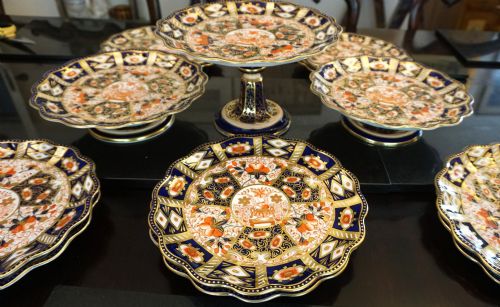
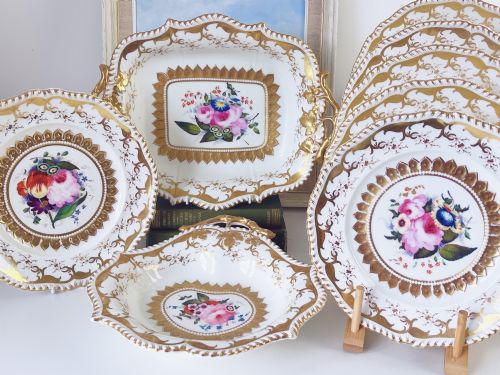
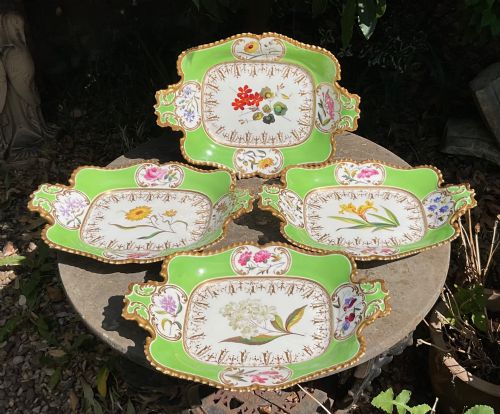
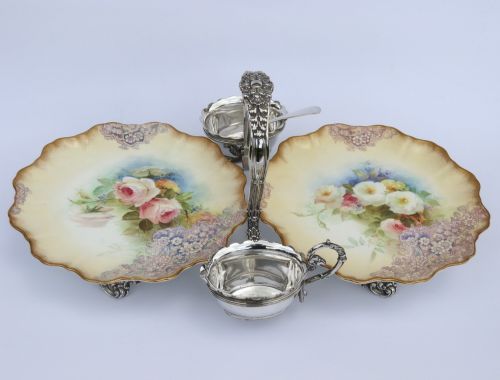
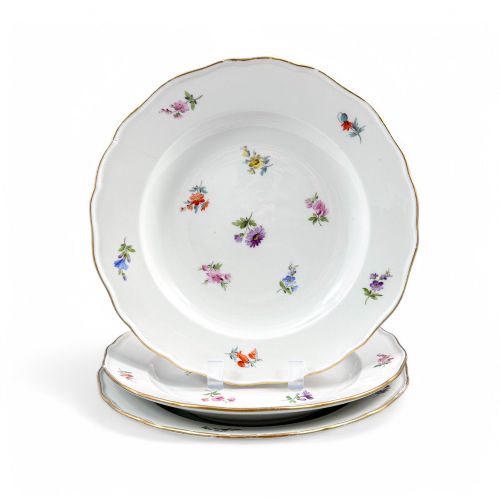


Hand Painted Dessert Set
These hand painted dessert set pieces bring painted floral motifs and fine porcelain to the table, offering a traditional way to serve fruit and sweets.
Hand Painted Dessert Set
A hand painted dessert set comprises matching plates and serving dishes designed specifically for the final course of a formal meal. The pieces span periods from the eighteenth century through to the twentieth century, with nineteenth-century examples appearing frequently on this page.
Forms range from complete services with multiple plates to smaller sets of four or pairs, alongside individual cabinet plates. Materials include porcelain, soft paste porcelain, bone china, ironstone, creamware, earthenware, and drabware, often accented with gold leaf and gilding.
Styles represented across the inventory include Georgian, Regency, Victorian, Rococo Revival, and Japanese Traditional designs. Makers encompass established names such as Davenport, Grainger Lee and Co, Chamberlains Worcester, Meissen, Doulton Burslem, John Ridgway, Rockingham Pottery, Chantilly, Sevres, Kerr and Binns, Wedgwood, and Mason's.
How they were made
Makers shaped these wares using ceramic materials such as porcelain, soft paste porcelain, ironstone, and creamware, firing them to create durable table services. Artisans then applied enamel colours by hand, particularly for floral and botanical decoration.
Many items incorporate gold leaf and gilding to highlight rims and borders, such as floral ozier patterns. Some sets combine ceramic plates with silver plated serving pieces to complete the service.
Hand Painted Dessert Set Retail Price Guide 2026
Typical asking prices for hand painted dessert set among the pieces listed under this phrase on Sellingantiques today, from the lower quarter to the upper quarter. They describe what is for sale here now, not the wider market.
Listings span from the 18th century to the 20th century, encompassing porcelain, earthenware, creamware, and silver plate.
What varies in quality
The fineness of the porcelain body and the complexity of the ceramic body distinguish the pieces, with soft paste porcelain and fine translucent porcelain sitting above heavier ironstone and creamware. The crispness of moulded borders like floral ozier also marks the standard.
The execution of the hand painting determines visual success, particularly in the detail and precision of floral motifs and enamel work. Applied gilding and gold leaf vary in richness and preservation across different services and makers.
Daventport·Grainger Lee and Co·Chamberlains Worcester·Meissen·Walker and Hall·Doulton Burslem·John Ridgway·Rockingham Pottery·Chantilly·Sevres·Kerr and Binns·Wedgwood·Mason's
The Hand Painted Dessert Set Glossary
- Soft paste porcelain
- A ceramic material composed of clay and glass frit, fired at lower temperatures than hard paste. It has a warm, slightly porous body common in eighteenth-century French and English wares.
- Ironstone
- A patented ceramic body developed for durability, heavier than porcelain but harder-wearing. It provides a robust surface well suited to daily nineteenth-century dining.
- Creamware
- A refined earthenware with a pale yellow or cream glaze, perfected in eighteenth-century England. It offers a smooth surface for painted decoration.
- Drabware
- A stoneware body with a muted brownish-grey or olive glaze, popular during the nineteenth century. Wedgwood produced notable examples of this subdued ceramic.
- Ozier border
- A moulded wicker or basketweave pattern applied to the rim of plates and dishes. It provides textured relief framing for central painted scenes.
- Streublumen
- A decorative scatter of small detached floral sprays across the white porcelain surface. This German term describes a popular Meissen painting style.
Hand Painted Dessert Set: Frequently Asked Questions
What is a dessert set used for?
These services were designed for serving fruit, sweetmeats, and confections at the conclusion of a formal dinner. They typically include a combination of large serving dishes and smaller plates for individual guests.
Over time, many of these sets transitioned from active dining tables to cabinet display, valued for their painted floral decoration and varied ceramic bodies.
How do I distinguish eighteenth-century pieces?
Eighteenth-century examples often employ soft paste porcelain bodies that feel softer to the touch and show subtle variations in the glaze. They frequently feature moulded borders like the floral ozier pattern seen on Chantilly wares.
Later nineteenth-century services generally utilise harder porcelains, ironstone, or refined earthenwares, reflecting industrial improvements in ceramic manufacturing.
Can I use antique plates for dining?
While these pieces were originally created for functional use, their age and hand-painted enamel decoration require careful handling. Many owners choose to display them in cabinets or use them only for special occasions.
Hand-applied gilding and enamel work can wear down with frequent washing, particularly in older creamware and soft paste porcelain services.
What does drabware mean?
Drabware refers to a ceramic body featuring a muted brownish-grey or olive-coloured glaze. It was produced by makers such as Wedgwood during the nineteenth century to provide a contrast to brighter white porcelains.
These pieces rely on subtle tone and form rather than colourful floral painting for their decorative effect.