


Hand Painted Desk Lamp
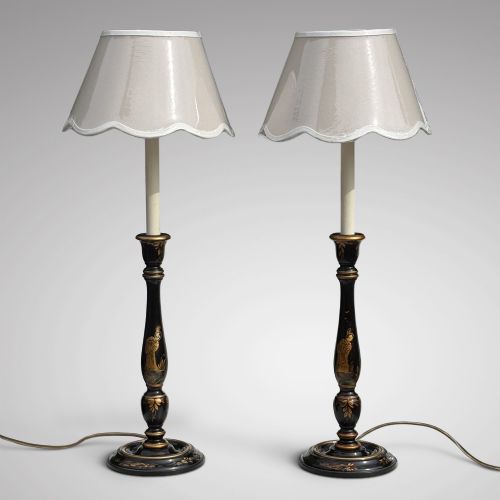
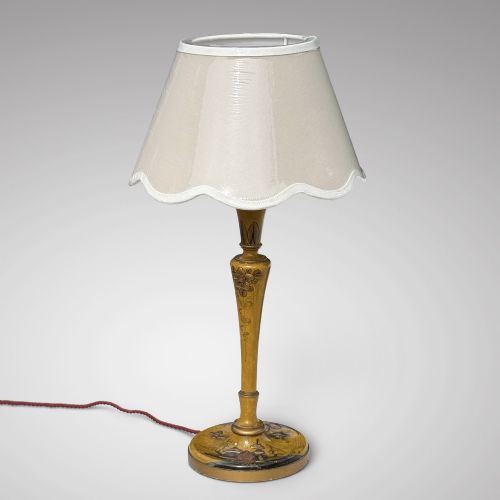
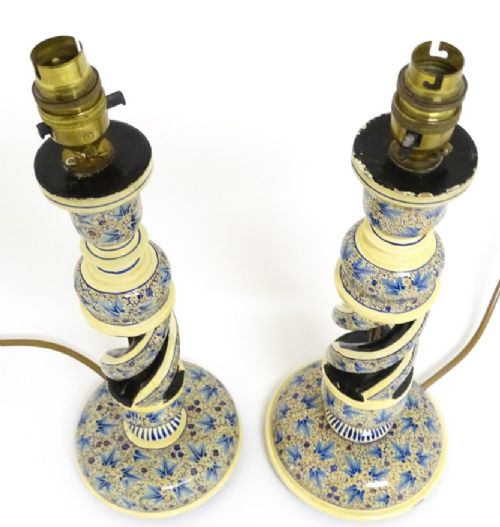
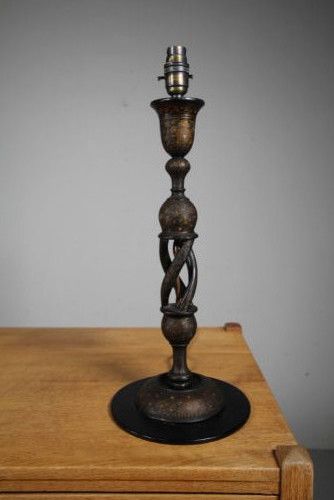
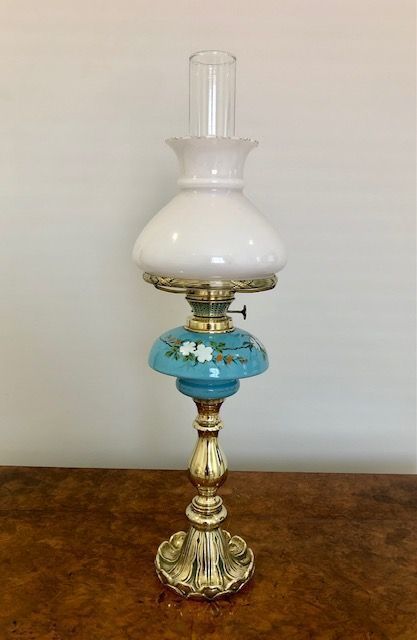
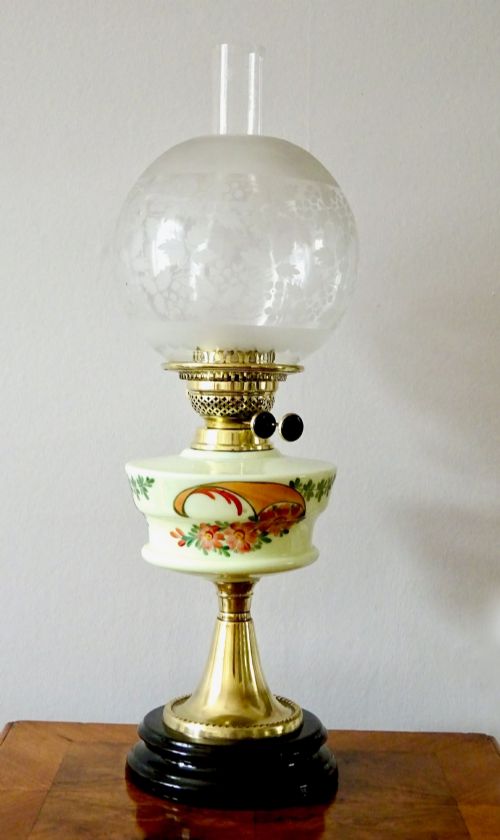
These hand painted desk lamp options bring together centuries of painted porcelain, lacquer, and converted vases.
Hand Painted Desk Lamp
When searching for a hand painted desk lamp, buyers encounter lighting formed from converted antique vases, oil lamps, and specialised table pieces. The selection spans the seventeenth century through to the Art Deco period, drawing heavily on Victorian and early twentieth-century examples.
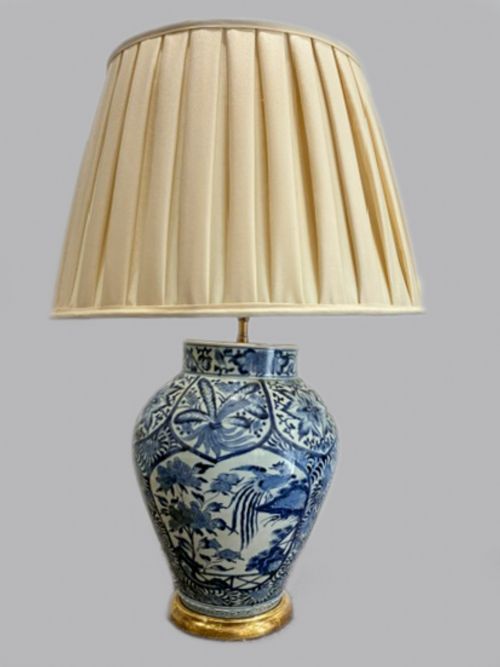
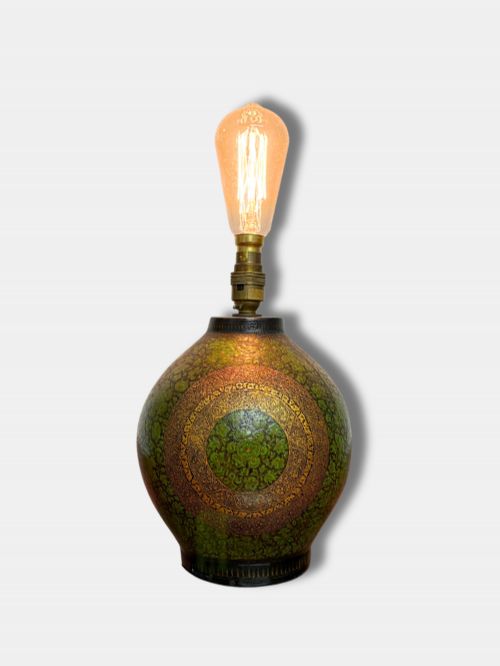
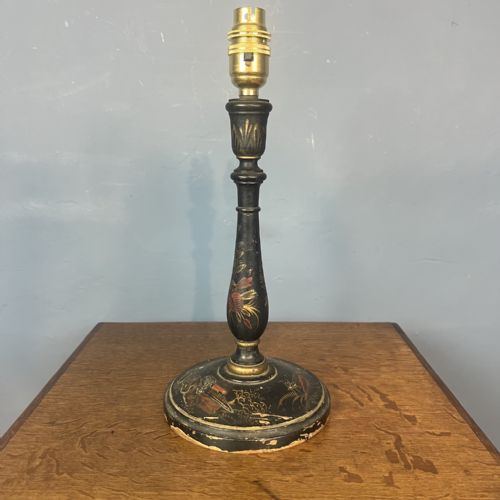
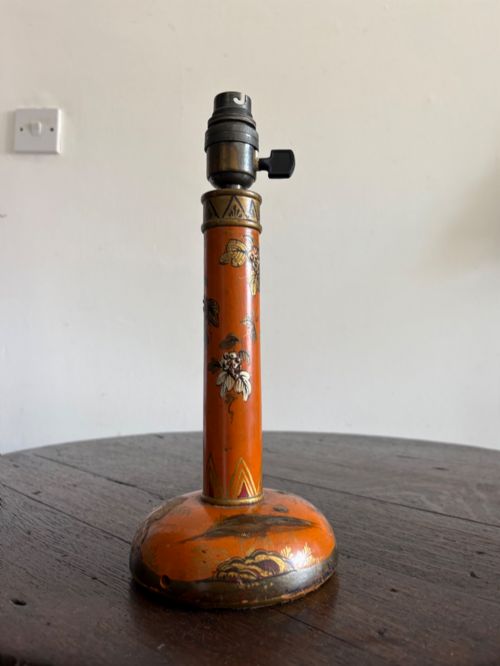
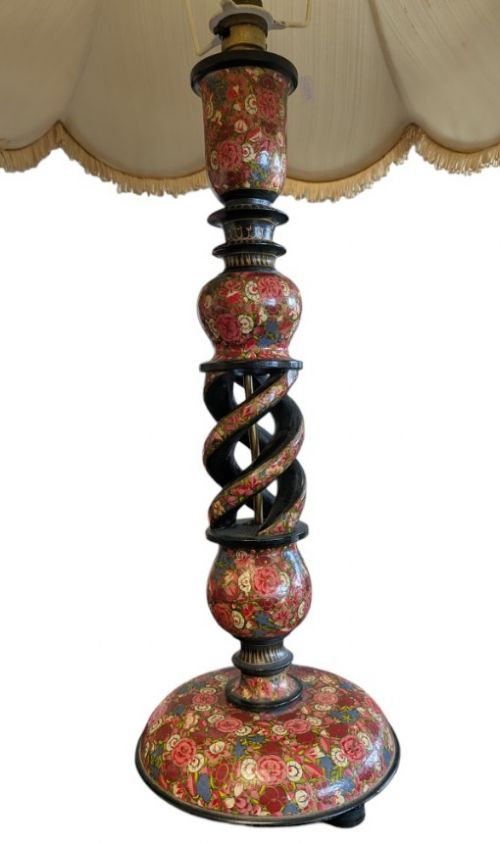
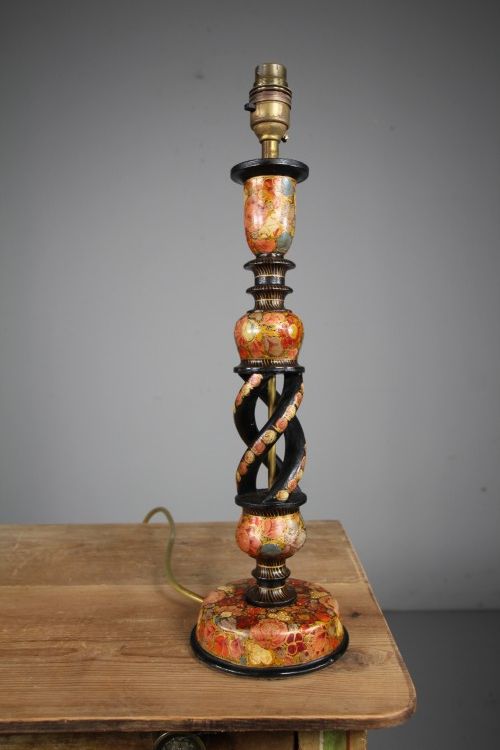
The most common forms on this page include Kashmiri painted wood bodies and Chinese porcelain vessels adapted for electrical use. These pieces often take the shape of ginger jars or slender vases mounted with lamp holders.
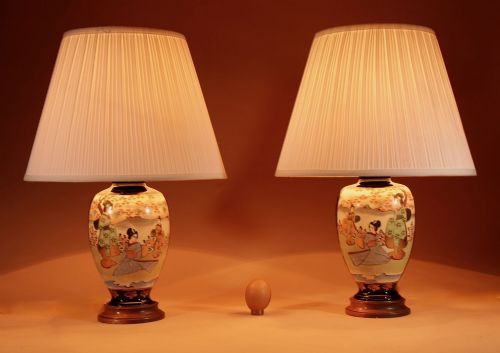
Origins range across multiple traditions, including Japanese Satsuma and Kutani wares, Anglo-Indian craft, and European lacquerwork. Each piece serves as both a functional light source and a decorative object reflecting its original period.
Materials and Methods
Makers utilised rigid substrates such as porcelain, earthenware, glass, and turned wood, often applying layers of lacquer or gilt bronze. Painted decoration relies on manual brushwork applied directly to the ceramic glaze, wood, or lacquer surface.
Many items originated as oil lamps or domestic vases before conversion into table lamps through the addition of electrical fittings and rewiring. Metal components such as brass and wrought iron provide structural support for the decorative bodies.
Listings feature periods spanning from the late seventeenth century up through Art Deco and the 1930s.
Distinctions in Standard
The standard of execution in hand-painted ornament dictates the visual appeal of each piece, distinguishing fine brushwork from simpler decoration. Crisp detailing on lacquerwork and well-preserved polychrome pigments on porcelain elevate the overall execution.
Integrity of the conversion process also matters, particularly how cleanly the original vase or oil lamp body accommodates modern wiring without altering the antique material. Complete pairs command higher regard than single lamps due to the difficulty of matching painted motifs.
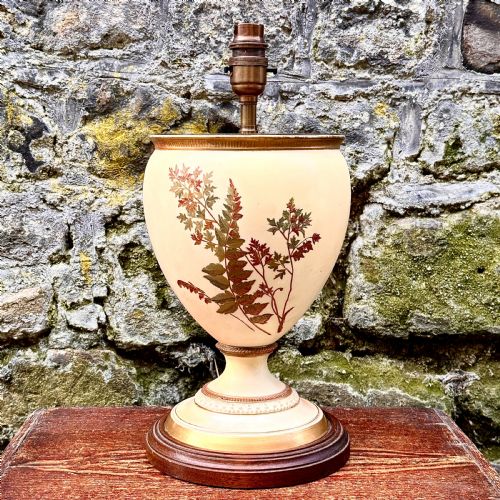
Royal Worcester
The Hand Painted Desk Lamp Glossary
- Chinoiserie
- European decorative style reflecting Chinese artistic traditions. It appears frequently on lacquered lamp bases from the Victorian and Edwardian eras.
- Famille Verte
- Chinese porcelain palette dominated by green enamel colours. Pieces utilising this style date largely from the nineteenth century in these listings.
- Opaline glass
- Opaque or translucent glass popular during the nineteenth century. It provides a smooth surface suitable for hand painting.
- Satsuma
- Japanese earthenware featuring ivory-coloured crackle glaze and detailed polychrome enamels. These wares frequently appear converted into table lamps.
Hand Painted Desk Lamp: Frequently Asked Questions
How do I choose the right hand painted desk lamp?
Consider the height and proportion of the lamp body in relation to your workspace. Matching the painted motifs, whether floral or geometric, to your room style helps narrow the choice.
Pay attention to the base material, choosing between ceramic porcelain, lacquered wood, or glass depending on the decorative weight you want on the desk.
Are these lamps safe for daily use?
Many older lamps have been rewired to meet modern standards, utilising contemporary electrical fittings. It remains sensible to have any antique lighting checked by a qualified electrician before plugging it in.
Handling the switch and cord with care preserves the historic body of the lamp while ensuring reliable daily operation.
Can I find matching pairs here?
Matching pairs do appear across various periods, particularly in lacquered finishes and nineteenth-century porcelain. They offer a balanced look for larger desks or matching side tables.
Because many pieces began as unique vases or oil lamps, single lamps are equally common in the selection.
How should I clean a painted lamp base?
Dust the surface gently with a dry, soft cloth to protect the hand-painted details and delicate lacquer or glaze. Avoid using harsh chemical cleaners or abrasive pads that could damage the historic finish.
Unplug the lamp entirely before undertaking any light maintenance around the shade and base.