



Hand Knotted Wool Fragment
A hand knotted wool fragment is a surviving portion of an older tribal textile or carpet, prized by collectors for its concentrated pattern and direct link to nomadic weaving traditions.
Hand Knotted Wool Fragment
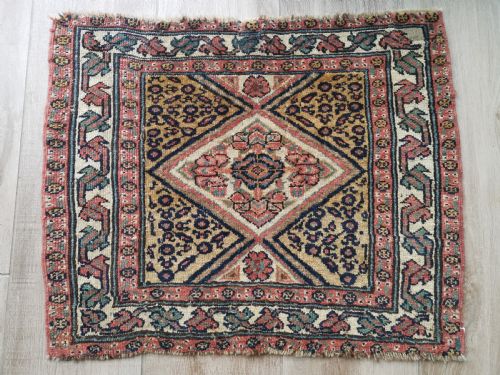
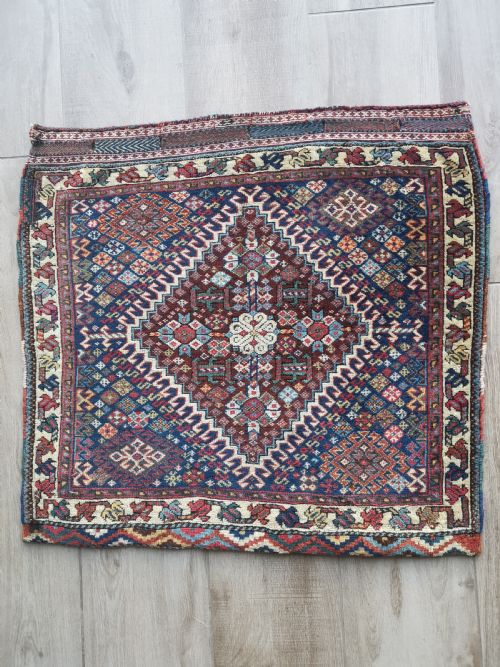
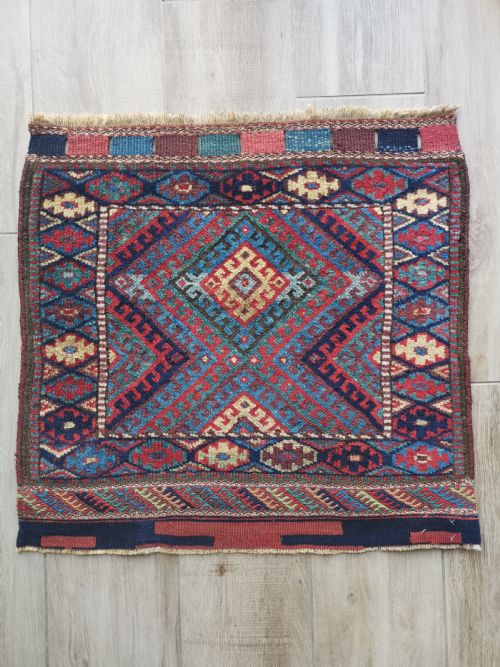
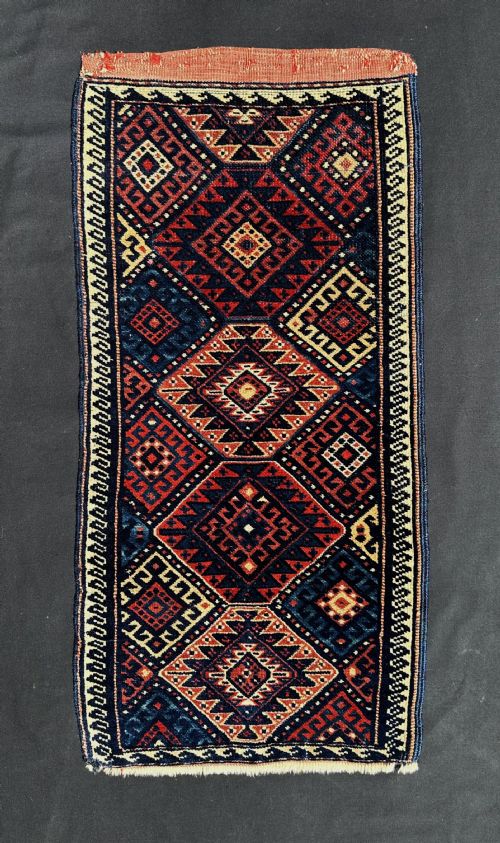
A hand knotted wool fragment represents a surviving section of a larger tribal textile, such as a bagface, saddlebag, or rug, which has separated from its original context over time. When exploring hand knotted wool fragment examples, one encounters remnants originating from nineteenth-century nomadic and village traditions across Persia, the Caucasus, Central Asia, and northern India. These pieces frequently manifest as bagfaces, torbas, chuvals, and runners that preserve specific tribal motifs and regional weaving structures.
The specimens seen here span from the mid-eighteenth century through to the early twentieth century, with nineteenth-century examples appearing most frequently. Tribal groups including the Turkmen, Qashqai, Afshar, Kurdish, and Baluch dominate the selection, bringing distinctive regional designs like gull motifs, medallions, and tile patterns into focus. Each hand knotted wool fragment carries the specific structural characteristics of its maker's tribal workshop or nomadic camp.
How they were made
Makers utilised hand-spun wool for the pile and foundation yarns, relying on natural dyes derived from plants and minerals to colour the fleece. This combination yields the varied tonal qualities and saturated hues observed across the pieces.
Weavers knotted the wool pile by hand onto cotton or wool foundation warps and wefts, producing dense textile structures designed for durable utility within nomadic households.
Several items preserve the industrious evidence of spindle bags and pillow faces once tucked away inside nomadic tents.
What varies in quality
Knot density and structural fineness separate standard utility weaving from exceptional artistic achievement, with tighter structures allowing complex curved lines and intricate motifs to emerge clearly. Finely woven pieces demonstrate greater control over the loom by the artisan.
The quality of the wool itself dictates the handle and visual depth of the pile, with lustrous, well-prepared fleece retaining vibrant colour interaction over decades of use. Natural dye saturation further elevates a fragment, as depth of colour remains consistent through the pile.
The Hand Knotted Wool Fragment Glossary
- Bagface
- The decorative front panel of a utilitarian storage sack, detached from the plain flat-woven back to survive as an individual textile. These panels preserve the primary tribal design intended for display inside a tent.
- Chuval
- A large tent bag used by Turkmen nomads for storage, featuring repeated primary guls across the face. Fragments of these sacks retain iconic medallion-like patterns.
- Torba
- A smaller storage bag than the chuval, traditionally hung on the walls of a nomad's tent. Torba faces display compressed versions of tribal heraldry and border systems.
- Gul
- A primary medallion or octagonal design element used repeatedly in Turkmen and tribal rugs. These motifs serve as identifying emblems for specific tribal groups.
- Balisht
- A pillow or pillow-face woven for domestic use within nomadic and village households. They typically measure smaller in format than floor carpets or storage bags.
Hand Knotted Wool Fragment: Frequently Asked Questions
What is a hand knotted wool fragment?
A hand knotted wool fragment is a surviving portion of a larger antique rug, runner, or storage bag that has been separated from the complete piece. These remnants allow collectors to study specific tribal motifs, knotting structures, and dye palettes in a manageable format.
Most fragments originate from nineteenth-century nomadic or village workshops in regions such as Persia, the Caucasus, and Central Asia. They preserve authentic weaving techniques and materials that might otherwise be lost when larger carpets succumb to heavy wear.
How were tribal bagfaces used?
Nomadic groups utilised woven bags to store bedding, clothing, and household goods inside tents or during seasonal migrations. The decorative face of the bag was woven with particular care using hand-spun wool and natural dyes.
Over generations, the plain utility backs wore out or were discarded, leaving the heavily ornamented front panels to survive as independent textiles. Collectors now preserve these panels as portable examples of tribal art.
How do I identify tribal origins?
Identifying the origin of a fragment relies on examining the specific design motifs, such as guls, medallions, or tile patterns, alongside the colour palette. Different tribal groups, including the Turkmen, Qashqai, and Afshar, utilised distinct visual vocabularies and structural foundations.
Structural details such as selvedges, end finishes, and wool preparation further point toward specific geographical regions like Khorassan or the Trans-Caspian steppes. Comparing these elements with documented examples helps clarify provenance.
How should I display a textile fragment?
Textile fragments are frequently mounted and framed behind conservation-grade materials or stitched carefully to a supporting fabric backing for wall hanging. This prevents sagging and distributes the weight evenly across the entire surface of the wool.
Display areas should be kept away from direct sunlight and excessive humidity to protect the natural dyes and wool fibres. Proper mounting ensures the historical structure remains secure for years to come.