
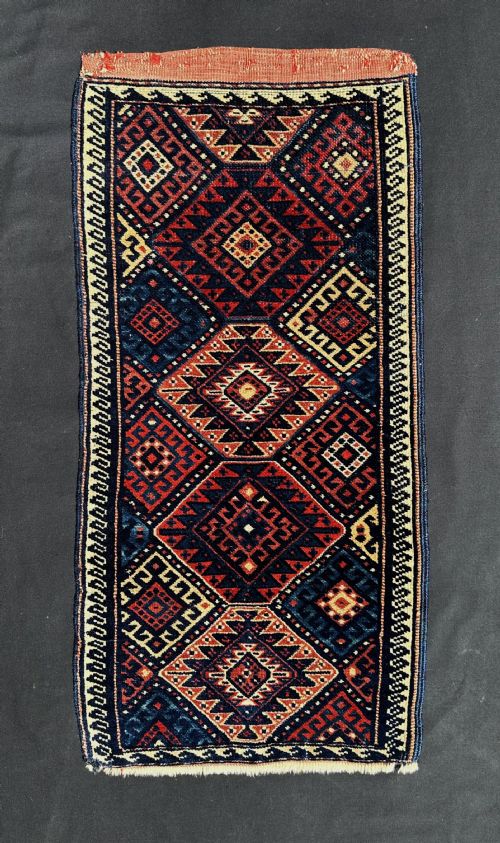


Hand Knotted Tribal Cushion
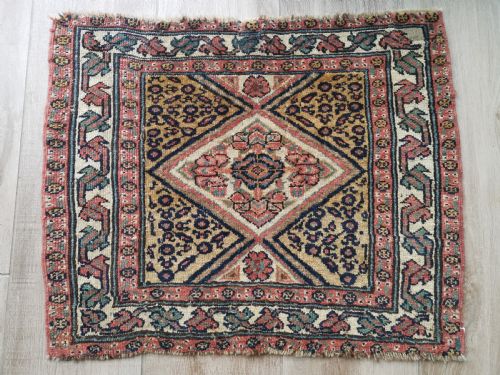
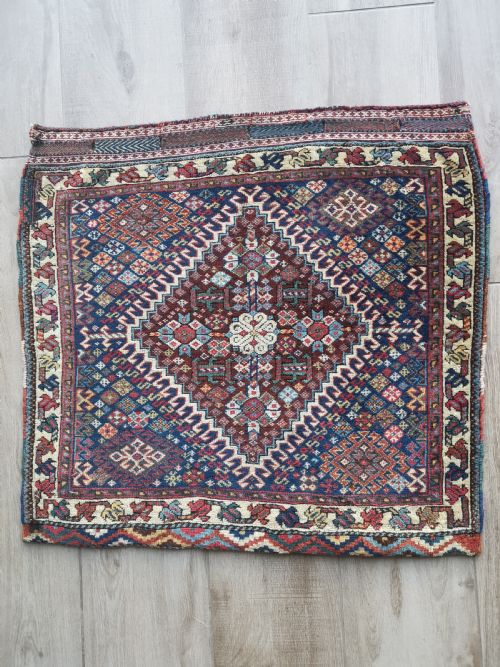
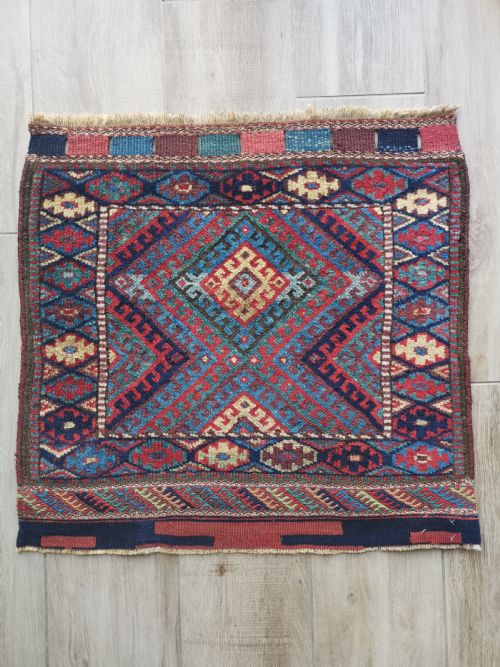
These hand knotted tribal cushion pieces are authentic nomadic bag faces and saddlebags repurposed into decorative cushions.
Hand Knotted Tribal Cushion
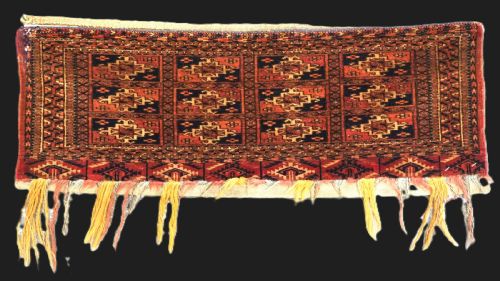
A hand knotted tribal cushion represents a repurposed fragment of nomadic weaving, typically created from antique bag faces, saddlebags, and torba faces. The items seen on this page draw from 19th Century and early 20th Century production, originating across Persia and Central Asia.
Makers shaped these textiles as functional objects for nomadic life, utilising utilitarian items like half saddlebags and pillow bag faces before their conversion into domestic cushions. The forms preserve the authentic geometry and field designs intended by tribes such as the Qashqai, Afshar, Khamseh, and Tekke Turkmen.
Buyers encounter various formats here, ranging from square bag faces measuring around sixty centimetres to rectangular torba fragments. Each hand knotted tribal cushion retains the character of its original tribal context, whether Kurdish, Baluch, or Luri.
How they were made
Weavers constructed these pieces using hand-spun wool and cotton foundations, tying dense knots by hand to form durable utilitarian surfaces. Natural dyes provide the underlying palette, interacting with the wool to create the deep tones visible across the pieces.
Nomadic workshops relied on locally sourced materials, combining wool fleece with vegetable colourants in regions spanning from Western Persia to Khorassan. The structural integrity stems from traditional weaving methods applied to saddlebags and storage bags long before their adaptation into cushions.
Nomadic weavers frequently tucked tiny protective amulets directly into the pile of their bags to ward off the evil eye.
What varies in quality
Quality in a hand knotted tribal cushion depends upon the fineness of the knotting, the lustre of the wool, and the depth of the natural dyes. Superior examples display tight, precise construction alongside harmonious colour palettes derived from traditional dyeing methods.
The preservation of the original design field, whether a classical gul pattern or a regional tribal motif, also distinguishes finer pieces. Strong structural integrity in the surviving textile portion separates robust historic examples from heavily degraded fragments.
The Hand Knotted Tribal Cushion Glossary
- Bagface
- The decorated front panel of a nomadic storage bag or saddlebag. These panels form the primary visual surface of most cushions.
- Torba
- A wide tribal storage bag produced by Turkmen groups. Fragments of these bags often survive as decorative cushions.
- Pushti
- A small tribal rug or mat used for sitting or leaning against. The face of a pushti translates well into cushion format.
- Mafrash
- A rectangular storage bale used for bedding and household goods inside a nomad tent. Surviving faces show elaborate pile-woven designs.
Hand Knotted Tribal Cushion: Frequently Asked Questions
What is a hand knotted tribal cushion?
It is a decorative cushion made from the antique face of a nomadic bag, saddlebag, or storage pouch.
These textiles originate from nineteenth and early twentieth century tribal groups in Persia and Central Asia.
How were these tribal bags originally used?
Nomadic peoples used them as functional storage containers for transporting household goods, bedding, and possessions.
They hung inside tents or across pack animals before surviving fragments were repurposed into cushions.
How do I identify the tribe?
Tribal attribution relies on specific knotting structures, wool characteristics, and characteristic design motifs.
Groups like the Qashqai, Afshar, and Tekke Turkmen each employed distinct colour palettes and geometric patterns.
Are natural dyes used in these pieces?
Yes, traditional nomadic weavers relied entirely on natural dye sources for their wool.
These vegetable and mineral colourants create the rich, varied tones seen across the historical pieces.
How should I care for a tribal cushion?
Gentle surface cleaning and protection from direct sunlight preserve the antique wool and natural dyes.
Professional textile cleaning is recommended for maintaining the structural integrity of older hand-spun pile.