
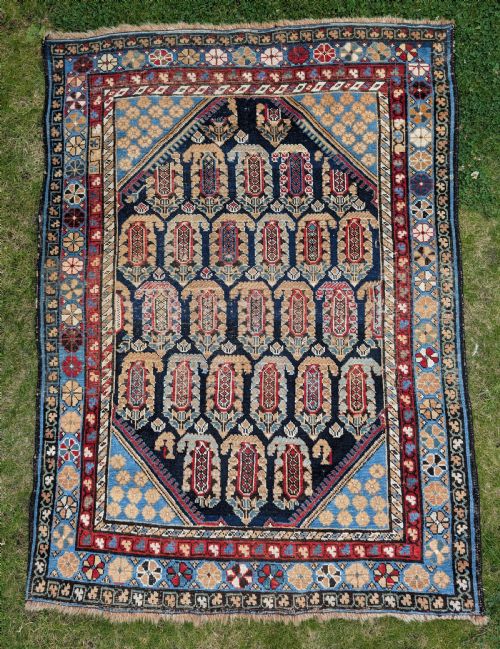
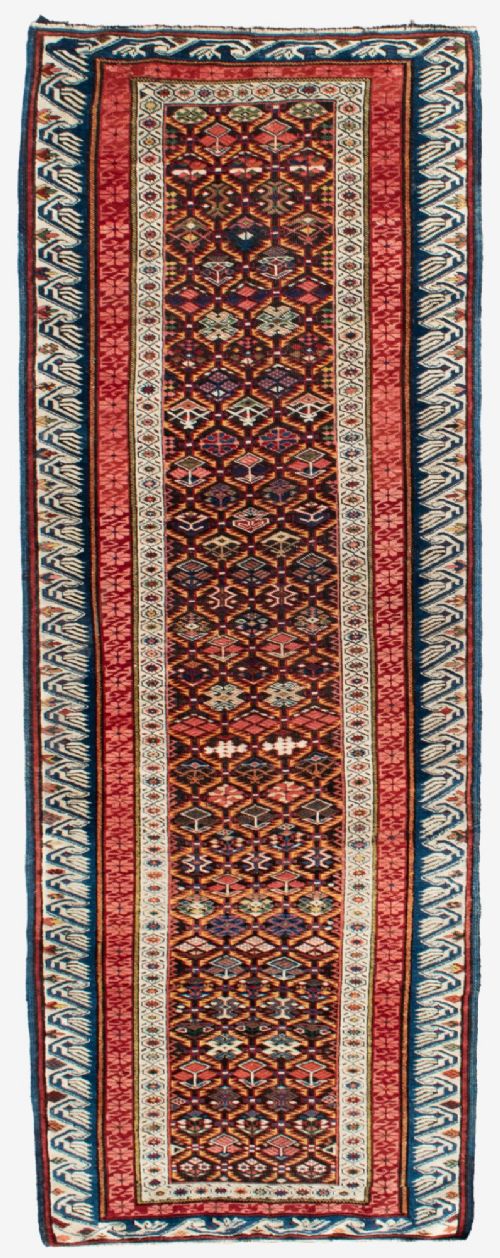
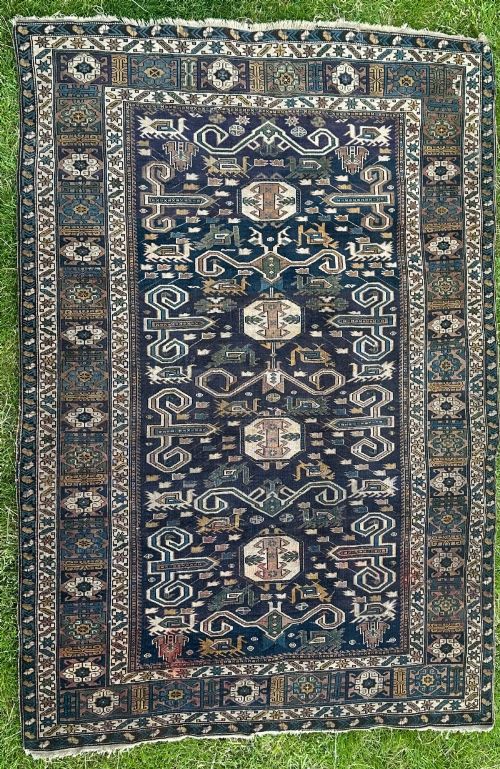
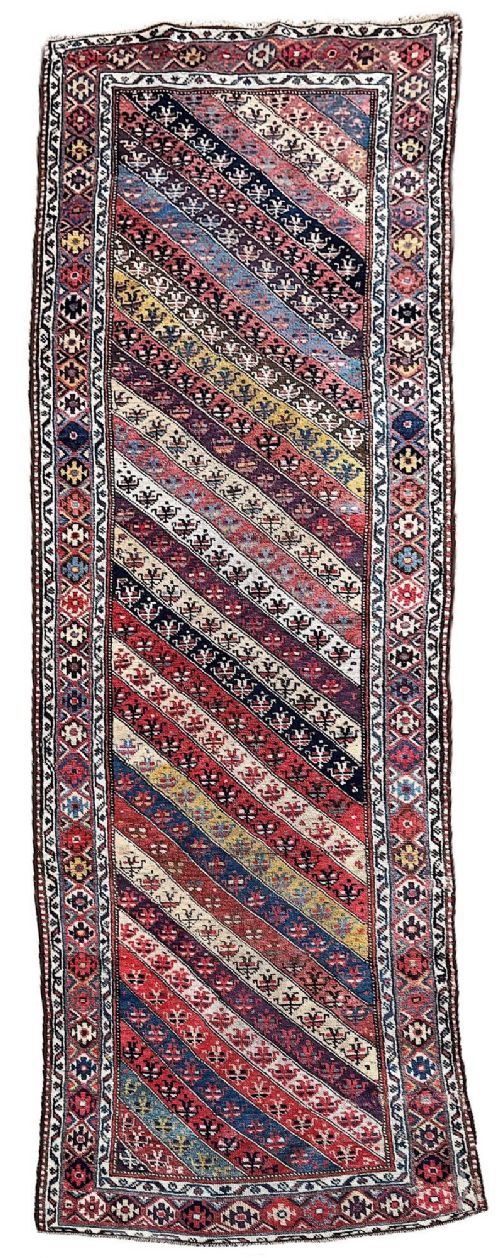
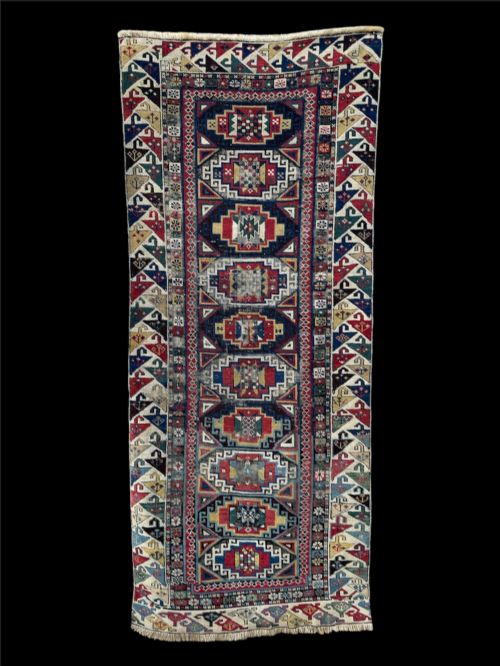


Hand Knotted Shirvan Rug
A hand knotted shirvan rug brings the geometric clarity and rich dyed wool of the nineteenth century Caucasus directly to your floor.
Hand Knotted Shirvan Rug
A hand knotted shirvan rug originates from the Eastern Caucasus, spanning village and tribal weaving traditions from the nineteenth and early twentieth centuries. These textiles include standard formats, long runners, and dedicated prayer rugs designed with specific mihrab niches.
Most examples encountered here date from the period between 1850 and 1920, showcasing traditional Caucasian and Shirvan geometric styles. Buyers will find diverse formats ranging from small square pieces to narrow runners and specific regional designs.
Materials and construction
These pieces are built using wool foundations and piles tied by hand, often incorporating hand-spun wool that yields a durable and textured surface. Natural dyes provide the palette, producing deep tones that age gracefully over decades.
Weavers employed traditional Caucasian knotting techniques to secure intricate geometric patterns, floral lattices, and bird motifs. The combination of hand-spun materials and natural colorants ensures the structure remains resilient.
Listings span the nineteenth and early twentieth centuries, featuring wool materials and natural dyes across Caucasian tribal styles.
Assessing quality in regional weaving
Quality rests upon the crispness of the geometric drawing, the density of the knotting, and the depth of the natural dyes. Superior examples exhibit precise symmetry in motifs like the floral lattice or star patterns.
The choice of ground colour, whether ivory, blue, or scarce yellow, influences visual impact. Finer specimens maintain structural integrity and retain vibrant, harmonious colour palettes across the field and borders.
The Hand Knotted Shirvan Rug Glossary
- Mihrab
- The arched niche found on prayer rugs, symbolising a doorway to paradise and directing the placement of the rug during worship.
- Boteh
- A stylised almond or paisley motif representing a floral shoot or cypress tree, frequently repeated across Caucasian fields.
- Kufic border
- A decorative border style inspired by early Arabic script, appearing as angular geometric key patterns along the edge.
- Hand-spun wool
- Yarn spun manually rather than by industrial machinery, creating irregularities that absorb natural dye with subtle tonal variations.
- Prayer rug
- A smaller format rug featuring a mihrab design, traditionally utilised for personal daily devotion.
Hand Knotted Shirvan Rug: Frequently Asked Questions
How do I care for an antique rug?
Vacuum gently without a rotating brush bar to protect the hand-spun wool pile from excessive friction. Keep the piece out of direct sunlight to preserve the stability of the natural dyes.
Professional cleaning should be undertaken sparingly and exclusively by specialists experienced in antique Caucasian textiles. Avoid harsh chemical spot treatments on historical fibres.
Where were these rugs made?
These pieces were woven in the Shirvan region and broader Caucasian territories, encompassing local workshops and nomadic encampments. The diverse villages produced distinct geometric vocabularies and border arrangements.
Production centred around traditional domestic weaving traditions passed down through generations during the nineteenth century.
What is a prayer rug?
A prayer rug is a portable devotional textile featuring a distinct architectural arch or mihrab at one end. This niche directed the user toward Mecca during daily prayers.
Collectors prize these formats for their concentrated symbolic motifs and precise geometric compositions.
How do I identify different regional types?
Regional attribution relies on analysing the specific combination of border designs, primary field motifs, and colour distribution. Specific locales within the Caucasus utilised characteristic palettes such as ivory or yellow grounds.
Examining the structural knotting style and wool preparation also assists in separating Shirvan pieces from neighbouring traditions.