

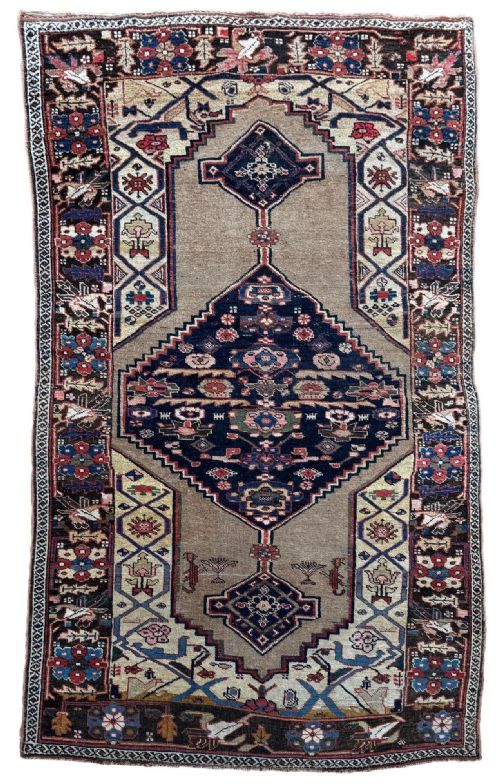
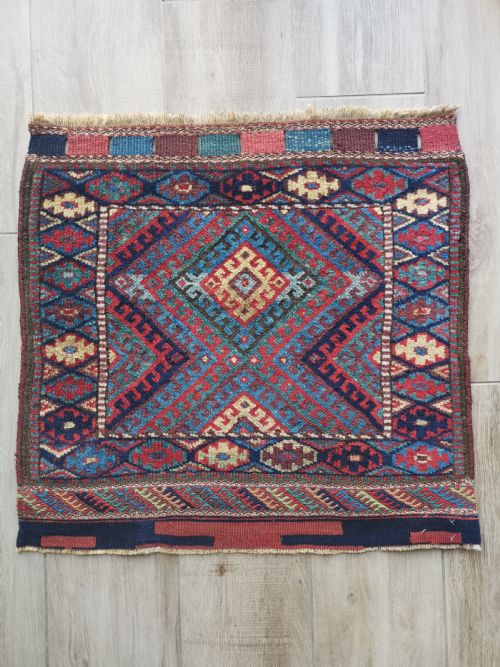
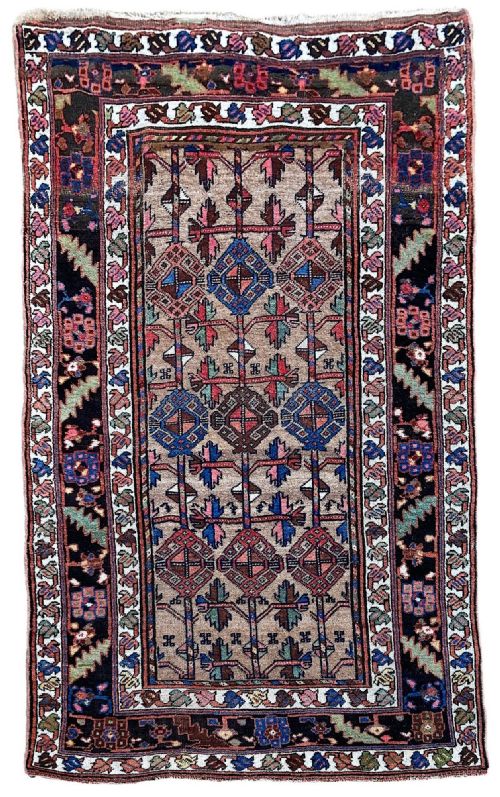
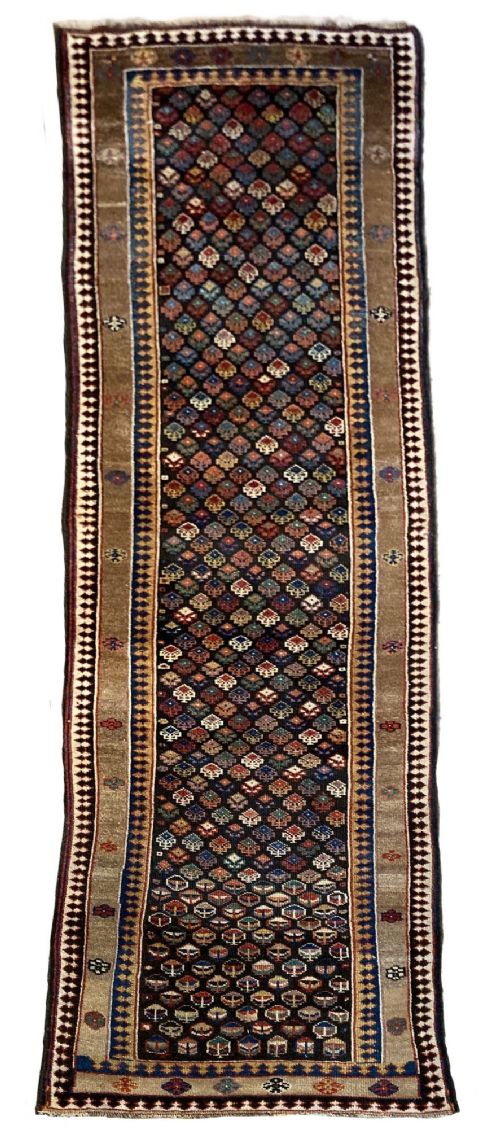


Hand Knotted Kurdish Rug
A hand knotted kurdish rug brings robust tribal geometry and rich wool into a room with genuine rural character.
Hand Knotted Kurdish Rug
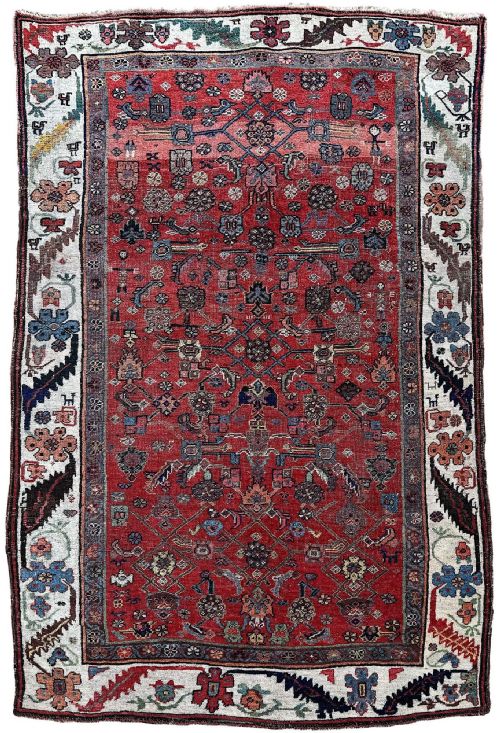
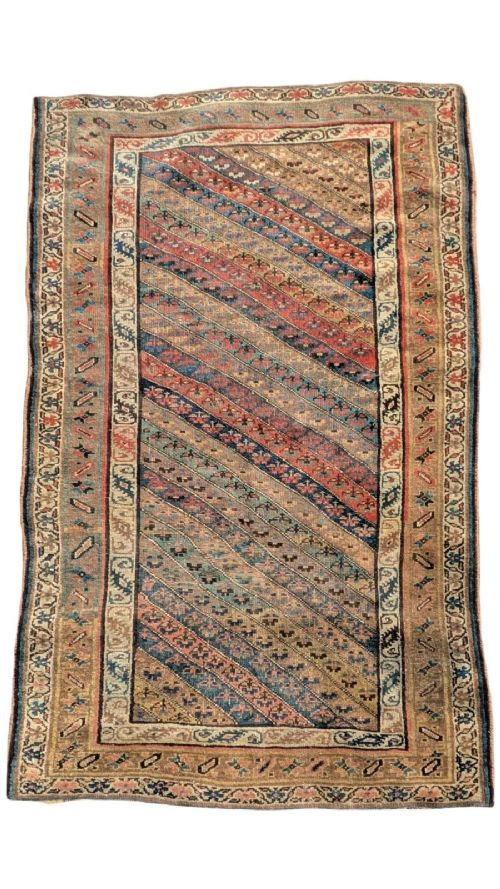
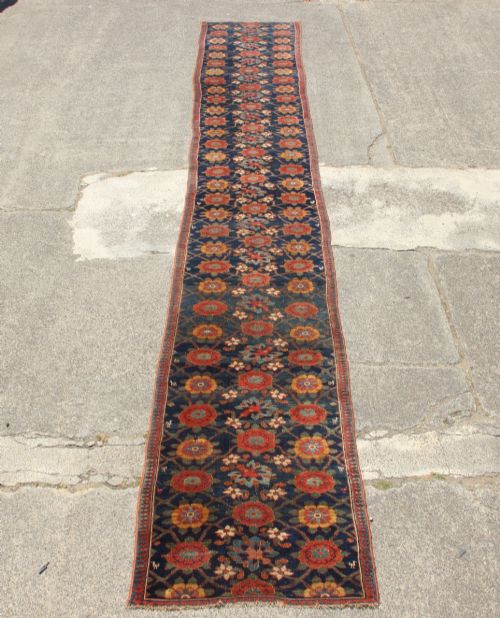
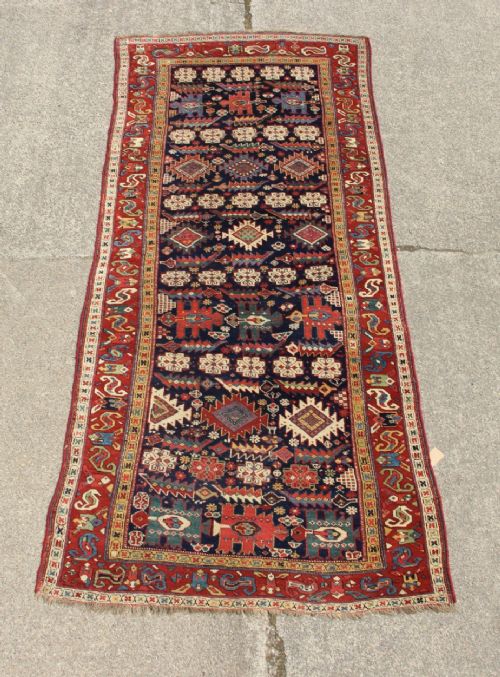
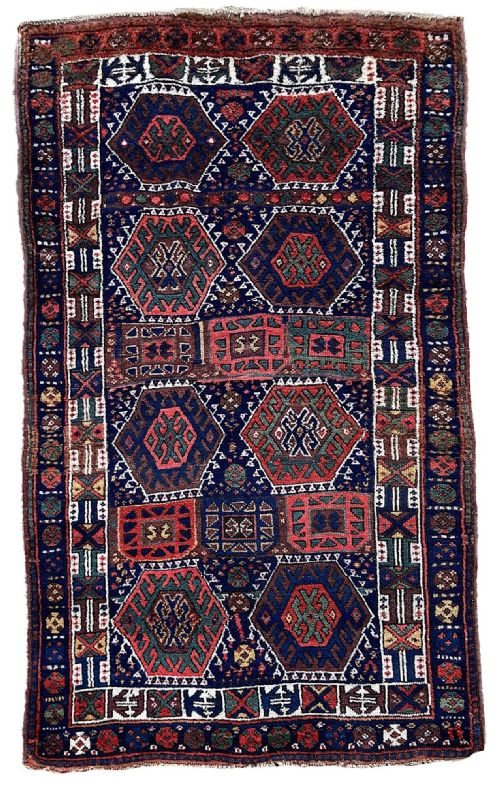
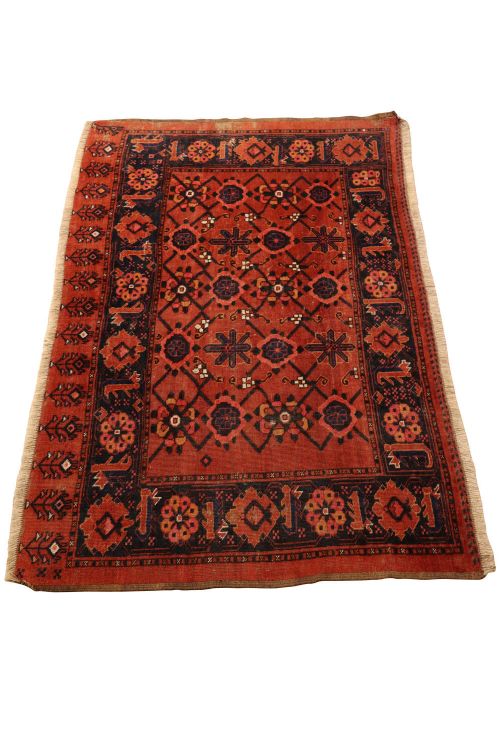
A hand knotted kurdish rug is a dense floor covering or smaller textile piece originating from tribal workshops and village weavers in regions such as Bidjar, Seneh, and Hamadan. Buyers seek these pieces for their durable construction and distinctive geometric motifs, which often include repeating patterns like the Mina Khani or Memlinc guls.
The pieces on this page span from the nineteenth century into the early twentieth century, taking forms that range from small saddlebag faces and square mats to long runners and room-size carpets. Village weavers produced these textiles primarily for domestic use or local trade rather than courtly commission, resulting in grounded, expressive designs.
How they were made
Weavers constructed these textiles using wool for the pile and foundation, frequently combining hand-spun wool with cotton warps for structural stability. The pile was knotted by hand onto the warp threads row by row, creating a thick, resilient surface designed to withstand generations of heavy domestic wear.
Colours derived primarily from natural dyes, yielding deep shades of indigo, madder red, and earthy tones that age gracefully over time. The combination of dense knotting and local dyeing traditions accounts for the enduring structural integrity found across these tribal weavings.
Some nineteenth-century saddlebags survive simply because children refused to let grandmother repurpose their favourite camel-side pockets into floor scrapers.
What varies in quality
Quality in these textiles depends heavily on the fineness of the knotting and the precision of the wool preparation. Pieces with tighter knots and finely spun hand-spun wool display crisper geometric definition and a more supple handle.
The richness and depth of the natural dyes also set finer examples apart from simpler village work. A balanced composition with harmonious colour transitions indicates a weaver of superior skill and aesthetic judgment.
The Hand Knotted Kurdish Rug Glossary
- Gul
- A medallion or repeating octagonal motif commonly found in tribal rugs. These designs often identify the specific tribe or region of the weaver.
- Kelleh
- A format descriptor for a carpet that is longer than it is wide, typically proportioned for specific areas of a traditional Persian room layout.
- Mina Khani
- An all-over repeating pattern composed of daisy-like flower heads linked by curved lattice vines. This classical design appears frequently in fine Kurdish runner formats.
- Chanteh
- A small woven bag or pouch produced by tribal groups for personal use or carriage. These diminutive textiles preserve the same knotting quality and wool standards as larger carpets.
- Warp
- The vertical foundation threads stretched tightly on the loom before knotting begins. Cotton and wool serve as the primary materials for these structural elements.
Hand Knotted Kurdish Rug: Frequently Asked Questions
How do I clean a Kurdish rug?
Maintenance requires gentle vacuuming without a beater bar and professional hand washing when necessary to protect the natural wool pile.
Avoid harsh chemical cleaners and direct prolonged sunlight to preserve the integrity of the natural dyes.
Where were these rugs made?
Weavers produced these textiles across various village and tribal districts in West Persia, including Bidjar, Seneh, and Hamadan. Local nomadic and settled Kurdish communities passed down specific patterns through generations.
Each producing region imparted distinct structural traits, from the heavy stiffness of Bidjar work to the finer handling of Seneh pieces.
Are these rugs durable for hallways?
Many surviving examples take the form of long runners specifically constructed for high-traffic corridors and staircases. The dense hand-knotted wool pile provides exceptional resilience against daily friction.
Placing a quality rug underlay beneath the textile prevents slipping and reduces wear on the foundation threads.
How do I identify a Jaf bagface?
Jaf bagfaces represent small square or rectangular sections detached from larger utilitarian storage sacks woven by the Jaf tribe. They typically feature repeating diagonal rows of hooked motifs or serrated polygons.
Collectors frequently frame these compact pieces or use them as small accent mats due to their intense, concentrated patterns.