

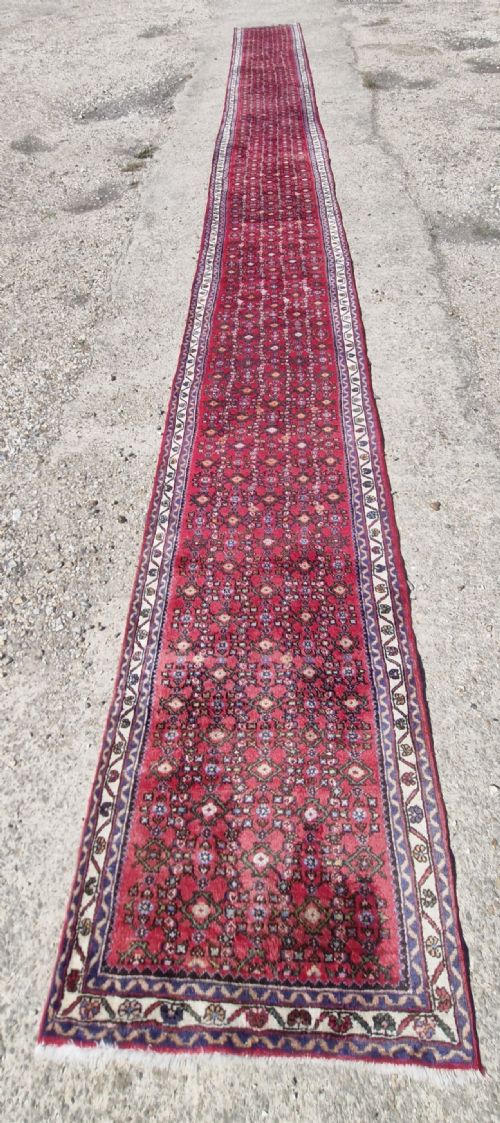
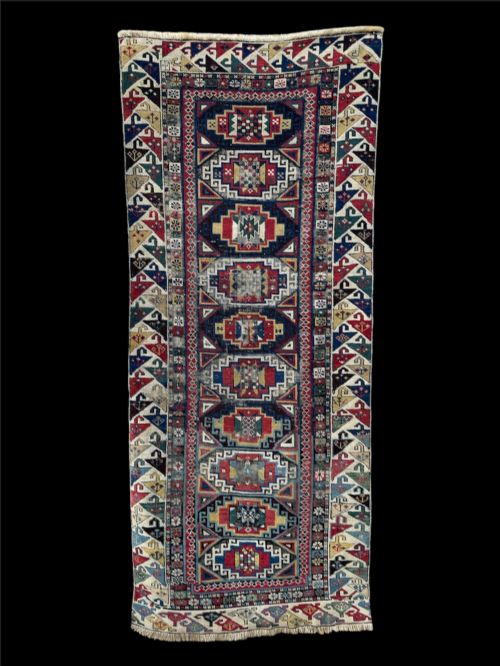
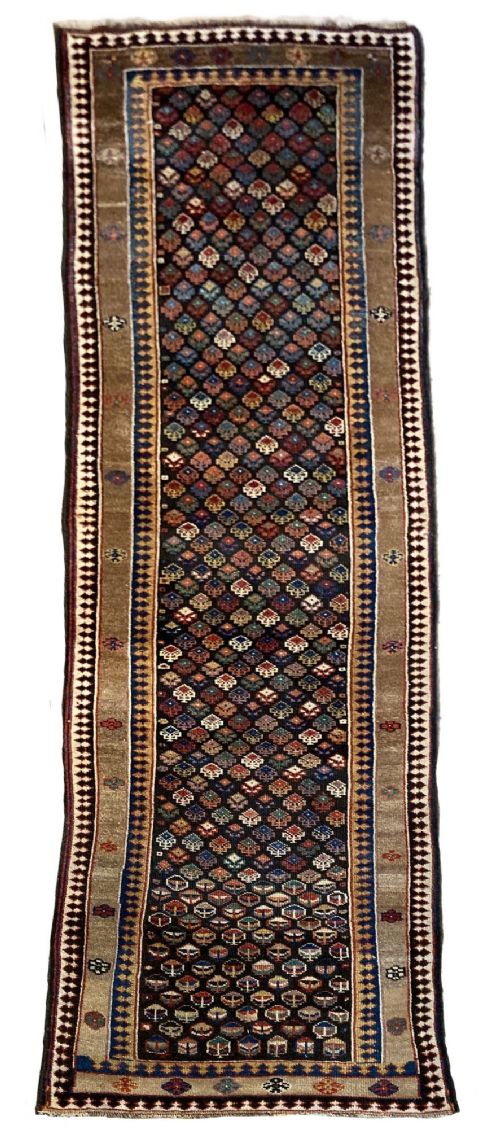
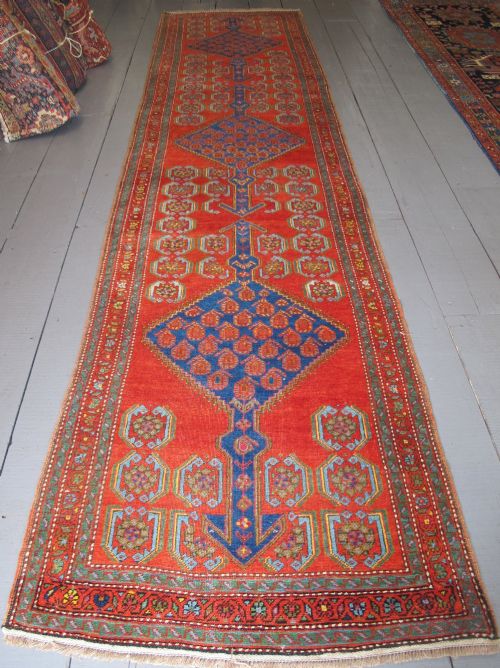


Hand Knotted Hall Runner
A hand knotted hall runner brings character and warmth to a narrow space through enduring craftsmanship and regional pattern.
Hand Knotted Hall Runner
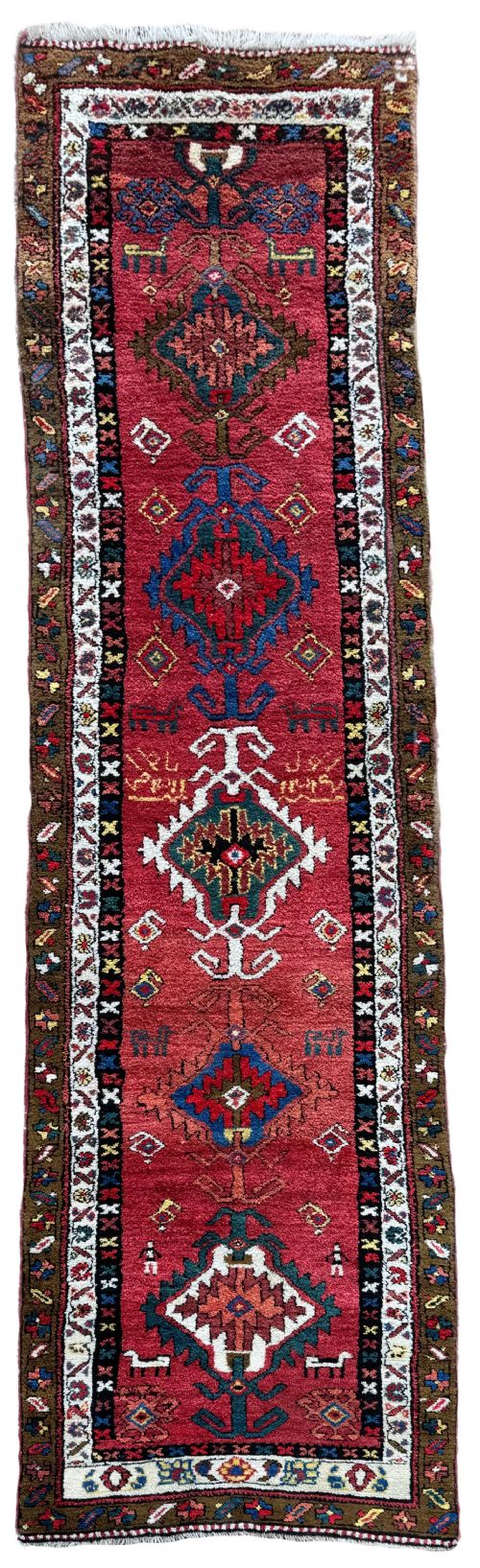
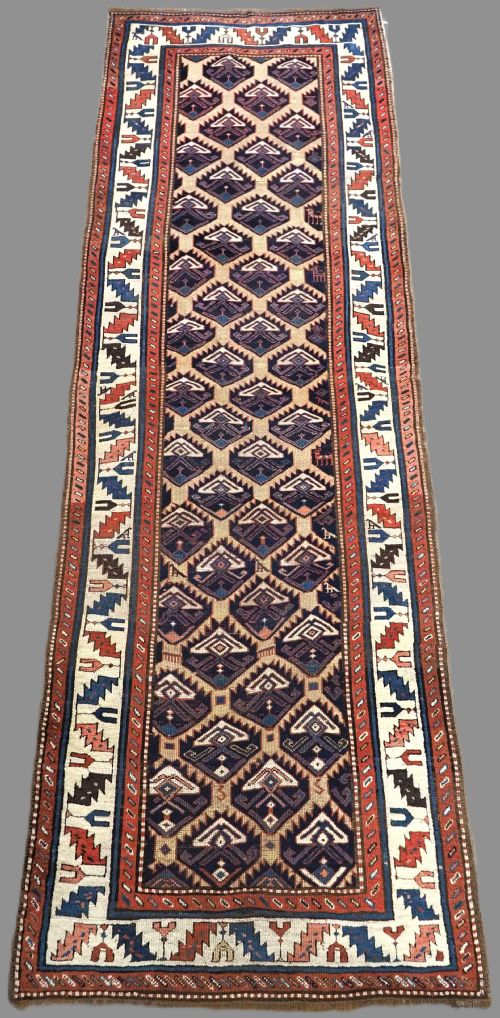
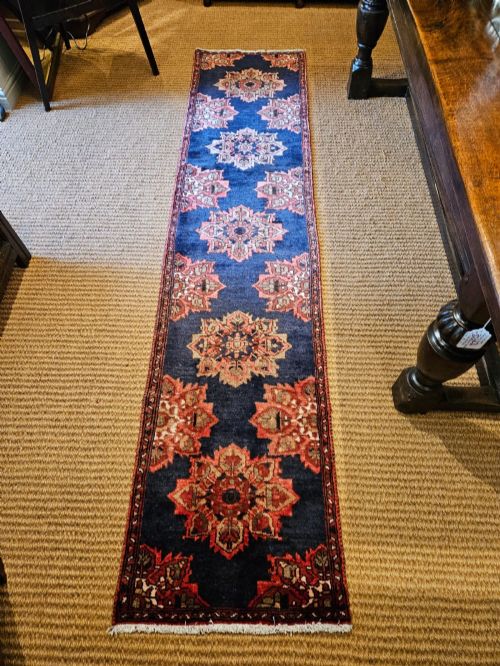
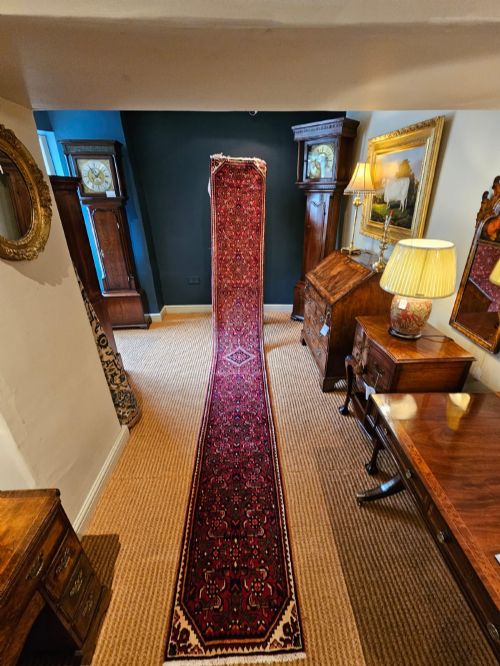
A hand knotted hall runner is a long, narrow carpet designed specifically for corridors, landings and high-traffic thoroughfares within a home. These floor coverings bridge utility and decorative expression, offering a way to anchor narrow architectural spaces with historic textiles.
Formats vary considerably in length, ranging from compact apartment corridors stretching under three metres to expansive thirty-foot installations meant for grander halls. The enduring appeal lies in the geometric motifs, medallion layouts and botanical patterns handed down through generations of weavers.
How they were made
Construction relies upon hand-spun wool knotted meticulously onto cotton or wool foundations, creating a dense pile capable of absorbing decades of foot traffic. Weavers utilised natural dyes derived from plants and minerals, producing rich shades of indigo, madder red and earthy brown that mature gracefully over time.
Nomadic and village workshops employed vertical or horizontal looms, tying symmetrical or asymmetrical knots by hand without mechanical aid. Certain examples incorporate camel hair within the un-dyed wool mixture, adding subtle tonal variation and distinct tactile durability to the weave.
Current listings span the nineteenth and twentieth centuries, featuring wool, cotton, camel hair and natural dyes across Persian, Caucasian and Turkish tribal forms.
What varies in quality
Quality rests upon knot density and the precision of the geometric or floral drawing executed across the narrow format. Finer execution allows complex medallion layouts and sharp lattice designs to remain crisp along elongated proportions.
The depth and saturation of the natural dyes distinguish superior examples, as does the consistent preparation of hand-spun wool. Uniformity in the width of the runner along its entire span reflects the weaver's control over tension during the months on the loom.
The Hand Knotted Hall Runner Glossary
- Natural Dyes
- Colourants extracted from botanical, insect or mineral sources before the widespread adoption of synthetic aniline dyes. They impart a mellow patina that deepens gracefully with age.
- Hand-Spun Wool
- Fleece twisted into yarn by hand rather than by industrial machinery. This method leaves variable thickness and lanolin content, giving the pile organic character and resilience.
- Medallion
- A central ornamental motif dominating the field of the carpet. In runner formats, these are often repeated sequentially down the narrow axis.
- Boteh
- An ancient motif shaped like a bent almond, teardrop or paisley. It symbolises life and eternity in traditional weaving.
- Lattice
- An interlocking network of diagonal lines forming a grid across the field. This geometric framework often contains floral or tribal motifs within its compartments.
Hand Knotted Hall Runner: Frequently Asked Questions
How do I choose the right length?
Measure your hallway carefully while leaving a uniform border of exposed floorboards or stone visible around the perimeter. Narrow runners typically function best when centred between walls rather than wall-to-wall.
Account for doorways opening into the corridor to ensure the pile thickness clears the bottom of interior doors without catching.
Where should a long runner be placed?
These textiles find their natural home in hallways, entrance passages, landings and galley kitchens where foot traffic benefits from added cushioning and sound insulation. Their elongated proportions draw the eye down architectural corridors, creating a sense of visual continuity.
Avoid damp basements or uncovered outdoor patios where moisture can degrade the natural wool and cotton foundations.
How do I care for an antique wool runner?
Vacuum gently on a low suction setting without a rotating beater bar to protect the hand-knotted pile from pulling or fraying. Lift the textile periodically to sweep beneath and inspect for dust accumulation.
Professional specialist cleaning is recommended every few years to remove embedded grit safely without disturbing the natural dyes.
What is the difference between Persian and Caucasian styles?
Persian weaving traditions often feature curved floral vines, intricate medallions and softer, blended tonal fields found in workshops such as Heriz or Bidjar. These designs lean towards botanical elaboration and refined symmetry.
Caucasian examples from regions like Shirvan or Kazak tend to display bold, highly geometric polygons, stark primary colours and sharply rendered tribal symbolism.