
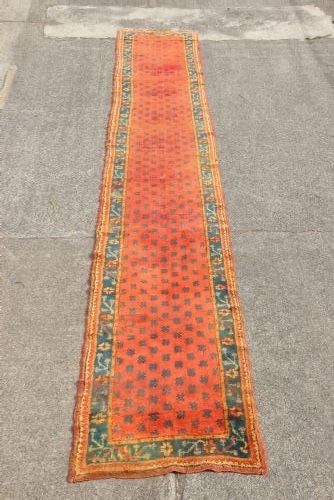
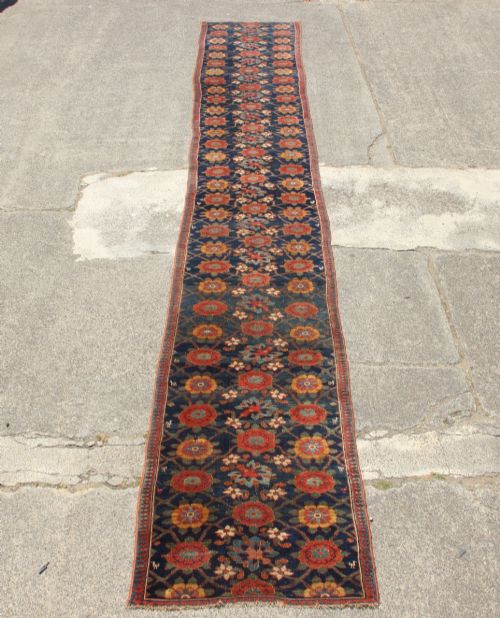
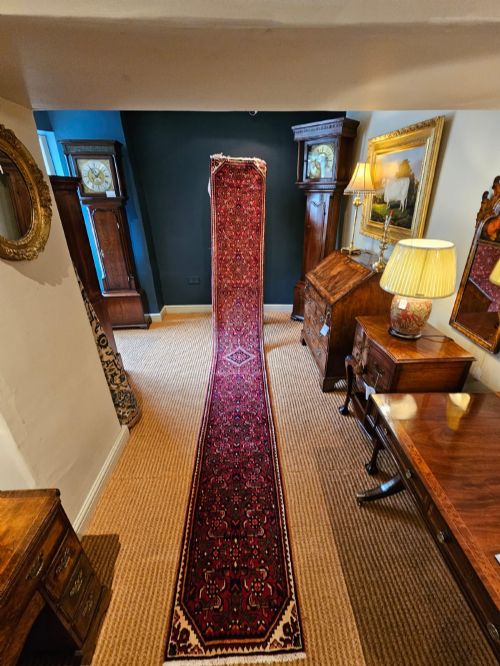
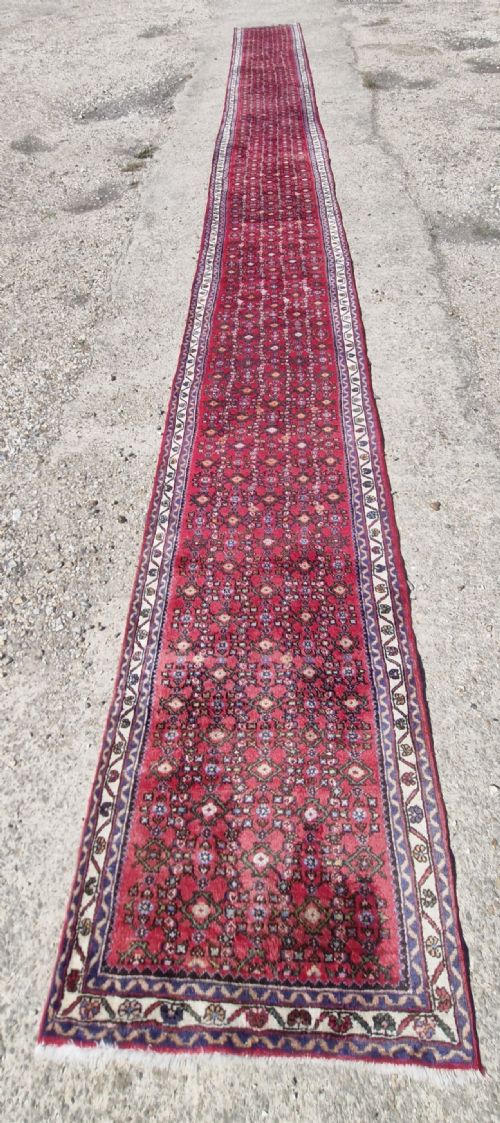


Extra Long Carpet Runner
An extra long carpet runner spans halls and landings with woven wool and cotton.
Extra Long Carpet Runner
An extra long carpet runner stretches across extended hallways, corridors, and staircases where standard lengths fall short. These pieces provide floor covering in narrow proportions, often measuring several metres in length.
The selections span tribal and traditional origins, including Persian, Kurdish, Moroccan, Turkish, and Ottoman workshops. Makers from the nineteenth and twentieth centuries built these textiles for heavy foot traffic in domestic spaces.
Buyers encounter formats ranging from traditional Persian room dividers to geometric Kurdish tribal pieces and simple Moroccan Berber weaves. Each item serves to line long passages with structured pattern and texture.
How they were made
Weavers constructed these runners using wool pile knotted or woven onto sturdy cotton foundations. The natural resilience of wool fibre provided the durability needed for sustained use in corridors and on stairs.
Workshops utilised hand-spun yarns dyed with traditional pigments to create intricate field designs and geometric borders. The combination of dense wool knots and strong cotton warp threads kept long formats stable under foot traffic.
One exceptional listing stretches out past twelve metres in length.
What varies in quality
Quality rests in the precision of the weave and the depth of the wool pile across extended dimensions. Tighter knots and heavier yarn count produce a denser surface that retains structural integrity over long spans.
The sophistication of the design, whether a Mina Khani pattern or tribal geometric arrangement, dictates the standard of the piece. Master weavers achieved greater symmetry and finer detail in traditional regional compositions.
The Extra Long Carpet Runner Glossary
- Runner
- A long, narrow carpet designed specifically for hallways, corridors, and stairs. These pieces measure significantly longer than their width.
- Warp
- The vertical threads stretched across a loom that form the structural foundation of a woven carpet. Cotton is common for this purpose in these pieces.
- Pile
- The upright yarn loops or knots that form the soft surface of a rug. Dense wool pile absorbs foot wear and displays the pattern.
- Kilim
- A flat-woven carpet or runner made without a raised pile. These items rely on interlocking weft threads to create geometric designs.
- Kelleh
- A large format carpet or runner originating from North West Persia. These pieces offer expansive decorative fields.
Extra Long Carpet Runner: Frequently Asked Questions
Where should an extra long carpet runner go?
These runners fit naturally along extended hallways, long landings, and up staircases where standard floor coverings fall short.
Their narrow proportions protect timber floors and guide movement through large domestic spaces.
How do I measure for a long runner?
Measure the clear floor space of your hallway or stair run carefully, leaving a uniform border of exposed wood or stone on each side.
Account for any doorways that need clearance when the door swings open across the path of the rug.
Are these runners made of pure wool?
The pile on these pieces consists of wool, which provides natural resilience and handles heavy foot traffic in corridors.
The underlying foundation frequently incorporates cotton threads to maintain structural stability over long dimensions.
How do I tell tribal runners apart from traditional ones?
Tribal runners from sources like Kurdish or Moroccan weavers typically feature geometric motifs, bold asymmetry, and local symbols.
Traditional pieces from Persian workshops tend to display formal floral arrangements, central medallions, and balanced botanical borders.